
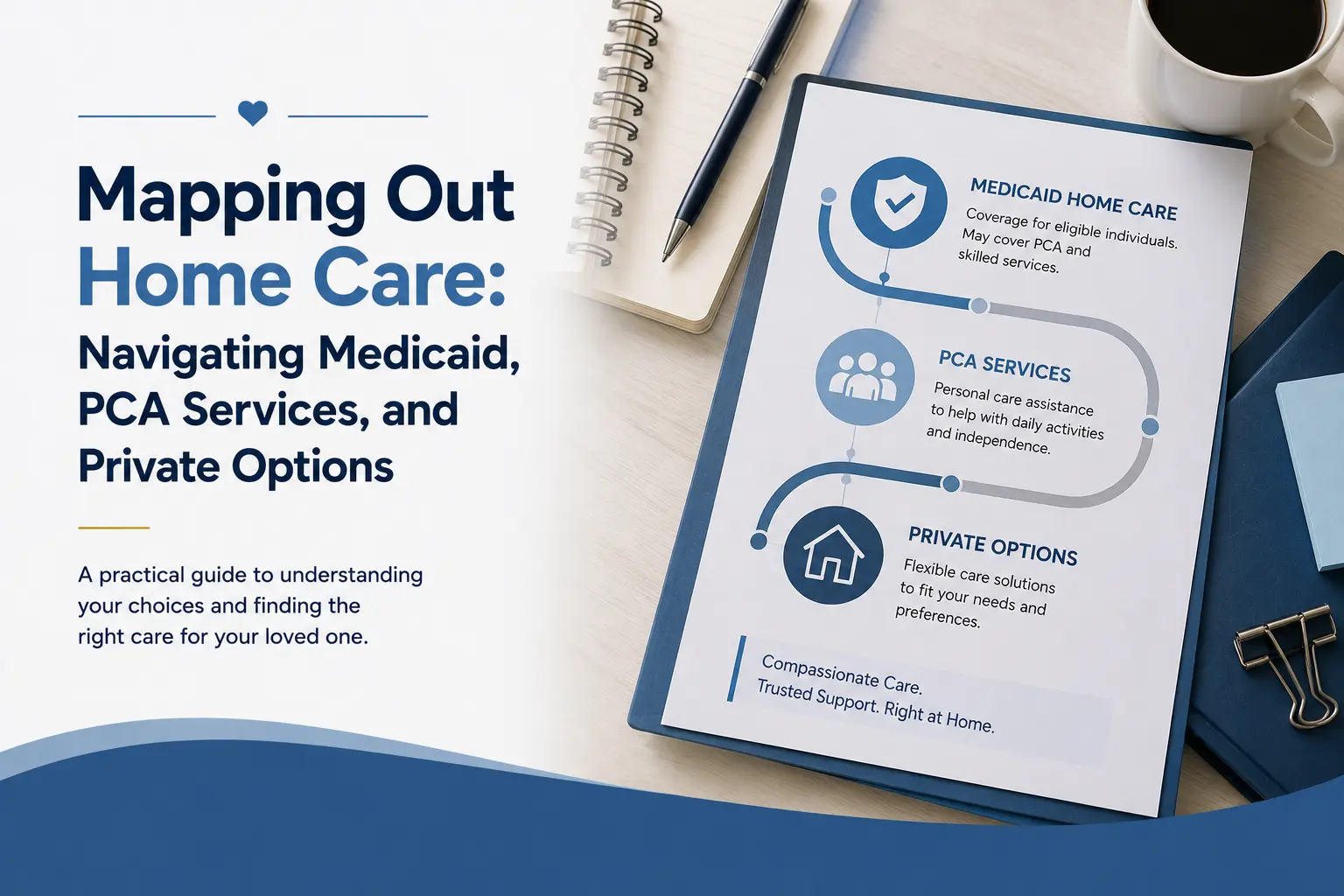
Mapping Out Home Care: Navigating Medicaid, PCA Services, and Private Options
When exploring home care for a loved one, you quickly realize how many paths exist. First, you must decode financial qualifications. Then, you need to determine the right level of daily assistance. Consequently, building the perfect safety net can feel overwhelming.
Every family’s starting line is completely unique. Some households have time to plan long-term benefits. However, others face sudden medical changes. These situations require an immediate, safe care solution at home. Ultimately, understanding how funding paths and clinical services intersect helps you find a calm, sustainable routine.
Step 1: Assessing the Funding Path
First, families must decide how to fund long-term home support. In New York, this generally divides into two distinct pathways:
The Medicaid Route
For families who meet state financial guidelines, qualifying for state-funded support is the ideal long-term choice. Furthermore, it unlocks comprehensive care plans that cover vital personal routines entirely. However, navigating validation paperwork and clinical screenings takes time. Therefore, getting professional support early is crucial. This step prevents administrative approval delays.
The Private Pay Route
Sometimes, families do not meet state asset thresholds. Other times, they need care to start immediately after a hospital discharge. Consequently, paying out-of-pocket or via insurance becomes the preferred path. Ultimately, private care skips the red tape entirely. It gives you total control over hours and caregivers. Furthermore, you can instantly set up short-term or 24/7 care.
Step 2: Defining Daily Personal Support
Next, you must decide exactly what tasks your caregiver will manage. This ensures comfort and safety at home. Specifically, this is where a certified Personal Care Aide steps in.
First, a PCA handles the daily physical challenges. This keeps a home running smoothly and safely. For instance, they provide steady physical support during transfers. Additionally, they assist with hygiene, manage light housekeeping, and prepare meals. Most importantly, a PCA preserves your loved one’s pride. It lifts the physical weight of constant caregiving off your shoulders. As a result, you can return to simply being a family member.
Building Your Family’s Care Plan
You might choose immediate private flexibility. Alternatively, you could pursue state-funded care. Regardless, the goal remains the same. You want to keep your loved one safe, happy, and autonomous. Fortunately, you don’t have to map out this journey alone. Instead, the right support team simplifies the system every step of the way.
Quick Links to Our Core Support Programs
Finally, select a pathway below to explore our dedicated home care frameworks. You will easily find the best match for your situation:
Medicaid Approval Guidance
Let our care specialists simplify the paperwork and guide your family smoothly through the state application process.
Personal Care Aide Support
Certified, compassionate hands-on help for bathing, dressing, meal prep, and daily fall prevention at home.
Private Pay Care Flexibility
Immediate care options with zero waiting lists. Total freedom to customize your schedule with no long-term contracts.