
Category: Managed Care Comparisons

  • How MLTC Plans Work in NYC: A Complete Guide for Families Navigating Managed Long-Term Care

    How MLTC Plans Work in NYC: A Complete Guide for Families Navigating Managed Long-Term Care

    Medicaid Home Care Guide

    How MLTC Plans Work in NYC: A Complete Guide for Families Navigating Managed Long-Term Care

    If your loved one needs ongoing home care in New York City, an MLTC plan is almost certainly part of the picture. Therefore, here is exactly what Managed Long-Term Care plans are, how they work, and how families choose the right one.

    💡 Key Takeaways
    • First, an MLTC plan is the Medicaid-funded managed care organization that authorizes, coordinates, and pays for long-term home care services in New York — including PCA and HHA services.
    • Second, enrollment in an MLTC plan is mandatory for most Medicaid recipients who need home care for more than 120 days. Specifically, you cannot receive long-term Medicaid home care in NYC without one.
    • Ultimately, families have the right to choose their MLTC plan and their home care agency within that plan — and both choices directly affect the quality of care received.

    Indeed, Managed Long-Term Care is one of the most misunderstood parts of the Medicaid home care system. Specifically, families hear the term “MLTC” during enrollment and assume it is just another insurance formality — but the MLTC plan is actually the entity that determines how many home care hours a person receives, which services are authorized, and how those services are delivered. Consequently, understanding how MLTC plans work gives families real power to advocate for better care. Therefore, this guide explains the system from start to finish — and how Advantage Home Care’s care coordination team helps families navigate every step.

    What Is an MLTC Plan?

    Essentially, a Managed Long-Term Care plan is a health plan — funded by Medicaid — that specifically manages long-term care services for individuals who need ongoing support to remain at home. Specifically, the MLTC plan receives a monthly payment from Medicaid for each enrolled member, and in return, the plan is responsible for arranging and paying for the member’s home care services.

    Furthermore, MLTC plans are separate from regular Medicaid managed care plans that cover doctor visits and hospital care. Consequently, a person can be enrolled in both a standard Medicaid managed care plan (for medical services) and an MLTC plan (for long-term home care) simultaneously.

    What Services Do MLTC Plans Cover?

    🛁
    Personal Care Aide (PCA) Services

    First, PCA services are the most commonly authorized MLTC benefit — bathing, dressing, meal preparation, light housekeeping, medication reminders, and companionship. Specifically, this is the core home care service that most enrollees receive.

    💉
    Home Health Aide (HHA) Services

    Furthermore, HHA services include everything a PCA does plus health monitoring — vital signs, observation, and reporting to a supervising nurse. Consequently, HHA-level care is authorized for individuals with chronic conditions requiring regular health oversight.

    🏥
    Certified Home Health Aide (CHHA) Services

    Additionally, CHHA services provide more clinically oriented home care under close nursing supervision — often authorized for post-hospital transitions or individuals with complex medical needs requiring structured observation and reporting.

    👩‍⚕️
    Skilled Nursing & Therapy

    Moreover, MLTC plans also cover intermittent skilled nursing visits, physical therapy, occupational therapy, and speech therapy when medically necessary. Specifically, these are supplemental to the daily home care services.

    🏨
    Adult Day Care & Respite

    Furthermore, many MLTC plans cover adult day health programs and short-term respite care for family caregivers — providing daytime programming or temporary relief when the primary caregiver needs a break.

    🚑
    Medical Transportation & Equipment

    Finally, MLTC plans typically cover non-emergency medical transportation to appointments and durable medical equipment — wheelchairs, hospital beds, walkers, and other assistive devices needed at home.

    Who Must Enroll in an MLTC Plan?

    Specifically, New York State requires MLTC enrollment for individuals who meet all of the following criteria:

    • Enrolled in Medicaid — either through standard eligibility or the Medicaid spend-down pathway
    • Need home care services for more than 120 days — individuals with short-term needs may receive services without MLTC enrollment
    • Require assistance with at least two Activities of Daily Living (ADLs) — or have a cognitive impairment that necessitates supervision
    • Are 18 years or older — and are living in the community (not in a nursing facility)

    Consequently, the vast majority of NYC seniors and adults with disabilities who receive ongoing Medicaid home care are enrolled in an MLTC plan. Learn more about Medicaid eligibility for home care.

    How MLTC Enrollment Works

    1
    Confirm Medicaid Eligibility

    First, the individual must be enrolled in Medicaid. Specifically, our care coordination team can help families determine eligibility and guide them through the application if they are not yet enrolled.

    2
    Choose an MLTC Plan

    Next, the individual selects an MLTC plan from the options available in their borough. Importantly, families have the right to choose — and should consider which plans work with their preferred home care agency, how responsive the plan is to hour-increase requests, and what supplemental benefits the plan offers.

    3
    Complete the Needs Assessment

    Then, the MLTC plan sends a nurse assessor to the individual’s home. Specifically, the assessor evaluates functional limitations — mobility, bathing, dressing, toileting, meal preparation, cognitive function — and determines the number of authorized daily home care hours. Critically, the accuracy of this assessment directly determines the amount of care received.

    4
    Select a Home Care Agency

    Finally, the enrollee chooses a licensed home care agency to deliver the authorized services. Importantly, you are not limited to whichever agency the MLTC plan suggests — you have the right to choose. Specifically, selecting an agency with a strong care coordination infrastructure means better caregiver matching, fewer gaps, and an advocate on your side when you need more hours. Learn how to choose the right agency.

    What Families Should Know About MLTC Hour Authorizations

    Importantly, the number of home care hours an MLTC plan authorizes is not fixed forever. Specifically, families should understand:

    📈

    Hours Can Be Increased

    If a person’s condition worsens — a new diagnosis, a fall, a hospitalization — the family can request a reassessment for additional hours. Specifically, our care coordinators help families prepare for reassessments and document the functional changes that justify increased coverage.

    📉

    Hours Can Be Reduced

    Conversely, MLTC plans periodically reassess enrollees and may reduce hours if they determine the person’s functional status has improved. Importantly, families have the right to appeal any reduction — and should act quickly with the help of their care coordinator.

    🔄

    You Can Switch MLTC Plans

    Furthermore, if a family is unhappy with their MLTC plan — slow authorization, poor communication, denied hours — they can switch to a different plan. Specifically, plan changes take effect at the beginning of the following month.

    🏠

    You Can Switch Home Care Agencies

    Finally, families can also change their home care agency within the same MLTC plan at any time. Consequently, if care quality is poor, caregivers are unreliable, or coordination is lacking, switching agencies is a legitimate and straightforward option.

    MLTC Plans and Advantage Home Care

    Ultimately, Advantage Home Care works with multiple MLTC plans across New York City. Specifically, our care coordination team manages the ongoing relationship with the MLTC plan on the family’s behalf — handling authorization renewals, hour-increase requests, reassessment preparation, and appeals when reductions are proposed. Therefore, families receive not only a caregiver, but a dedicated team that actively manages every administrative aspect of their Medicaid home care.

    Furthermore, for families who need care before MLTC enrollment is complete — or who want supplemental coverage beyond what Medicaid authorizes — private pay home care is available immediately with no waiting period. Reach out to get started.

  • Home Care Coordination in NYC: What It Is and Why It Matters for Your Family

    Home Care Coordination in NYC: What It Is and Why It Matters for Your Family

    Care Coordination Guide

    Home Care Coordination in NYC: What It Is and Why It Matters for Your Family

    Care coordination is the connective tissue of good home care — making sure the right people communicate, the right services are in place, and nothing falls through the cracks. Here’s what it means in practice for NYC families.

    💡 Key Takeaways
    • Care coordination connects home care, medical care, and family caregivers into a unified plan — preventing the communication gaps that lead to hospitalizations and crises.
    • A care coordinator is different from a caregiver — they manage the plan, not the hands-on care.
    • For complex or multi-service situations, professional care coordination dramatically reduces family stress and improves outcomes.

    When a loved one needs home care in New York City, the practical challenge isn’t just finding a caregiver — it’s keeping everything coordinated. The doctor’s instructions need to reach the home health aide. The Medicaid plan needs to authorize the right number of hours. The family members who live out of state need to know what’s happening. The specialist appointment needs transportation. And when something changes — a hospitalization, a new diagnosis, a change in condition — someone needs to update the entire plan. That’s what care coordination does, and it’s the part of home care that families most consistently underestimate until they need it. Our care coordination and family support services exist specifically to fill this gap.

    What Is Home Care Coordination?

    Home care coordination is the active management of a person’s care plan — ensuring that all the pieces of their care ecosystem (home aides, physicians, specialists, therapists, Medicaid plans, family members) are communicating and working toward the same goals. A care coordinator is the person who makes this happen.

    They are not a caregiver. They don’t provide hands-on care. Their job is organizational and relational — they know the full picture of a person’s situation and act as the central point of contact for everyone involved in their care.

    What Does a Care Coordinator Actually Do?

    📋
    Develops & Updates the Care Plan

    Creates a comprehensive, written care plan based on medical needs, functional limitations, family preferences, and available services — and keeps it current as circumstances change.

    🔗
    Connects Doctors & Home Care

    Bridges the gap between clinical care (what the doctor orders) and home care (what the aide actually does). Ensures physician instructions reach the caregiver accurately and completely.

    🏛️
    Navigates Medicaid & Benefits

    Manages authorizations, monitors hour approvals, handles appeals when Medicaid denies coverage, and identifies additional benefits the family may not know about.

    👨‍👩‍👧
    Keeps the Family Informed

    Acts as a single point of contact for family members — especially those who aren’t nearby — providing regular updates and involving them in decisions appropriately.

    🚨
    Manages Crises & Transitions

    When a hospitalization, fall, or change in condition occurs, a coordinator mobilizes quickly — arranging updated care, communicating with all parties, and preventing the chaos that uncoordinated care produces.

    📅
    Coordinates Appointments & Services

    Schedules and tracks medical appointments, arranges transportation, ensures follow-through on referrals, and manages the logistics of multiple concurrent services.

    Who Needs Care Coordination Support?

    Not every home care situation requires formal care coordination — someone receiving a few hours of companionship per week may not need a coordinator. But these situations almost always benefit from one:

    🏥
    Multiple chronic conditions

    When someone has diabetes, heart failure, and cognitive decline simultaneously, the care plan has to account for all three — and the providers for each need to be in communication. Without coordination, treatments conflict and things get missed.

    🌍
    Long-distance family caregivers

    When family members live out of state or far from the care recipient, a local coordinator becomes their eyes, ears, and hands on the ground — providing reliable information and managing day-to-day decisions.

    📄
    Complex Medicaid or MLTC situations

    Navigating Medicaid authorization, MLTC plan requirements, appeals, and benefit changes is genuinely complex. A coordinator who knows the system prevents coverage gaps and ensures authorized hours are fully utilized.

    🔄
    Post-hospitalization transitions

    The period immediately after a hospital discharge is the highest-risk time for readmission. A care coordinator manages the transition — communicating with discharge planners, arranging home care, and monitoring in the first critical weeks.

    🧩
    OPWDD or specialty program participants

    Individuals receiving services through OPWDD, the TBI Waiver, or NHTD programs have complex, multi-service plans that require ongoing coordination between multiple providers, funding streams, and agencies.

    Care Coordination vs. Case Management: What’s the Difference?

    These terms are often used interchangeably but have distinct meanings in New York’s home care system:

    • Care coordination (provided by home care agencies): Active, ongoing management of a person’s full care plan — typically provided by a licensed home care agency as part of their service offering. Focused on day-to-day and week-to-week coordination across all care domains.
    • Case management (provided by MLTC plans and OPWDD): Required for Medicaid managed care enrollment. A case manager assigned by the MLTC plan or OPWDD manages the formal care plan, authorizes hours, and conducts required assessments.
    • Service coordination (OPWDD/TBI specific): Every individual enrolled in OPWDD or the TBI Waiver is assigned a service coordinator who develops their individualized service plan and manages their waiver services.

    Many families have both a Medicaid case manager and an agency care coordinator — and the best outcomes happen when these roles work together rather than in silos.

    How Advantage Home Care’s Coordination Support Works

    Our care coordination and family support team works with clients and families across all five New York City boroughs to ensure that every element of a care plan is in place, current, and functioning. We serve as the communication hub — between caregivers, physicians, Medicaid plans, and families — so that no one is operating on outdated information and nothing falls through the cracks.

    Whether you’re starting a new home care arrangement, navigating a hospital discharge, or managing a complex multi-service situation, our coordination team can help you build and maintain the structure that makes everything else work. Get in touch to learn more.

  • Connecting the Pieces: Why Care Coordination is Vital for Your Family

    Connecting the Pieces: Why Care Coordination is Vital for Your Family

    Care Coordination: Why This Essential Support is Vital for Your Family

    Connecting the Pieces: Why Care Coordination is Vital for Your Family

    By The Advantage Home Care Team • 4 min read

    When a loved one faces a chronic condition or aging challenges, your support network expands quickly. Suddenly, a small army of professionals fills your weekly schedule. You must juggle primary doctors, medical specialists, therapists, and home care aides. Effective care coordination becomes essential immediately.

    Having access to these resources is incredible. However, managing them often feels like an exhausting logistical puzzle. Many family caregivers share a common frustration. They spend less time actually caring for their loved one. Instead, they act as unpaid administrators. They constantly chase down health forms, match records, and fix communication gaps.

    The missing link: Care coordination isn’t about scheduling another appointment. Instead, it introduces a single, dedicated advocate. This professional syncs your clinical teams, community waivers, and daily home care plan. Consequently, your family avoids carrying the heavy logistical weight alone.

    Real Situations Where Care Coordination Changes Everything

    Most households initially try to shoulder the planning on their own. Eventually, families reach specific milestones and need help. They realize a dedicated professional turns overwhelming confusion into an organized, calm strategy.

    1. Using Care Coordination for State & Medical Waivers

    Applying for community programs like Medicaid requires matching exact medical terminology to rigid guidelines. Families often partner with us when they feel completely stuck. They stare at applications and wonder which document to validate first. A dedicated expert bridges that gap. We map out your records cleanly to protect your essential benefits.

    2. Syncing Doctors Through Care Coordination Services

    Your loved one might see multiple specialists across different medical groups. Keeping everyone on the same page is incredibly challenging. Families often realize Doctor A missed a prescription adjustment from Doctor B. To solve this, we create a unified communication profile. This ensures your entire medical network stays in perfect alignment.

    Medical team reviewing care coordination plans for a patient's safe hospital discharge

    3. Managing Safe Hospital Discharges and Care Transitions

    A hospital or short-term rehab discharge causes high stress for any household. Staff members suddenly hand you new dietary rules, therapy routines, and medication orders. Families leverage care coordination to make this shift entirely seamless. We prep the home care aide on the new routine. Furthermore, we guarantee equipment arrives promptly and lock in follow-up visits.

    You Don’t Have to Be the Care Coordination Expert

    You shouldn’t need a healthcare management degree to look after your family. Entrust the background logistics to our experienced team instead. This allows you to step away from endless phone tag and paperwork. Ultimately, you gain the freedom to focus entirely on what matters most. You can go back to being a present, supportive family member.

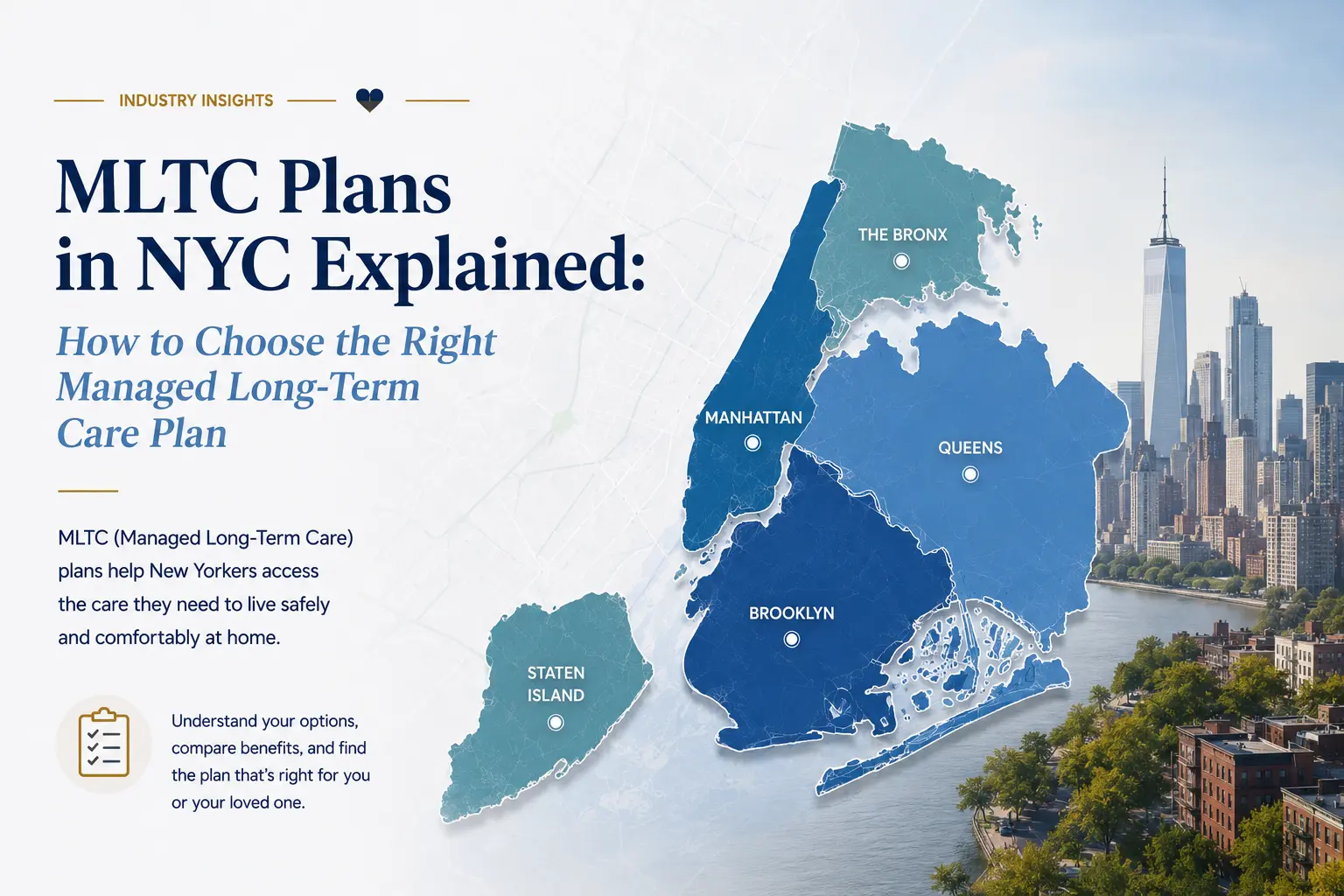
  • MLTC Plans in NYC Explained: How to Choose the Right Managed Long-Term Care Plan

    MLTC Plans in NYC Explained: How to Choose the Right Managed Long-Term Care Plan

    Medicaid Planning Guide

    MLTC Plans in NYC Explained: How to Choose the Right Managed Long-Term Care Plan

    Most people enrolled in Medicaid home care in New York City receive their services through an MLTC plan. Understanding what these plans are — and how to choose between them — is one of the most important decisions a family makes.

    💡 Key Takeaways
    • MLTC (Managed Long-Term Care) plans coordinate and pay for Medicaid home care and related services in NYC.
    • Most people who need long-term home care in New York are required to enroll in an MLTC plan.
    • Plans vary in their networks, covered services, and quality — choosing carefully matters.

    When a family first hears the term “MLTC plan,” it often lands somewhere between confusing and alarming. Is it insurance? Is it Medicaid? Do you have to switch doctors? The short answer: an MLTC plan is how New York State organizes and delivers Medicaid long-term care services — including home care — for people who need ongoing support. If your loved one is enrolling in Medicaid home care, they’ll almost certainly need to be in one.

    What Is an MLTC Plan?

    A Managed Long-Term Care plan is a Medicaid managed care organization that coordinates the full range of long-term support services for its members. Instead of Medicaid paying individual providers directly, the state pays the MLTC plan a monthly capitation fee, and the plan covers home care, adult day services, transportation to medical appointments, personal care, and other supports.

    The plan works with licensed home care agencies — like Advantage Home Care — to provide the actual services. The MLTC plan manages authorization, scheduling coordination, and oversight; the agency manages the caregivers and day-to-day care.

    What MLTC Plans Typically Cover

    🏠
    Home Care Services

    Personal care aide (PCA) and home health aide (HHA) services — the core of what most families need — are covered based on assessed hours.

    🚗
    Non-Emergency Transportation

    Rides to medical appointments, therapy, and adult day programs are typically covered — a meaningful benefit for NYC seniors without cars.

    🏢
    Adult Day Health Programs

    Structured daytime programs that provide social engagement, health monitoring, and therapeutic activities — often used alongside home care.

    🛠️
    Home Modifications & Equipment

    Some plans cover grab bars, shower chairs, ramps, and other home modifications that support safe independent living.

    How to Choose Between MLTC Plans in NYC

    Multiple MLTC plans operate in New York City, and enrollment is voluntary — you can choose. The choice matters more than most families realize at the time of enrollment. Here’s what to look at:

    1
    Which home care agencies are in-network?

    If you want to use a specific home care agency — or want the flexibility to switch if needed — confirm that the agency is in the plan’s network before enrolling.

    2
    What hours of care are being authorized?

    Plans conduct their own assessments and determine approved hours. Ask how the plan handles appeals if you believe more hours are needed.

    3
    Is the plan accepting new members?

    Some plans have waitlists or aren’t accepting new enrollments in certain boroughs. Confirm availability before selecting.

    4
    What do existing members say?

    State quality ratings and family feedback can tell you a lot about how a plan handles problems, appeals, and care coordination in practice.

    5
    Does the plan cover additional services you need?

    If your loved one also needs adult day services, special transportation needs, or home modifications, confirm the plan covers these before enrolling.

    MLTC vs. PACE: What’s the Difference?

    Some families are offered enrollment in a PACE program (Program of All-Inclusive Care for the Elderly) instead of a standard MLTC plan. PACE is more intensive — it requires attendance at a day health center and provides a broader range of medical services — but it also requires giving up your current primary care physician. It works well for some families and not at all for others. If PACE comes up in your enrollment conversation, it’s worth a careful conversation before deciding.

    How Advantage Home Care Works With MLTC Plans

    Advantage Home Care is in-network with multiple MLTC plans operating across New York City’s five boroughs. If your loved one is already enrolled in an MLTC plan, we can confirm in-network status and often begin care coordination quickly. If you’re just starting the Medicaid or MLTC enrollment process, our team can help you understand your options and navigate the process — including which plans our agency works with and how to get the most from your authorized hours.

  • Connecting the Dots: Why Families Need Care Coordination

    Connecting the Dots: Why Families Need Care Coordination

    Connecting the Dots: Why Families Need Care Coordination

    By The Advantage Home Care Team • 4 min read

    When a family member faces health challenges or aging, the care journey rarely involves just one person. Suddenly, a small army of professionals fills your life. You must manage primary doctors, specialists, therapists, and home care aides.

    Having access to resources is incredible. However, managing them quickly becomes a logistical puzzle. Many family caregivers share a common frustration. They spend less time actually caring for their loved one. Instead, they act as unpaid administrative assistants. They constantly make phone calls, chase records, and fix communication gaps.

    The missing link: Care Coordination isn’t about adding another appointment to your calendar. Instead, it introduces a single, dedicated navigator. This expert syncs your doctors, community resources, and home care plan. Consequently, your family can finally breathe easier.

    Real Moments When Care Coordination Changes Everything

    Most families manage on their own for a while. Eventually, specific situations arise that require professional help. Bringing in a dedicated Care Coordinator turns chaos into a structured, calm plan.

    1. When Navigating Complex State & Medical Benefits

    Applying for specialized waivers or Medicaid coverage requires precise terminology. You must match exact clinical language to strict state guidelines. Families often hire us when they feel stuck. They stare at an application stack thinking, “I don’t know what form comes first.” A coordinator bridges that gap. We ensure accurate documentation and meet all critical timelines.

    2. Managing Multiple Doctors and Changing Care Plans

    Your loved one might see multiple specialists across different boroughs. Keeping everyone on the same page is incredibly tough. We step in when communication breaks down. Often, Doctor A doesn’t know what Doctor B prescribed. To solve this, we create a single, centralized care record. This keeps the entire medical team unified.

    3. Transitioning Between Environments (Like Hospital to Home)

    Facilities and hospitals often discharge patients quickly. This creates a high-stress moment for any family. Staff members suddenly hand you new instructions, dietary changes, and follow-up tasks. Families use care coordination to map out this transition smoothly. We ensure the home care aide knows the new routine. We also guarantee prompt equipment delivery and schedule all follow-ups seamlessly.

    You Don’t Have to Be the Expert

    You shouldn’t need a healthcare administration degree to look after your family. Entrust the logistics to our professional team instead. This allows you to step back into your most important role. You can simply be a supportive, present family member.

  • Let’s Design a Care Plan That Fits Your Family

    Let’s Design a Care Plan That Fits Your Family

    Start Your Journey

    Let’s Design a Care Plan That Fits Your Family

    Whether you are inquiring about CDPAP enrollment, specialized OPWDD services, or career opportunities, our coordinators are here to listen and help you build the perfect home care plan.

    Why You Need a Custom Home Care Plan

    Navigating home healthcare can be a complex process, but you do not have to do it alone. Building a tailored home care plan ensures your loved one receives exactly the right level of support, precisely when they need it. A strong strategy minimizes stress, prevents medical setbacks, and promotes long-term independence. In fact, research from the National Institute on Aging consistently highlights that proper in-home support drastically improves overall quality of life.

    Key Elements of an Effective Home Care Plan

    When you partner with a dedicated Advantage Care Coordinator, we walk you through a comprehensive checklist to build your home care plan. This personalized approach typically includes:

    • Medical Needs Assessment: Coordinating with primary care physicians to safely manage medications, therapies, and clinical routines.
    • Daily Living Assistance: Arranging hands-on help for bathing, meal preparation, mobility, and household safety.
    • Financial Guidance: Exploring sustainable funding options, leveraging resources from trusted programs outlined on Medicaid.gov, or navigating private pay avenues.

    Understanding Your Home Care Plan Options

    Creating a successful home care plan also means understanding your state and local resources. In New York, programs like the Consumer Directed Personal Assistance Program (CDPAP) or the Office for People With Developmental Disabilities (OPWDD) provide flexible, community-based care. Knowing which path to take is the first step in solidifying your future. You can read more about foundational caregiver support at the AARP Caregiving Resource Center.

    Our mission is to take the guesswork out of this process, turning a stressful transition into a clear, manageable roadmap. Tell us a little bit about what you are looking for, and we will reach out to you directly with personalized guidance.

    Send Us Your Inquiry

    All information submitted is strictly confidential and securely handled.

    • Centerlight PACE vs. Traditional MLTC: Selecting Your NYC Home Care Infrastructure

      Centerlight PACE vs. Traditional MLTC: Selecting Your NYC Home Care Infrastructure

      Distinct insurance management models: PACE vs MLTC Care
      👤

      Medically Reviewed By: David Zhorzholiani. MSN

      Chief Operating Officer | Advantage Home Care


      Structuring long-term care for a relative in New York requires careful planning. First, you must evaluate distinct insurance management models. Specifically, you will likely encounter two primary frameworks. You can choose a Program of All-Inclusive Care for the Elderly (PACE), like Centerlight. Alternatively, you can select a traditional Managed Long-Term Care (MLTC) plan.

      Both programs help dual-eligible individuals stay safely inside their homes. You can learn more about Medicaid and Medicare eligibility online. However, their operational structures and doctor restrictions differ significantly. Caregiver networks also vary between the two. Understanding these distinct insurance management models is essential. Ultimately, it helps you pick a framework that fits your family’s routines.

      1. Distinct Insurance Management Models: The PACE Framework

      A PACE program acts as an all-in-one insurer and provider network. When a senior enrolls, the program takes complete control. Specifically, it manages their Medicare and Medicaid benefits entirely.

      • The Hub Concept: PACE programs frequently utilize physical adult day centers. Transport services bring enrollees to these centers directly. Here, they receive medical checkups, physical therapy, and communal meals.
      • The Provider Network: A PACE plan requires the senior to switch providers. Therefore, they must use doctors and specialists contracted within that specific network.

      2. Distinct Insurance Management Models: The MLTC Approach

      A traditional Managed Long-Term Care (MLTC) plan works differently. It manages only the long-term community care portion of insurance. For example, it allocates daily Home Health Aide hours.

      • Keep Your Regular Doctors: Your Medicare remains entirely separate. Therefore, your loved one can keep their longtime primary care physician. They also keep their existing cardiologists and specialists.
      • Agency Choice: The MLTC plan authorizes specific weekly care hours. The family then selects a trusted Licensed Home Care Services Agency. Finally, the agency recruits, vets, and sends the caregiver to you.

      Traditional MLTC Model

      • Medicare remains completely independent
      • Keep your existing local doctors and specialists
      • Choose your preferred LHCSA personal aide

      Integrated PACE Model

      • Medicare and Medicaid merge into one plan
      • Must utilize network clinic physicians and staff
      • Care and socialization center around Day Centers

      Get Approved for Medicaid Home Care Fast & Easy

      We help NYC families navigate the Medicaid home care process with confidence. Our team assists with eligibility, paperwork, and connecting you with compassionate caregivers. Consequently, you receive high-quality care at home.

      • Medicaid Accepted
      • Fast Approval Assistance
      • Experienced, Compassionate Caregivers
      • Serving All 5 Boroughs of NYC

      Check Your Eligibility

      It only takes 30 seconds.

        How to Choose the Optimal Path for Your Family

        The choice often comes down to independence versus centralization. Your relative might value their relationship with existing doctors. Furthermore, they might want a dedicated caregiver in their home. Therefore, a traditional MLTC paired with a local agency is often ideal.

        You might be evaluating your plan choices right now. Alternatively, you might want to coordinate a case transfer. Understanding these distinct insurance management models saves weeks of delays. Ultimately, it simplifies administrative pathways completely.

        Published: May 31, 2026 | Category: Managed Care Comparisons

        Disclaimer: Plan structures, network statuses, and state health insurance rules evolve constantly. This guide provides an objective educational comparison of New York care options. Always check directly with your chosen insurance company before initiating enrollment changes.