
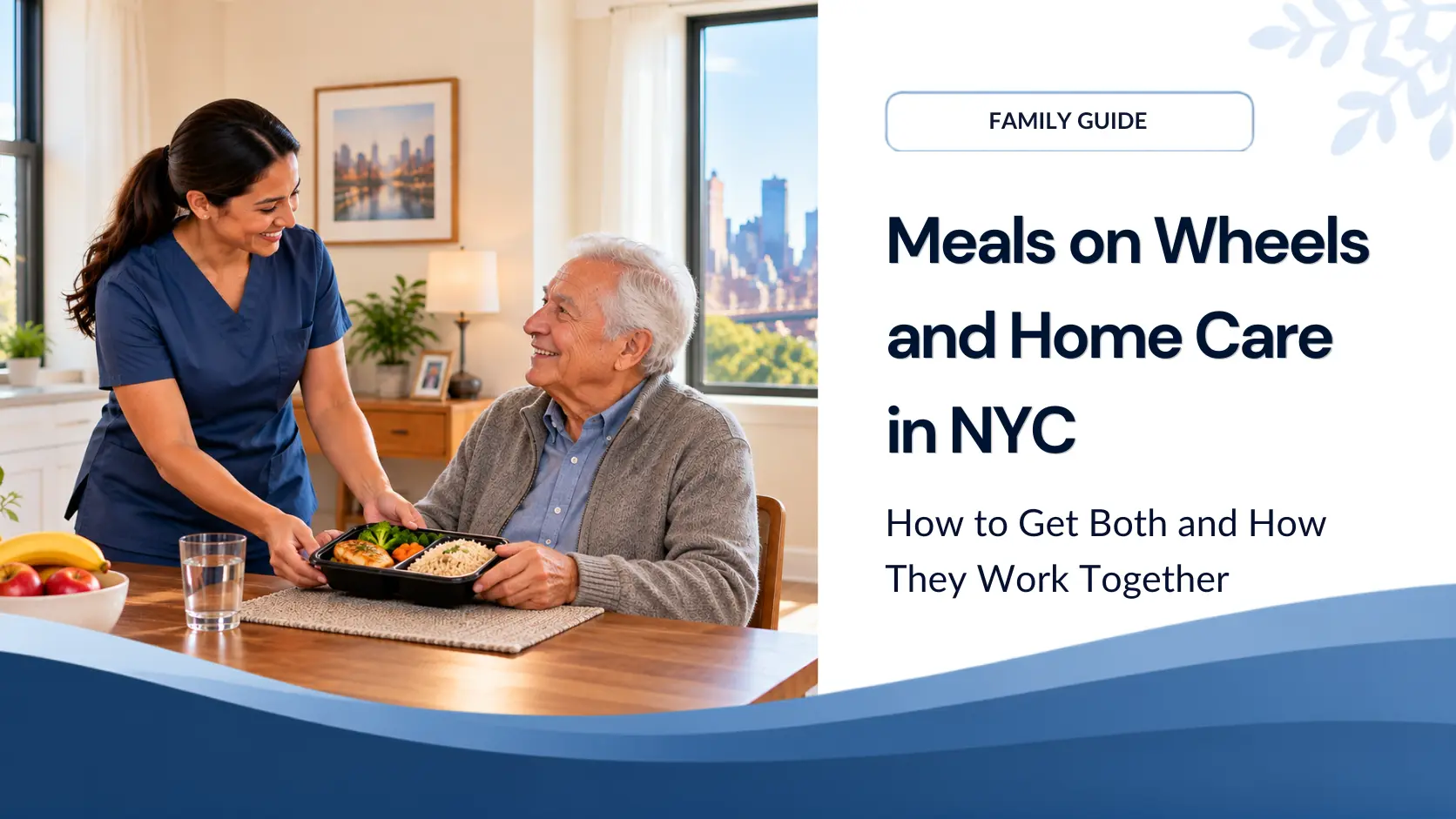
Meals on Wheels and Home Care in NYC: How to Get Both and How They Work Together
A delivered meal and a home care aide solve different problems. Used together, they keep an older parent fed, safe and less alone, often at little or no cost to the family.
Yes, your parent can usually get Meals on Wheels and home care in NYC at the same time. Home-delivered meals for adults 60 and older are arranged through NYC Aging (start with 311), after an in-home assessment. Home care is arranged through Medicaid, an MLTC plan, or private pay. The aide can heat and serve the delivered meal, help with eating, and report changes.
Meals on Wheels and home care in NYC: two different services
Families often ask whether they should choose between Meals on Wheels and home care in NYC. In most cases you do not have to choose. The two programs are run by different systems and meet different needs:
- Home-delivered meals (what most people call Meals on Wheels) bring prepared meals to the door of older adults who have trouble shopping or cooking. In New York City, the public program is organized by NYC Aging (formerly the Department for the Aging, or DFTA) through local community providers, with support from nonprofits such as Citymeals on Wheels for weekends, holidays and emergencies.
- Home care brings a trained aide into the home for a set number of hours to help with bathing, dressing, toileting, walking, meals, light housekeeping and other daily tasks.
A meal program delivers food. An aide delivers hands-on help. For a parent who lives alone and is starting to struggle, the combination covers both nutrition and safety.
Prepared meals brought to the door, usually on weekdays, for eligible adults 60 and older.
Hands-on help with bathing, dressing, toileting, walking, meals and light housework.
NYC Aging case managers assess needs and connect older adults to meals and other services.
The aide heats and serves meals, helps with eating, and notices when food goes untouched.
Who qualifies for home-delivered meals in NYC
Eligibility details are set by NYC Aging and can change, so confirm before you apply. In general, the program serves New Yorkers who are 60 or older and who are unable to shop for or prepare meals on their own, often because they are homebound or have no one available to cook for them. There is typically no income test and no charge, though voluntary contributions may be invited.
Some people under 60 or with serious illness may qualify for other meal programs through nonprofits or through their health plan. If your parent has Medicaid managed long-term care, ask the plan’s care manager whether home-delivered meals are part of the plan’s covered services.
How to apply for Meals on Wheels in NYC
- Call 311 and ask for home-delivered meals for an older adult, or contact NYC Aging directly. You can call on behalf of a parent.
- Expect a referral to a case management agency that serves your parent’s neighborhood.
- Schedule an in-home assessment. A case manager visits to understand your parent’s health, mobility, diet and support. Have the medication list and any dietary restrictions ready.
- Ask about meal types. Depending on the provider and neighborhood, options may include diabetic-friendly, low-sodium, kosher, or culturally specific meals.
- Confirm the delivery routine. Ask which days meals come, whether frozen meals cover weekends, and what happens if no one answers the door.
Timelines vary by area and demand. If your parent needs food right away, tell 311 and the case manager, and line up a family member, neighbor or private aide in the meantime.
How to get home care at the same time
Home care runs on a separate track. For most families the path is Medicaid: either a managed long-term care (MLTC) plan or fee-for-service home care through HRA. The first step is an assessment by the New York Independent Assessor (NYIA), which includes a nurse’s Community Health Assessment and a separate clinical appointment that produces a Practitioner Order. Approval often takes several weeks. Our guide to getting started with home care in NYC walks through each step, and the 2-minute self-check helps you see whether your parent is likely to qualify.
Medicaid approves hours based on the need for help with daily activities like bathing, dressing, toileting, transferring and eating. Meal preparation is one of the tasks an aide can do during approved hours. If your parent already receives delivered meals, the assessor may note that, so describe honestly what the meals cover and what they do not, such as breakfast, weekends, or help actually eating.
Families who do not qualify for Medicaid, or who want care to start sooner, can arrange private pay hours. See private pay home care in NYC.
How meals and an aide work together day to day
Here is what a combined routine often looks like for a parent living alone:
- Morning: the aide arrives, helps with bathing and dressing, prepares breakfast, and gives medication reminders.
- Midday: the delivered meal arrives. The aide receives it, checks it matches any diet restrictions, heats and serves it, and helps with eating if needed.
- Afternoon: the aide stores the second meal or leftovers safely, labels them, and throws away old food.
- Evening: if the aide’s shift has ended, your parent has a ready meal that only needs reheating.
The aide is also a second set of eyes. If meals are coming back untouched, if your parent is losing weight, or if the refrigerator is full of spoiled food, the aide reports it to the agency nurse and the family. That information is often the first sign of depression, dental pain, swallowing trouble or memory loss.
This article is general information, not medical or legal advice. Program rules change, so confirm eligibility with NYC Aging, 311, or your parent’s health plan.
Other food supports worth knowing
- Older adult centers run by NYC Aging partners serve group meals and social programs for those who can still get out.
- SNAP benefits can help pay for groceries; apply through HRA.
- Grocery delivery plus an aide who cooks can work well for parents with specific tastes.
- Family meal drops on weekends fill gaps when delivered meals do not come.
For more on keeping a parent safe and connected when they live alone, read home care for a parent living alone in NYC. For the bigger picture, see our complete guide to elderly care at home in NYC.
Related Guides
Companion care in NYC · Home care for diabetes · Signs it is time for home care · What Medicaid home care covers
Frequently Asked Questions
Can you get Meals on Wheels and a home health aide at the same time?
Yes. They are separate programs. Many older New Yorkers receive delivered meals and Medicaid or private pay home care together.
How do I sign up my mother for Meals on Wheels in NYC?
Call 311 and ask for home-delivered meals for an older adult. Your mother will be referred to a local case management agency for an in-home assessment.
Is Meals on Wheels free in New York City?
The NYC Aging program generally does not charge eligible older adults, though voluntary contributions may be invited. Confirm current rules with 311 or NYC Aging.
Does Meals on Wheels deliver on weekends?
Many providers deliver on weekdays and may send frozen meals for weekends. Ask the case manager about weekend and holiday coverage in your parent’s area.
Will delivered meals reduce my parent’s Medicaid home care hours?
Hours are based mainly on help needed with personal care like bathing, dressing and toileting. Delivered meals may be noted, so explain clearly which meals and tasks are still not covered.
Can the aide cook instead of using delivered meals?
Yes, meal preparation can be part of the aide’s tasks during approved hours. Many families use both so there is food when the aide is not there.
Add hands-on help to the meals
Call us to see whether your parent may qualify for home care alongside delivered meals.
Call 718-375-2707Start Home Care