
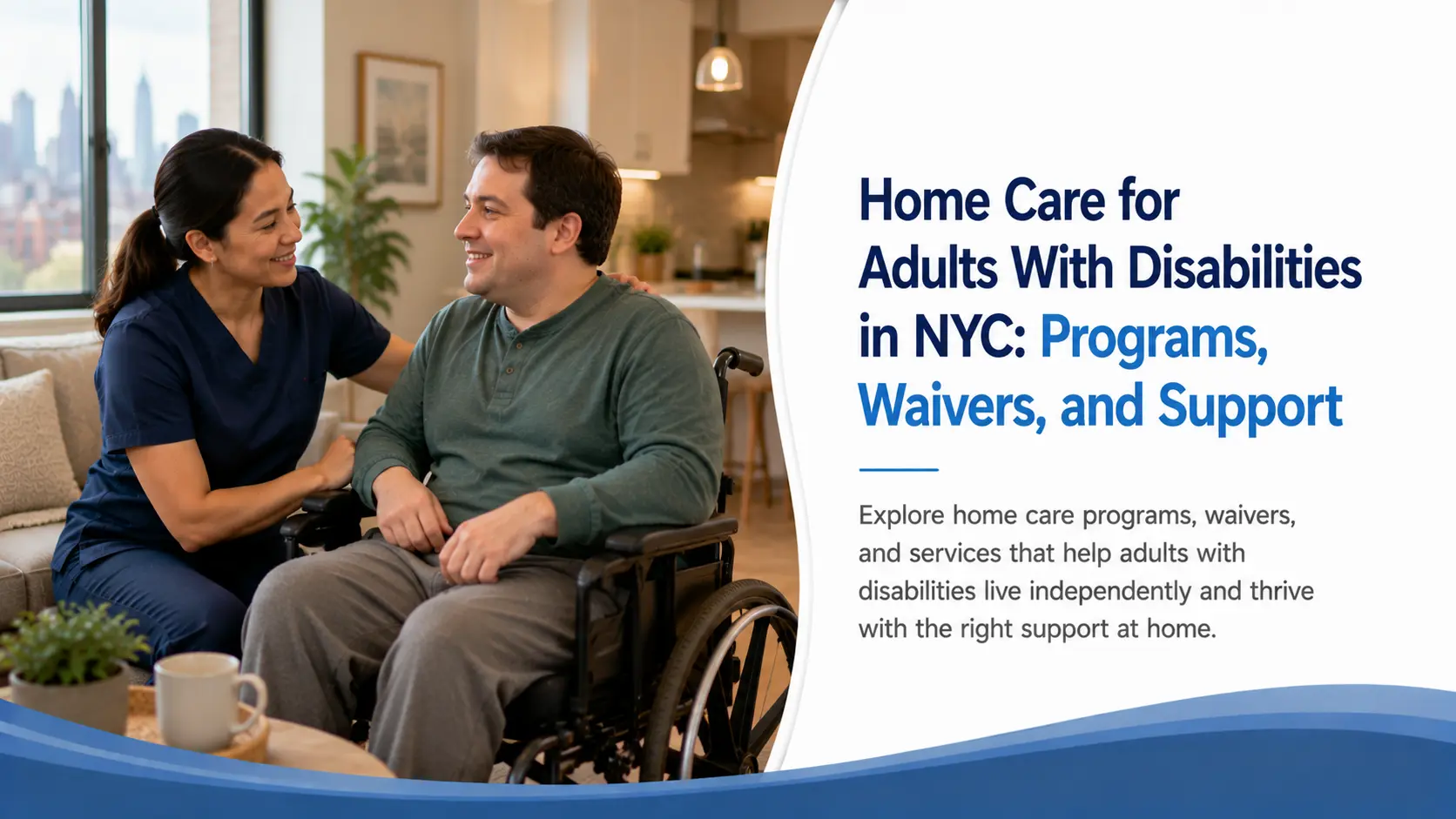
Home Care for Adults With Disabilities in NYC: Programs, Waivers, and Support
Home care isn’t only for seniors. Adults of any age living with a disability can get in-home support in New York — and several programs exist specifically to make independent living possible.
- Adults with disabilities — of any age — can qualify for Medicaid home care and specialized waiver programs in New York.
- The right program depends on the type of disability: physical, brain injury, or developmental.
- These programs are designed to support independence and community living, not just basic care.
When people hear “home care,” they usually picture an elderly parent. But a large share of the people who benefit most are younger adults living with disabilities — from spinal cord and mobility conditions to brain injuries and developmental disabilities. New York has built specific programs to help these adults live at home and in their communities rather than in institutions, and knowing which one fits is the key to unlocking support.
Types of Home Care Programs for Adults With Disabilities
The best-fit program depends on the nature of the disability:
Matching the Program to the Person
These programs aren’t interchangeable — each is designed around a different kind of need. An adult with a physical disability who needs help bathing, dressing, and moving safely is usually best served by Medicaid personal care or the NHTD waiver. Someone rebuilding independence after a brain injury benefits from the supervision, cueing, and skills training the TBI waiver provides. And a person with a developmental disability that began early in life accesses a whole system of support through OPWDD. Part of getting started is simply identifying which door to walk through — something an experienced team can help with quickly.
What Support Actually Looks Like
Home care for adults with disabilities goes beyond basic personal care. Depending on the program, it can include help with daily activities, safe transfers and mobility, medication supervision, independent-living skills training, community integration, and respite for family members who provide much of the care themselves. The goal is consistent: maximum independence, with support filling the gaps.
How to Get Started
Frequently Asked Questions
Can adults under 65 get home care in NYC?
Yes. Home care is available to adults of any age who have a qualifying need. Younger adults with disabilities often access it through Medicaid personal care or a specialized waiver like NHTD, TBI, or OPWDD.
What’s the difference between the NHTD and TBI waivers?
The NHTD waiver serves adults with physical disabilities who could otherwise need a nursing home, while the TBI waiver is designed specifically for people with traumatic brain injuries, adding supervision, cueing, and skills training suited to cognitive and behavioral needs.
How do adults with developmental disabilities get home care?
Through OPWDD, New York’s system for people with developmental disabilities such as autism, intellectual disability, and cerebral palsy. It funds in-home support, community habilitation, day programs, and respite.
Find the Right Support for Your Situation
Not sure which program fits? We’ll help you identify the right pathway and get support in place. Call 718-375-2707 or reach out online for a free conversation.