TBI Home Care in NYC: Services, Waivers, and How to Get Support After a Brain Injury
A traumatic brain injury changes everything β but it doesn’t have to mean a nursing home. New York’s TBI Medicaid Waiver funds in-home and community support for individuals with brain injuries who want to live independently. Here’s how it works.
- New York’s TBI Medicaid Waiver funds home and community-based services for individuals aged 18β64 with a traumatic brain injury.
- Services include home care, housing subsidies, day programs, respite, and community integration support β all designed to support independent living.
- The TBI Waiver is administered separately from standard Medicaid home care β eligibility and enrollment work differently.
Traumatic brain injury affects approximately 3 million Americans every year β from car accidents and falls to sports injuries and violence. For those whose injuries result in lasting cognitive, physical, or behavioral changes, the path to community living can feel uncertain. New York State created the TBI Medicaid Waiver specifically to change that: to give individuals with brain injuries the home and community supports they need to live outside of institutional settings. If you or someone you love is navigating life after a TBI in New York City, this guide explains what’s available and how to access it through our NHTD/TBI support services.
What Is the TBI Medicaid Waiver?
The TBI Waiver is a New York State Medicaid program β officially the Traumatic Brain Injury Home and Community-Based Services Waiver β that funds a broad range of services for individuals with TBI who want to live at home or in the community rather than in a nursing facility or other institutional setting.
It’s not standard Medicaid home care. The TBI Waiver is a separate, specialized program with its own eligibility criteria, enrollment process, and service menu. It’s designed specifically for the complex, often unpredictable needs of individuals recovering from or living with traumatic brain injury.
Who Qualifies for TBI Waiver Services?
The TBI Waiver serves working-age adults. Individuals 65 and older may be eligible for other Medicaid home care programs instead.
A traumatic brain injury must be documented and must have resulted in lasting functional limitations affecting daily living, behavior, cognition, or communication.
The individual must require a level of care that would otherwise qualify for nursing facility placement β even if they’re currently living at home.
Must be enrolled in or eligible for Medicaid. Financial eligibility requirements apply, though individuals above standard income limits may qualify through spend-down.
The individual must want to live in the community and have a safe plan for doing so β not currently residing in a nursing facility long-term (though transitioning from one is allowed).
Enrollment requires an approved service plan developed with a TBI Service Coordinator that outlines all needed supports and how they’ll be provided.
What Services Does the TBI Waiver Cover?
The TBI Waiver covers a wide range of home and community-based services β far broader than standard Medicaid home care. The actual services approved depend on each individual’s assessed needs and service plan:
Help with Activities of Daily Living β bathing, dressing, meals, mobility β provided by trained home care aides in the person’s own home. This is the core of most TBI Waiver service plans.
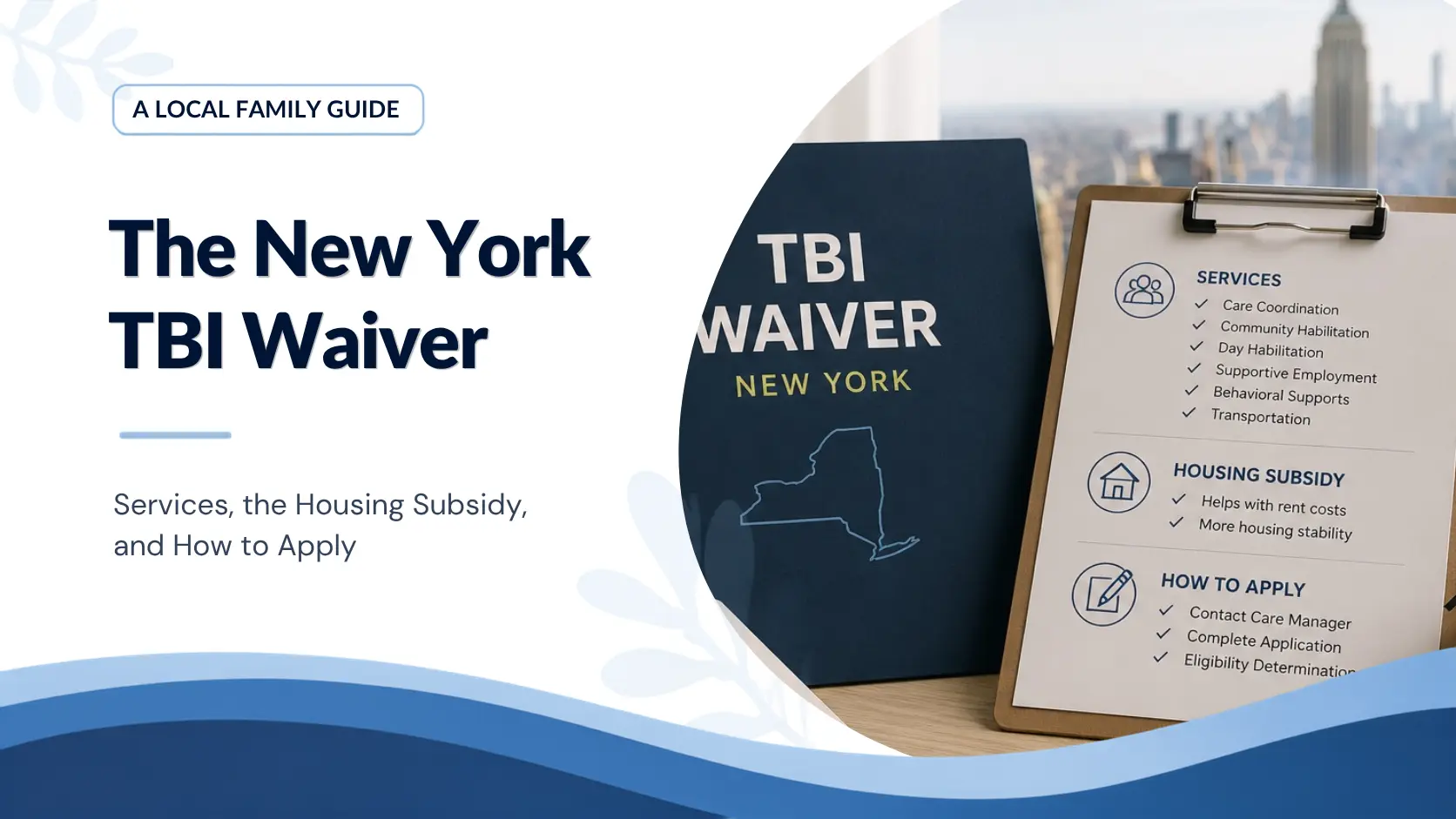
One of the most impactful and underutilized TBI Waiver services β a monthly housing subsidy that helps individuals afford accessible, appropriate housing in the community. The housing subsidy can be the deciding factor in whether community living is actually feasible.
A dedicated coordinator who develops and manages the individual’s service plan, connects them with needed providers, and helps navigate the complexities of the TBI Waiver system. Every enrolled individual has a service coordinator.
Structured programs that support skill development, community participation, and meaningful daily activity β particularly important for individuals whose TBI affects cognitive function, behavior, or social skills.
Planned relief for family caregivers β a professional caregiver steps in so family members can rest, work, or attend to their own needs. Available in-home or at a respite facility.
Funding for home modifications β grab bars, ramps, widened doorways, accessible bathrooms β that make safe community living possible for individuals with physical limitations from their TBI.
TBI Waiver vs. NHTD Waiver: What’s the Difference?
New York administers two closely related Medicaid waivers that often get confused:
- TBI Waiver: Specifically for individuals aged 18β64 with a traumatic brain injury. Focuses on TBI-specific supports including cognitive rehabilitation, behavioral supports, and the TBI housing subsidy.
- NHTD Waiver (Nursing Home Transition and Diversion): Broader program for individuals with physical disabilities or chronic illness of any age who need nursing-facility-level care and want to live in the community. Some individuals who don’t qualify for the TBI Waiver may qualify for NHTD instead.
Both waivers are administered by the New York State Department of Health and share some service categories, but they serve different populations and have different eligibility pathways. Our team can help you determine which program fits your situation. Learn more about our NHTD and TBI support services.
How to Access TBI Home Care in New York City
The TBI Waiver enrollment process involves several steps and typically takes 3β6 months from initial application to approved services. Starting early β and with knowledgeable guidance β significantly speeds the process:
If not already enrolled in Medicaid, this is the first step. Financial eligibility must be established before TBI Waiver enrollment can proceed.
The RRDC for your region manages TBI Waiver applications and conducts the initial screening. In NYC, this is the Regional Resource Development Center for Region 4.
A medical review confirms the TBI diagnosis and level of care need. A functional assessment evaluates daily living limitations and determines what services are needed.
Once approved, a TBI Service Coordinator is assigned to develop an individualized service plan. This plan drives all subsequent service authorizations.
Services are provided by authorized providers β including licensed home care agencies like Advantage Home Care β working within the approved service plan.
Advantage Home Care supports individuals with TBI across New York City’s five boroughs through our NHTD/TBI services. If you’re navigating TBI Waiver enrollment or looking for authorized home care providers, our care coordination team can help guide you through the process. Reach out to start the conversation.