
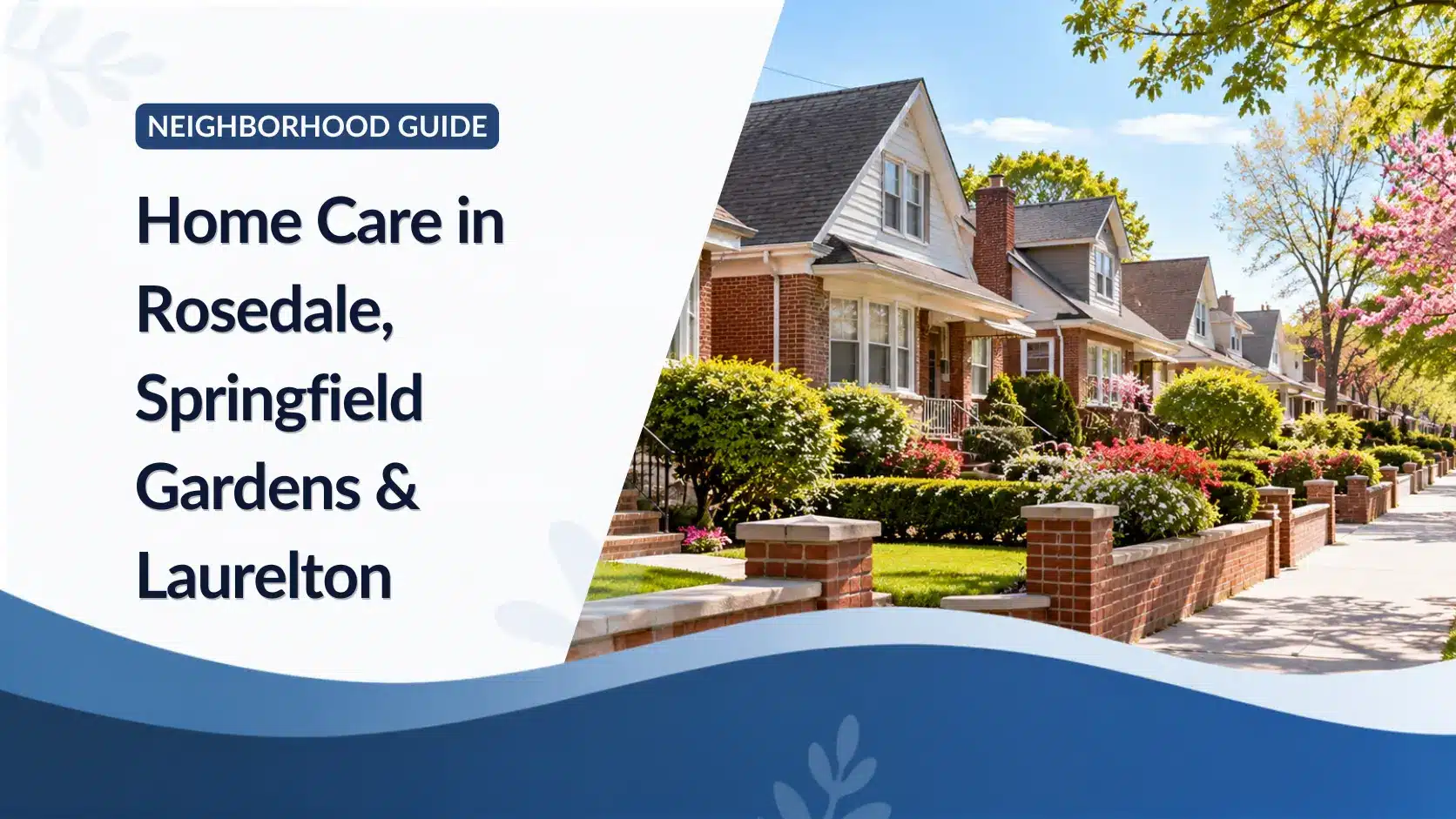
Home Care in Rosedale, Springfield Gardens and Laurelton: A Southeast Queens Family Guide
Quiet blocks of family homes at the edge of the city, longtime homeowners aging in place, and long trips without a subway. Here is how home care works in this corner of Southeast Queens.
Home care in Rosedale, Queens, and nearby Springfield Gardens and Laurelton is available through Medicaid (usually a managed long-term care plan after an independent assessment) or private pay. A licensed agency sends a personal care aide or home health aide for hourly, daily or live-in shifts, ideally matched with aides who live in or near Southeast Queens.
Home Care in Rosedale, Queens and Its Neighbors
Rosedale, Springfield Gardens and Laurelton sit at the southeastern edge of Queens, between Jamaica and the Nassau County line, with JFK Airport to the southwest. These are neighborhoods of one- and two-family homes with driveways, yards and front steps, plus some garden apartments and co-ops. Many residents bought their homes decades ago and raised families here. Today, a lot of those homeowners are in their seventies, eighties and nineties and want to stay in the house they own.
The community is largely Black and Caribbean, with many families from Jamaica, Haiti, Guyana, Trinidad and other islands, alongside African American households that have been here for generations. Families often ask for aides who understand Caribbean food, faith and family customs, and some need an aide who speaks Haitian Creole. A good agency will ask about these preferences at intake. Our guide to home care in your language explains how language matching works.
Common Care Needs in Southeast Queens Homes
Private houses are wonderful for aging in place, but they bring specific challenges that apartment dwellers do not face.
- Stairs everywhere: Front steps, stairs to the bedroom, stairs to the basement laundry. Many families move a parent’s bedroom to the first floor or install a stair lift.
- Bathrooms upstairs: Older homes often have the only full bathroom on the second floor, which makes bathing help especially important.
- Snow and leaves: Homeowners are responsible for their own walks and steps, and a parent who insists on shoveling is at real risk of a fall.
- Driving dependence: With no subway nearby, many older residents drove everywhere. When driving stops, isolation can set in fast.
- Chronic conditions: Diabetes, high blood pressure, heart disease and stroke are common reasons families seek home care in this area.
Before care begins, walk through the house with our home safety checklist for seniors. If your parent has diabetes, our guide to home care for diabetes in NYC explains what an aide can help with day to day.
Mostly one- and two-family houses with steps, plus garden apartments and co-ops.
English is most common; Haitian Creole and Caribbean English are widely spoken.
Buses and LIRR stations rather than subway; many seniors relied on driving.
Hourly visits, daily shifts, live-in care, and help after a hospital stay.
Paying for Care: Medicaid and MLTC
Most long-term home care in this area is paid by Medicaid. For adults who need care for more than 120 days, this usually means enrolling in a managed long-term care (MLTC) plan. The process typically looks like this:
- Medicaid eligibility: Your parent applies for or already has Medicaid. Owning a home does not automatically disqualify someone, but income and other assets matter. Check current rules with HRA or New York Medicaid.
- Independent assessment: The New York Independent Assessor (NYIA) arranges a nurse visit to assess daily needs and a separate appointment with an independent practitioner who issues the medical order.
- Plan enrollment: Your parent chooses an MLTC plan. The plan’s nurse visits and authorizes hours based on how much help is needed with bathing, dressing, toileting, transfers and eating.
- Agency assignment: The plan works with a licensed agency like ours to staff the case.
The whole process often takes several weeks. If your parent needs care urgently, read about the immediate need pathway for Medicaid home care. For a borough-wide view, see our pillar guide to home care in Queens.
Private pay and other options
Families who are not eligible for Medicaid, or who want more hours than Medicaid authorizes, can pay privately. Private pay offers flexibility: a few hours a week, overnight help, or short-term care after surgery. Some veterans may qualify for help through the VA. Long-term care insurance, if your parent has a policy, may also reimburse home care.
This is general information, not legal or financial advice. Medicaid rules and limits change; confirm current details with HRA, New York State Medicaid or a qualified advisor.
How Aide Scheduling and Travel Work Here
Travel is the biggest practical issue in this part of Queens. There is no subway line through Rosedale, Springfield Gardens or Laurelton. Aides typically arrive by bus, including routes along Merrick Boulevard and other main roads, by the Long Island Rail Road (with stations at Locust Manor, Laurelton and Rosedale), or by car. An aide coming from Brooklyn or the Bronx could face a long commute, which makes early-morning or late-evening shifts harder to staff reliably.
That is why we try to match aides who live in Southeast Queens, nearby Jamaica, or the Rockaways. A shorter commute means fewer late arrivals and an aide who is more likely to stay with your parent long-term. Live-in care is also popular here, partly because many homes have a spare bedroom and partly because it avoids daily commuting.
Families in nearby neighborhoods face similar travel issues. Our guide to home care in Jamaica, Richmond Hill and Southeast Queens covers the areas just to the north and west, and home care in the Rockaways covers the peninsula to the south.
Hospitals and Local Resources
Many residents use hospitals in Jamaica, including Jamaica Hospital Medical Center and Queens Hospital Center, and some use hospitals just across the Nassau County line. When your parent is discharged, ask the hospital social worker to coordinate home care before they leave. Our guide to home care after a hospital stay explains how to plan a safe discharge.
For community support, NYC Aging (formerly DFTA) funds older adult centers, case management and home-delivered meals across Queens. Call 311 and ask for older adult services near your parent’s address. Many local churches also run senior fellowship groups and visiting programs, which can be a good complement to home care for a parent who no longer drives.
Related Guides
Home Care in Queens · Jamaica, Richmond Hill and Southeast Queens · Fresh Meadows, Jamaica Estates and Hollis · The Rockaways
Frequently Asked Questions
Do you provide home care in Rosedale, Queens?
Yes. We serve Rosedale, Springfield Gardens, Laurelton and the rest of Southeast Queens, with hourly, daily and live-in care through Medicaid plans or private pay.
Can my parent get Medicaid home care if they own their house?
Owning a home does not automatically disqualify someone, but Medicaid looks at income and assets under specific rules. Check current rules with HRA or New York Medicaid, or speak with an application service or elder law attorney.
Can I get a Haitian Creole speaking aide in Southeast Queens?
Ask the agency at intake. We try to match language and cultural preferences when aides are available, and we will tell you honestly if a match will take time.
How do aides get to Rosedale and Laurelton without a subway?
Aides use local buses, the Long Island Rail Road, or drive. Agencies try to match aides who live nearby to keep commutes short and shifts reliable.
Is live-in home care available in Springfield Gardens?
Yes. Live-in care is common in Southeast Queens, where many homes have space for an aide to sleep. The aide must have a place to sleep and breaks during the day.
How long does it take to start Medicaid home care in Queens?
Often several weeks, because of the assessment and plan enrollment steps. If care is urgent, ask about the immediate need pathway or start with private pay while Medicaid is pending.
Care for Your Parent in Southeast Queens
Call us to talk through Medicaid, private pay and aide matching for Rosedale, Springfield Gardens and Laurelton.
Call 718-375-2707Start Home Care