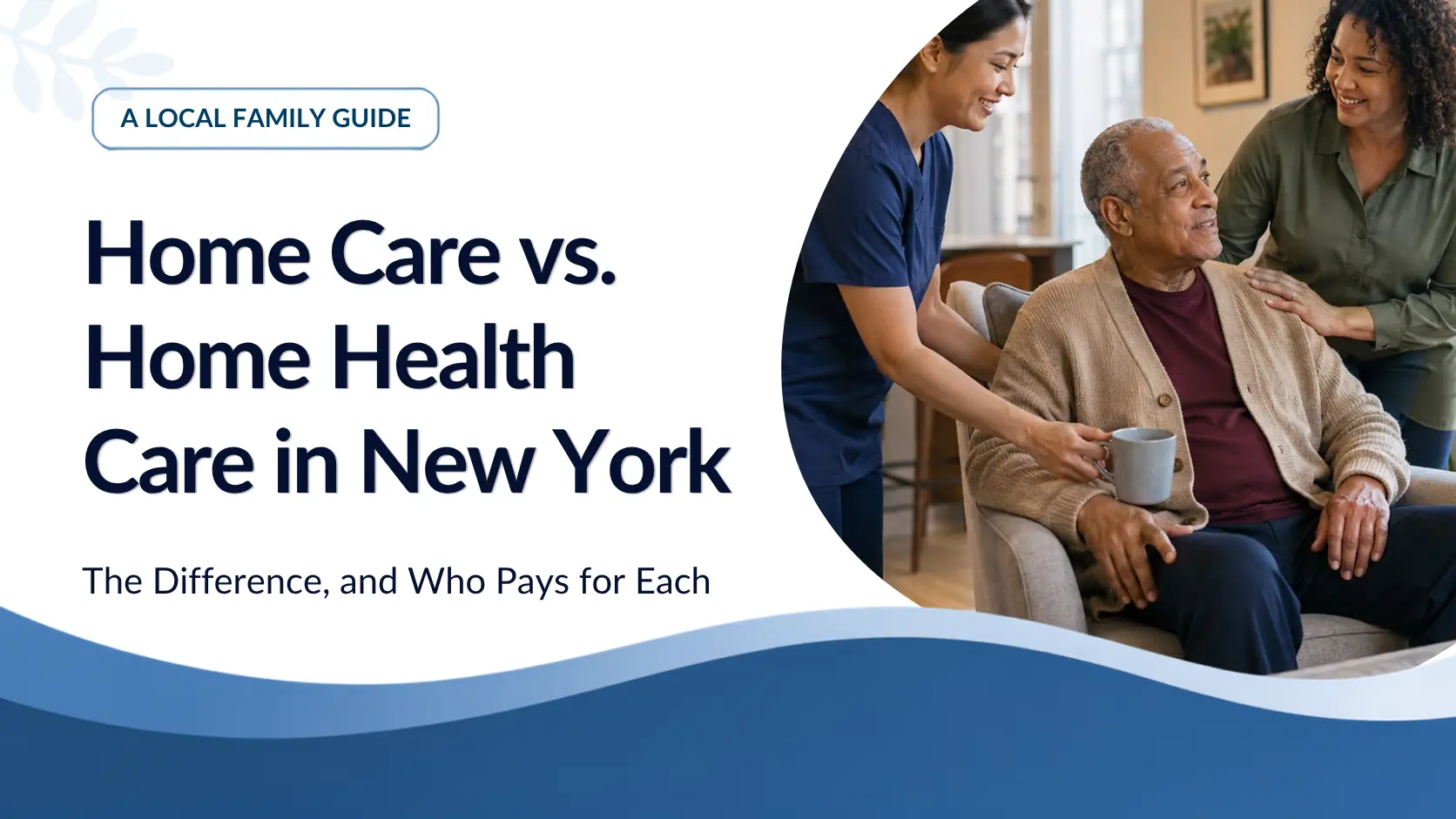
Home Care vs. Home Health Care in New York: The Difference, and Who Pays for Each
Two nearly identical names, two different services, two different payers. Getting this straight saves families months of confusion.
Home care is ongoing, non-medical daily help — an aide for bathing, dressing, meals and supervision — paid long-term by Medicaid or privately. Home health care is short-term medical care at home — nurses and therapists after an illness or hospital stay — paid by Medicare or insurance for a limited episode. Most families eventually use both, in sequence. Call 718-375-2707 if you’re not sure which you need.
Side by Side
Home care (custodial)
Who comes: PCAs and HHAs.
What they do: personal care, meals, housekeeping, errands, supervision.
How long: indefinitely — months and years.
Who pays: Medicaid (via MLTC) or private pay.
Home health care (skilled)
Who comes: nurses, physical/occupational/speech therapists.
What they do: wound care, injections, rehab exercises, monitoring.
How long: a limited episode while there’s a skilled need.
Who pays: Medicare or health insurance, with a doctor’s order.
The Confusion, Untangled
- The aide titles overlap — the services don’t. An HHA working under a Medicare home health episode is doing short-term skilled-adjacent visits; an HHA on Medicaid home care hours is your loved one’s daily support. Same certification, different program. See HHA vs PCA and what a CHHA is.
- “Medicare covers home care” is the classic trap. It covers home health episodes; it does not fund the ongoing aide most families are actually looking for. Long-term hours run through Medicaid.
- The agencies are licensed differently too — LHCSAs provide home care; CHHAs (certified agencies) provide Medicare home health. Advantage Home Care is a licensed home care agency: the daily-support side.
- The handoff moment: when the Medicare episode ends and the therapist stops coming, the need for daily help usually hasn’t ended. That is the week to have home care arranged — see after a hospital stay.
Quick Answers
What is the difference between home care and home health care?
Home care is ongoing non-medical daily help from aides; home health care is short-term medical treatment at home from nurses and therapists after an illness or hospitalization.
Who pays for home health care in New York?
Medicare or health insurance, for a limited episode with a doctor’s order. When the skilled need ends, so does the coverage.
Who pays for home care in New York?
Medicaid pays for ongoing aide hours for eligible New Yorkers through MLTC plans; families who don’t qualify (or can’t wait) pay privately.
Can you have home care and home health care at the same time?
Yes — commonly right after a hospital stay: Medicare’s nurses and therapists visit while a home care aide covers the daily hours in between.
How do I apply for home health care?
Through the doctor or hospital discharge planner — it requires a physician’s order. For home care, you apply through Medicaid/an MLTC plan, or simply call an agency for private-pay care.
What does each cost?
Home health episodes are typically covered in full by Medicare. Home care is billed hourly if private — see home care costs in NYC — and free to eligible Medicaid recipients.
Home Care vs Home Health Care: Quick Answers
Is home health care covered by Medicare and home care by Medicaid?
Broadly yes: “home health care” (skilled nursing and therapy from a Certified Home Health Agency) is a Medicare benefit after illness or hospitalization; “home care” (daily help from aides through a licensed agency) is paid by Medicaid MLTC or privately. Many families use both in sequence.
Which do I need after a hospital stay?
Usually both: the CHHA nurse and therapists for the first weeks, and an aide for daily help that continues afterwards. Arrange the aide before discharge; see coming home from rehab: what to set up before discharge day.
Which One Does Your Family Need?
Describe the situation in one phone call and a coordinator will tell you: home care, home health, or both — and how to get each started.