
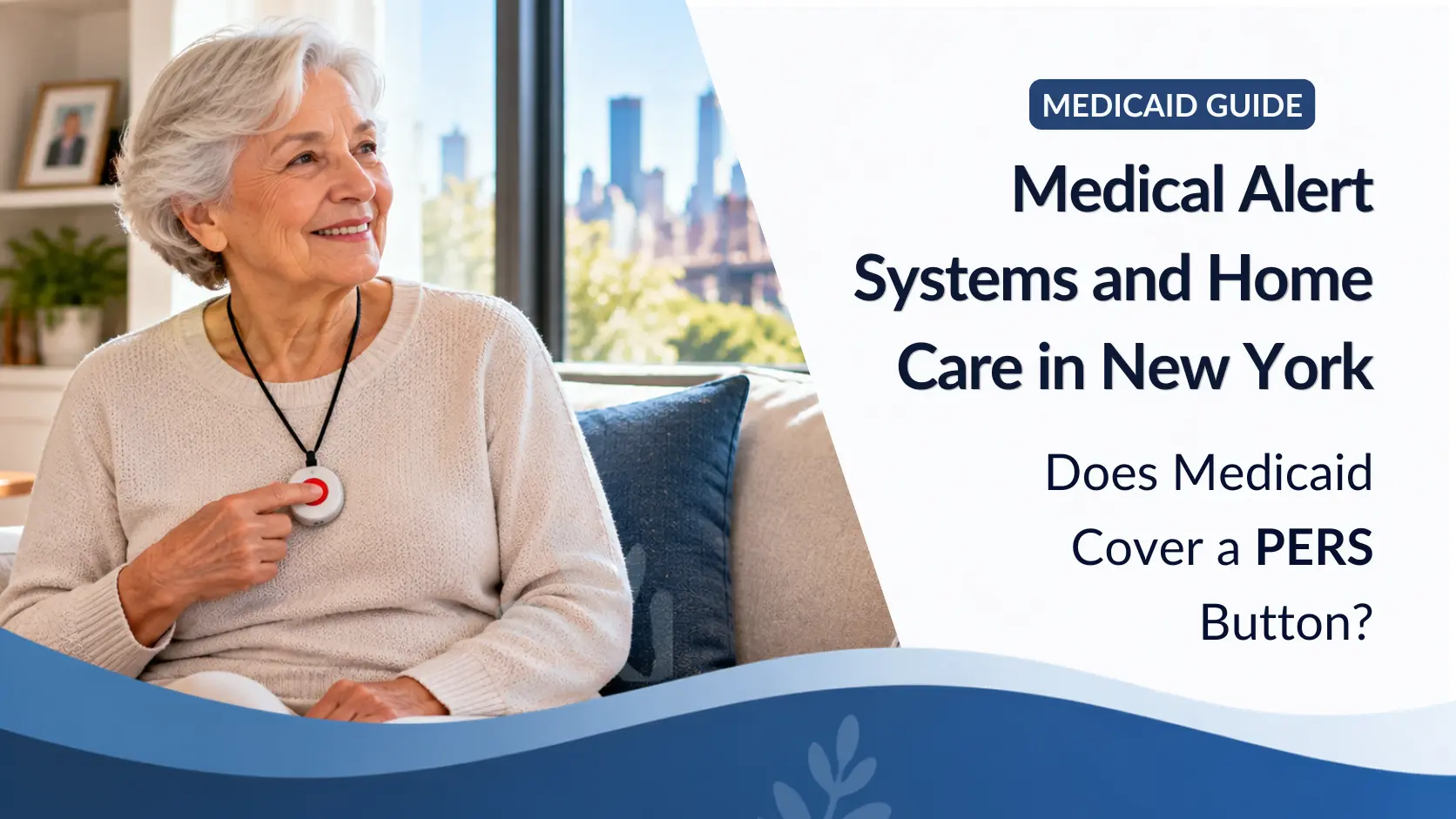
Medical Alert Systems and Home Care in New York: Does Medicaid Cover a PERS Button?
A medical alert button can cover the hours when no aide or family member is in the apartment. Here is how New York Medicaid handles these devices and how they fit alongside home care.
Yes, New York Medicaid can cover a medical alert system, called a Personal Emergency Response System (PERS), for members who are at risk and alone for part of the day. In NYC it is usually arranged through the person’s MLTC plan or, for fee-for-service Medicaid, through HRA. Medicare does not cover it. A PERS button adds to home care but does not replace an aide.
What a medical alert system is under New York Medicaid
A medical alert system is a wearable button, usually on a pendant or wristband, that connects the user to a monitoring center 24 hours a day. When pressed, a trained operator speaks to the person through a base unit or the device itself and calls a family member, a neighbor or 911, depending on the situation.
New York Medicaid calls this a Personal Emergency Response System, or PERS. It is a recognized Medicaid service, which surprises many families who assume it is only something you buy privately. For people searching for a medical alert system through Medicaid in New York, the important point is that it is linked to a person’s care needs, not handed out to everyone automatically.
Who usually qualifies for a Medicaid PERS
Medicaid generally covers PERS for members who:
- Have Medicaid and are receiving, or eligible for, home care services such as personal care or home health.
- Live alone, or are alone for significant parts of the day or night with no one regularly available to help.
- Have a medical condition or functional limitation that puts them at risk, such as a history of falls, heart problems, dizziness, or difficulty getting up without help.
- Are able to understand and use the button, which matters for people with memory loss.
The exact criteria are applied by the plan or HRA during the assessment and care planning process, so describe your parent’s situation honestly and specifically.
A recent fall, or several near falls, is one of the strongest reasons to request PERS.
The button covers the hours when no aide or relative is in the home.
Heart conditions, blood thinners, dizziness or diabetes can make fast help critical.
The person must be able to remember and press the button when needed.
How to request a PERS in NYC
How you ask depends on how your parent receives Medicaid home care.
If your parent is in an MLTC plan
PERS is a covered benefit in Managed Long Term Care plans. Call the plan’s care manager and ask for a PERS evaluation. Explain when your parent is alone, any recent falls, and any conditions that worry you. The plan will usually arrange the device through a vendor it contracts with. If you are still choosing a plan, our guide on how to choose an MLTC plan covers what to ask about extras like this.
If your parent has fee-for-service Medicaid
Contact the HRA Home Care Services Program, or the case worker handling your parent’s home care, and ask about PERS. A doctor’s note describing the medical risk can help.
If your parent is not on Medicaid yet
Many families buy a system privately while the Medicaid application is in progress. Once coverage starts, you can ask the plan whether to switch to their vendor.
For a wider look at what Medicaid will pay for in the home, see our guides to what home care services Medicaid covers and Medicaid coverage for hospital beds, wheelchairs and grab bars.
What Medicare covers
Original Medicare does not cover medical alert systems. Some Medicare Advantage plans offer them as an extra benefit, so if your parent has an Advantage plan, check the plan’s benefit summary or call member services. For people who have both Medicare and Medicaid, the Medicaid side is usually the route to PERS.
Paying privately
Private medical alert systems are sold with a monthly monitoring fee, and prices vary by company and features. When comparing, ask about:
- Whether the device works only inside the apartment or also outside, with cellular service and GPS.
- Automatic fall detection, which can call for help if the person cannot press the button. It is helpful but not perfect.
- Battery life and how the device warns that it needs charging.
- Whether it is waterproof and safe to wear in the shower, where many falls happen.
- Operators who speak your parent’s language.
- Contract length, equipment fees and cancellation terms.
PERS and a home care aide: how they work together
A medical alert button and an aide do different jobs. The aide prevents problems: helping with bathing, walking, transfers, meals and medication reminders, and noticing when something changes. The button is a safety net for the hours when no one is there.
A common pattern in NYC is an aide in the morning and early afternoon, family checking in by phone in the evening, and a PERS button overnight. Our guide on home care for a parent living alone walks through how families build that kind of schedule.
A few practical tips:
- Ask the aide to check that the button is being worn and the base unit is plugged in.
- Do a monthly test call so your parent remembers how it works.
- Put the emergency contact list with the device company in the order you actually want them called.
- Make sure EMS can get in. A lockbox or a neighbor with a key avoids a broken door.
- If your parent takes blood thinners, a fall can be serious even without visible injury. See our guide on blood thinners and fall safety.
Setting up the device so it actually gets used
The best system is the one your parent will wear. Many older adults take the pendant off because it feels like a sign of frailty, or leave it on the nightstand at night, which is exactly when many falls happen on the way to the bathroom. Let your parent choose the style, a wristband or a pendant, and explain it as a way to stay independent rather than a sign that something is wrong. Put the base unit where its speaker can be heard from the bedroom and bathroom, and keep the device on its charger at the same time every day so it becomes routine.
When a button is not enough
A PERS only works if the person presses it, and many people who fall do not, out of embarrassment, confusion or because they think they can get up alone. If your parent has fallen more than once, has memory loss, or has been found on the floor, it is a sign they may need more hours of hands-on care. Our fall prevention guide and home care after a fall explain how to reduce risk and when to ask for a reassessment.
Related Guides
Medicaid Equipment Coverage · Parent Living Alone · Home Safety Checklist
Frequently Asked Questions
Does Medicaid pay for a medical alert system in New York?
Yes, New York Medicaid can cover a Personal Emergency Response System for members who are at risk and alone for parts of the day. It is arranged through the MLTC plan or HRA.
Is a medical alert button covered by MLTC plans?
Yes, PERS is a covered service in New York MLTC plans. Ask your parent’s care manager for an evaluation.
Does Medicare cover medical alert systems?
Original Medicare does not. Some Medicare Advantage plans include one as an extra benefit, so check the plan’s benefits.
Can someone with dementia use a medical alert system?
It depends on whether they can remember to press it. For moderate or advanced dementia, more supervision from an aide or family is usually needed.
Does a medical alert system replace a home health aide?
No. It only summons help after something happens. An aide helps prevent falls and supports daily care.
Can I get a medical alert system before Medicaid is approved?
Yes, many families buy one privately in the meantime and ask the plan about switching once coverage begins.
Add Hands-On Help to the Safety Net
If your parent is alone more than feels safe, we can help you arrange home care alongside a medical alert system.
Call 718-375-2707Start Home Care