
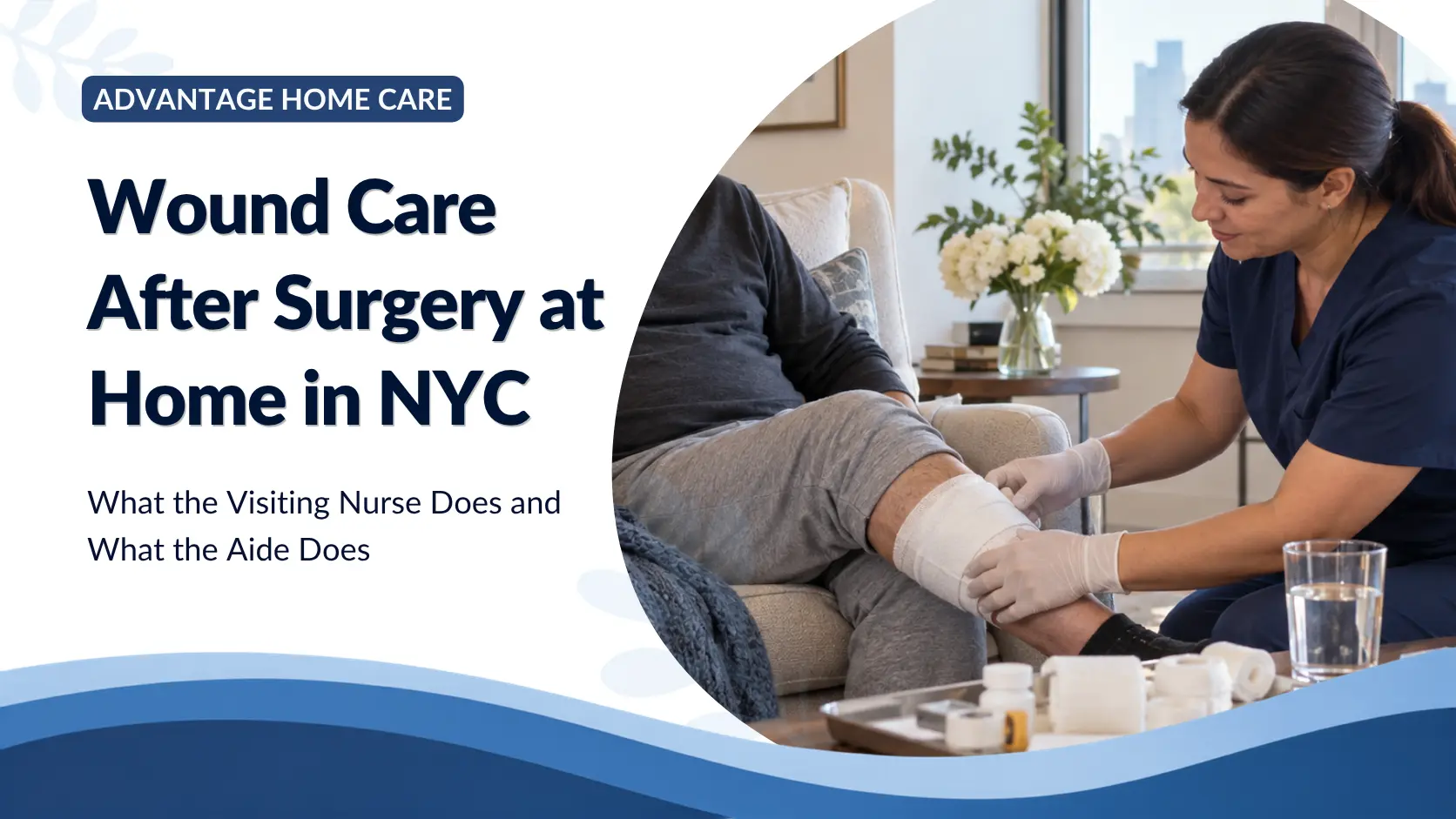
Wound Care After Surgery at Home in NYC: What the Visiting Nurse Does and What the Aide Does
For families bringing someone home after surgery with an incision, a drain or a pressure wound, trying to work out who does what in the first weeks.
Two different people usually share the job. A visiting nurse from a Certified Home Health Agency (ordered by the surgeon, paid by Medicare or insurance) handles the wound itself: dressing changes that require a licensed professional, drain care, infection assessment and teaching. A home care aide (Medicaid MLTC or private pay, from a licensed agency such as Advantage Home Care) handles everything around it: bathing without soaking the wound, nutrition for healing, mobility and repositioning, medication reminders and daily observation between nurse visits. Call 718-375-2707 and we will coordinate both.
Why Post-Surgical Recovery Needs Two Kinds of Help
Surgeons discharge patients faster than they used to, and “home with home health” often means a nurse visit two or three times a week. The other 160 hours a week are the family’s, and that is where infections, falls and readmissions happen: a shower that soaks the dressing, a missed antibiotic, a person too weak to get to the bathroom, a pressure sore starting on the heel of someone who cannot turn. Pairing the nurse’s skilled visits with daily aide hours is how NYC families get through the first month safely, especially after hip and knee replacements, abdominal surgery, cardiac surgery and amputations.
Who Does What
Sterile dressing changes, drain and staple care, wound measurement, infection assessment, coordination with the surgeon, teaching the family or aide simple dressing care where appropriate.
Bathing that keeps the wound dry as instructed, skin care, clean clothing and bedding, help with toileting and incontinence, which matters most for wounds near the hips or sacrum.
Safe transfers, walking within surgical precautions, repositioning every two hours for people who cannot turn, and preventing the falls that reopen incisions.
Protein-rich meals and fluids that healing depends on, and prompting a person who has no appetite to eat.
Noticing redness, swelling, odour, drainage, fever or new pain between nurse visits and reporting it the same day per the plan.
Reminders for antibiotics and pain medication schedules, and escorts to the surgical follow-up.
Does Medicaid Cover It?
Medicare covers the nurse visits, not daily aide hours. Daily help in the first weeks is private pay or, for people already on Medicaid, MLTC hours that can be increased after surgery with a reassessment. Under current New York rules, most adults must need help with three or more activities of daily living (two with a dementia diagnosis) to qualify for Medicaid personal care; the assessment measures need, not diagnosis. See how many hours of Medicaid home care you can get in NYC and what Medicare does and does not pay for.
Setting Up the First Weeks
- Before discharge: tell the planner you want an aide from day one and give them the agency’s details; see what to set up before discharge day.
- Ask the nurse for written wound instructions the aide can follow: what to keep dry, what to report, what the normal healing should look like.
- Equipment: raised toilet seat, shower chair with hand-held sprayer, and a hospital bed or pressure-relieving mattress when the person cannot turn; see Medicaid equipment coverage in New York.
- A simple log: temperature once a day, wound observations, medications given, meals eaten. The nurse and surgeon will want it.
- If Medicaid hours were in place before the surgery, request a reassessment for the recovery period; see how Medicaid home care hours are decided.
How Advantage Home Care Helps
We staff aides experienced with post-surgical recovery across the five boroughs, coordinate with the CHHA nurse and the discharge planner, and can start private-pay hours within 24–48 hours of a call from the hospital. For people on Medicaid we request the recovery-period reassessment. Related: home care after hip replacement and home care vs home health care: the difference.
Frequently Asked Questions
Can a home health aide change a surgical dressing?
Only simple, non-sterile dressing tasks that the visiting nurse has delegated and taught under the plan of care. Sterile changes, staples and drains are nursing tasks.
Does Medicare pay for an aide after surgery?
Only for limited aide visits tied to the skilled nursing episode. Daily help is private pay or Medicaid MLTC.
How long will we need an aide after surgery?
Commonly two to six weeks for orthopedic and abdominal surgery, longer for amputations, cardiac surgery or when the person was frail before. Many families keep fewer hours afterwards.
Who do I call if the wound looks infected?
The visiting nurse or surgeon’s office the same day, or 911 for fever with confusion, spreading redness or heavy bleeding. The aide’s job is to notice and call; put the numbers on the fridge.
Can the aide help prevent bedsores?
Yes: repositioning on schedule, keeping skin clean and dry, checking heels and sacrum daily, and encouraging fluids and protein. Pressure-relieving mattresses are often Medicaid-covered.
Can care start the day my father comes home?
Yes, with a call before discharge. Private-pay aides can be there for arrival; Medicaid hours can restart or increase once the plan is notified.
Coming Home After Surgery? Call Before Discharge
We will explain what Medicaid can cover, help with the application, and match an aide who understands the routine.
Call 718-375-2707Start Home Care