
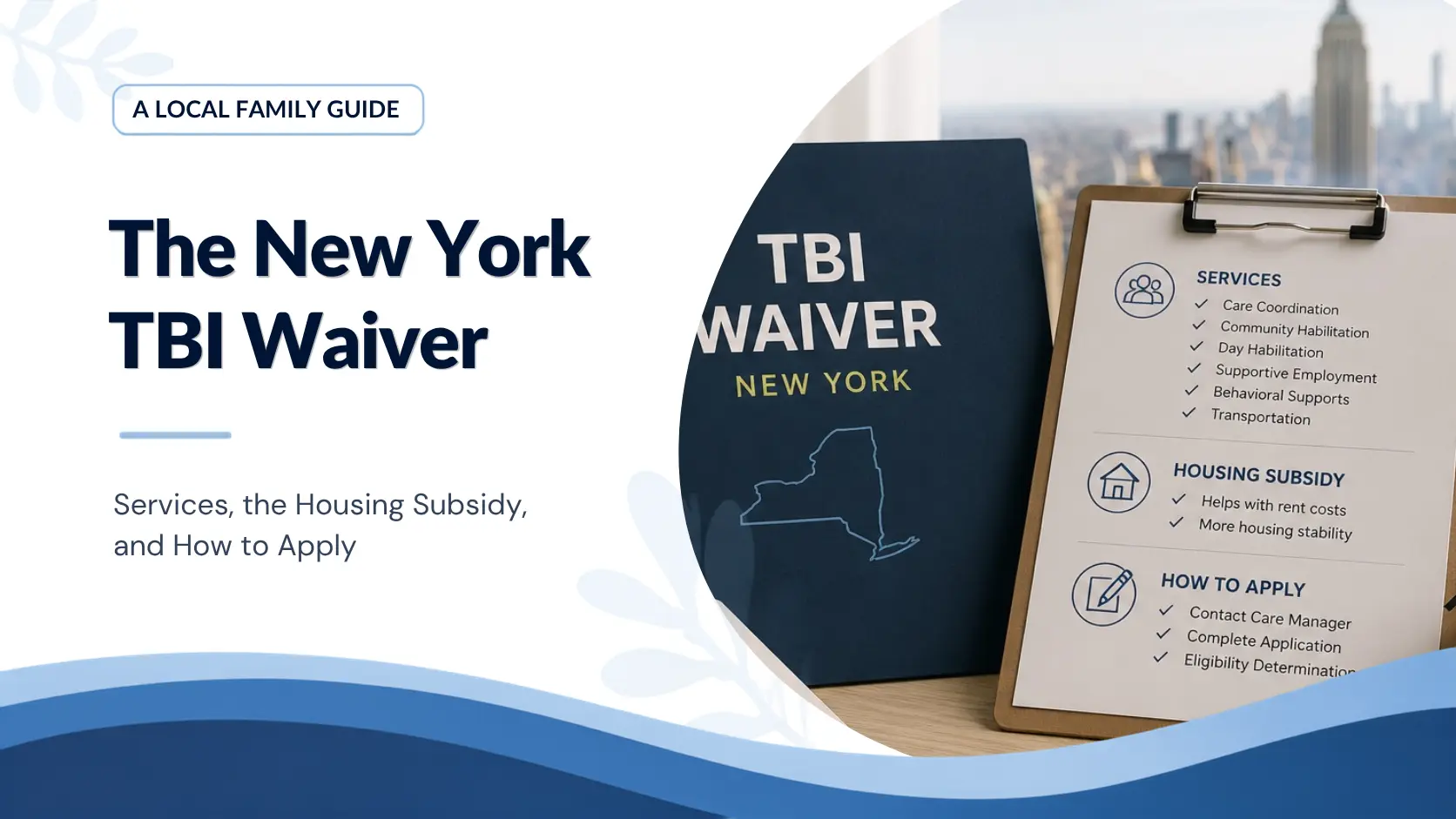
The New York TBI Waiver: Services, the Housing Subsidy, and How to Apply
How New York’s Medicaid Traumatic Brain Injury waiver works — the services it funds, who qualifies, how the TBI housing subsidy is calculated, and the step-by-step application path.
- The TBI waiver is a Medicaid HCBS program that keeps brain-injury survivors living in the community.
- It funds service coordination, skills training, day programs, behavioural support and home modifications.
- The TBI/NHTD housing subsidy pays rent above roughly one third of the participant’s monthly income, up to fair market rent.
- Applications start with your Regional Resource Development Center (RRDC).
- Waiver services can be combined with regular Medicaid home care hours.
After a brain injury, the hardest part is often not the medical care — it is everything around it. Where will they live? Who helps during the day? How does any of it get paid for? New York has a Medicaid program built specifically for this: the Traumatic Brain Injury (TBI) waiver, administered by the New York State Department of Health.
The TBI waiver is a Home and Community Based Services (HCBS) waiver. Its purpose is simple: keep people with brain injuries living in the community instead of a nursing facility, by funding the services — and in some cases the housing — that make community living possible.
What the TBI Waiver Covers
Waiver services go well beyond a home health aide. Depending on the approved service plan, participants can receive:
A coordinator who builds the service plan, arranges providers and keeps the plan current.
Rebuilding daily-living, budgeting, cooking, transport and organisational skills after injury.
Community-based day programming focused on cognition, socialisation and re-entry.
Behavioural support for the impulsivity, agitation or disinhibition that can follow a brain injury.
Ramps, grab bars, bathroom modifications and assistive technology to make a home workable.
Rental assistance for eligible participants who cannot afford community housing on their own.
Waiver services sit alongside regular Medicaid, so a participant can also receive personal care or home health aide hours. If you want the care side rather than the program side, see our guides to TBI home care in New York and support after a brain injury in NYC.
The TBI Housing Subsidy: How It Actually Works
This is the part families most often search for and least often find explained. The TBI/NHTD housing program provides a monthly rental subsidy to waiver participants who cannot otherwise afford community housing.
- Who it is for. People already enrolled in the TBI or NHTD waiver, with an approved service plan and active waiver services.
- The participant contribution. Participants contribute roughly one third of their monthly income toward rent; the program covers the remainder, up to fair market rent limits for the area.
- What else it can cover. Security deposits, moving expenses, and background or credit check fees as one-time costs, plus limited utility assistance in defined circumstances.
- What it does not cover. Home ownership costs and mortgages, and rent above fair market limits.
- Resource of last resort. The state treats the subsidy as a last resort — other housing resources are expected to be pursued first.
Approval runs through your Service Coordinator and the Regional Resource Development Center (RRDC), with final sign-off from the Department of Health. Because both the rules and the payment administration have changed over the years, always confirm current requirements with your RRDC or Service Coordinator before making housing decisions.
Who Qualifies for the TBI Waiver
Broadly, an applicant must:
- Have a diagnosed traumatic brain injury or a related acquired brain injury recognised by the program;
- Be Medicaid eligible;
- Be assessed as requiring a nursing home level of care — but be able to live safely in the community with waiver services;
- Be within the program’s age range and able to participate in developing a service plan;
- Live in, or be moving to, an approved community setting.
TBI waiver or NHTD waiver? They are siblings. The NHTD (Nursing Home Transition and Diversion) waiver serves people with physical disabilities and seniors who need a nursing home level of care; the TBI waiver serves people with brain injuries. They share the housing program and much of the service menu. Our overview of NHTD and TBI support services compares them, and home care for adults with disabilities maps all the programs together.
How to Apply for the TBI Waiver
- 1. Contact your Regional Resource Development Center. Every region of New York has an RRDC; it is the front door to both waivers. A hospital social worker, discharge planner or home care agency can point you to yours.
- 2. Establish Medicaid. If Medicaid is not in place, start there — see how to qualify for Medicaid home care, and pooled income trusts if income is over the limit.
- 3. Intake and eligibility review. The RRDC confirms diagnosis, level of care and Medicaid status.
- 4. Choose a Service Coordinator. You pick from approved providers. This person matters more than any other choice you make in the process.
- 5. Build the Service Plan. The plan lists every service, provider and frequency — including a housing subsidy request if one applies.
- 6. Approval and start. Once the Department of Health approves the plan, services begin and are reviewed on an ongoing basis.
Expect the process to take time, and expect paperwork. Families who move fastest are usually the ones who get Medicaid sorted early and who ask their coordinator for a written checklist at the start.
Where a Home Care Agency Fits
Waiver services and home care are separate but complementary. Advantage Home Care supports brain-injury clients across the five boroughs with personal care and home health aide hours, overnight and live-in coverage, and care coordination and family support that keeps the medical, waiver and family sides talking to each other. If you are mid-application and stuck, that coordination is often the thing that unblocks it.
Frequently Asked Questions
What is the TBI waiver in New York?
It is a Medicaid Home and Community Based Services waiver run by the New York State Department of Health for people with traumatic brain injuries who would otherwise need nursing home care. It funds services such as service coordination, independent living skills training, structured day programs, behavioural support, home modifications and a housing subsidy.
Does the TBI waiver pay rent?
For eligible participants, yes — through the TBI/NHTD housing program. Participants generally contribute about one third of their monthly income toward rent and the program covers the balance up to fair market rent limits. It also covers certain one-time costs like security deposits and moving expenses, and is treated as a resource of last resort.
How do I apply for the TBI waiver?
Contact the Regional Resource Development Center (RRDC) for your area. The RRDC handles intake, confirms Medicaid and level-of-care eligibility, and connects you with a Service Coordinator who builds your service plan for state approval.
What is the difference between the TBI waiver and the NHTD waiver?
Both keep people out of nursing homes and share the housing program and much of the service menu. The TBI waiver serves people with brain injuries; the NHTD waiver serves seniors and people with physical disabilities.
Can I get a home health aide and the TBI waiver at the same time?
Yes. Waiver services are in addition to regular Medicaid coverage, so participants can receive personal care or home health aide hours alongside waiver services.
How long does TBI waiver approval take?
It varies by region and by how quickly Medicaid and documentation come together — plan for months rather than weeks. Getting Medicaid in place first is the single biggest accelerator.
TBI Waiver Program in NY: Quick Answers
What is the TBI waiver program in NY?
New York’s Medicaid Traumatic Brain Injury waiver funds community-based services for adults 18–64 (at enrollment) with a documented TBI or related brain injury who need a nursing-facility level of care but want to live at home. It runs through Regional Resource Development Centers (RRDCs) and a service coordinator, alongside regular Medicaid.
What TBI waiver services are covered?
Service coordination, home and community support services, independent living skills training, structured day programs, community integration counseling, positive behavioral interventions, environmental modifications, assistive technology, transportation, respite, substance abuse programs and the housing subsidy described above, all written into an individual service plan.
What is the difference between the TBI housing program and the housing subsidy?
They are the same benefit: the waiver’s housing subsidy helps pay rent and utilities so a participant can live in the community. It is requested through the service coordinator and RRDC and is separate from Section 8 or NYCHA. For day-to-day aide support during and after the application, see TBI home care in NYC or call 718-375-2707.
Navigating the TBI Waiver? We Can Help.
Our care coordinators work with brain-injury clients and families across all five boroughs — from Medicaid setup to day-to-day home care.
Call 718-375-2707 Request Care Online