- ALS progressively weakens the muscles that control movement, speech, swallowing, and breathing β but with the right support, most people can remain safely at home.
- Care grows over time, from a few hours a day early on to around-the-clock support in later stages.
- Medicare covers only limited skilled visits; long-hours daily care in New York is usually funded through Medicaid or, for those who served, VA benefits.
An ALS diagnosis changes life for the whole family. Amyotrophic lateral sclerosis progressively weakens the muscles that control movement, speech, swallowing, and eventually breathing β but it does not have to mean leaving home. With the right in-home support, most people with ALS can remain safely and comfortably in the place they know best.
The short answer
ALS home care means trained aides coming to the home to help with the things ALS takes away first — transfers, bathing, dressing, eating and communication — and adding hours as the disease progresses. In New York, Medicaid covers ALS home care hours for eligible residents at no out-of-pocket cost, and private pay can start within 24 to 48 hours. Call 718-375-2707.
What Does ALS Home Care Include?
ALS affects everyone differently, so good home care is built around the person, not a checklist. Most families rely on caregivers for some combination of the following:
π
Personal CareBathing, dressing, grooming, and toileting as hand and arm strength decline.
π
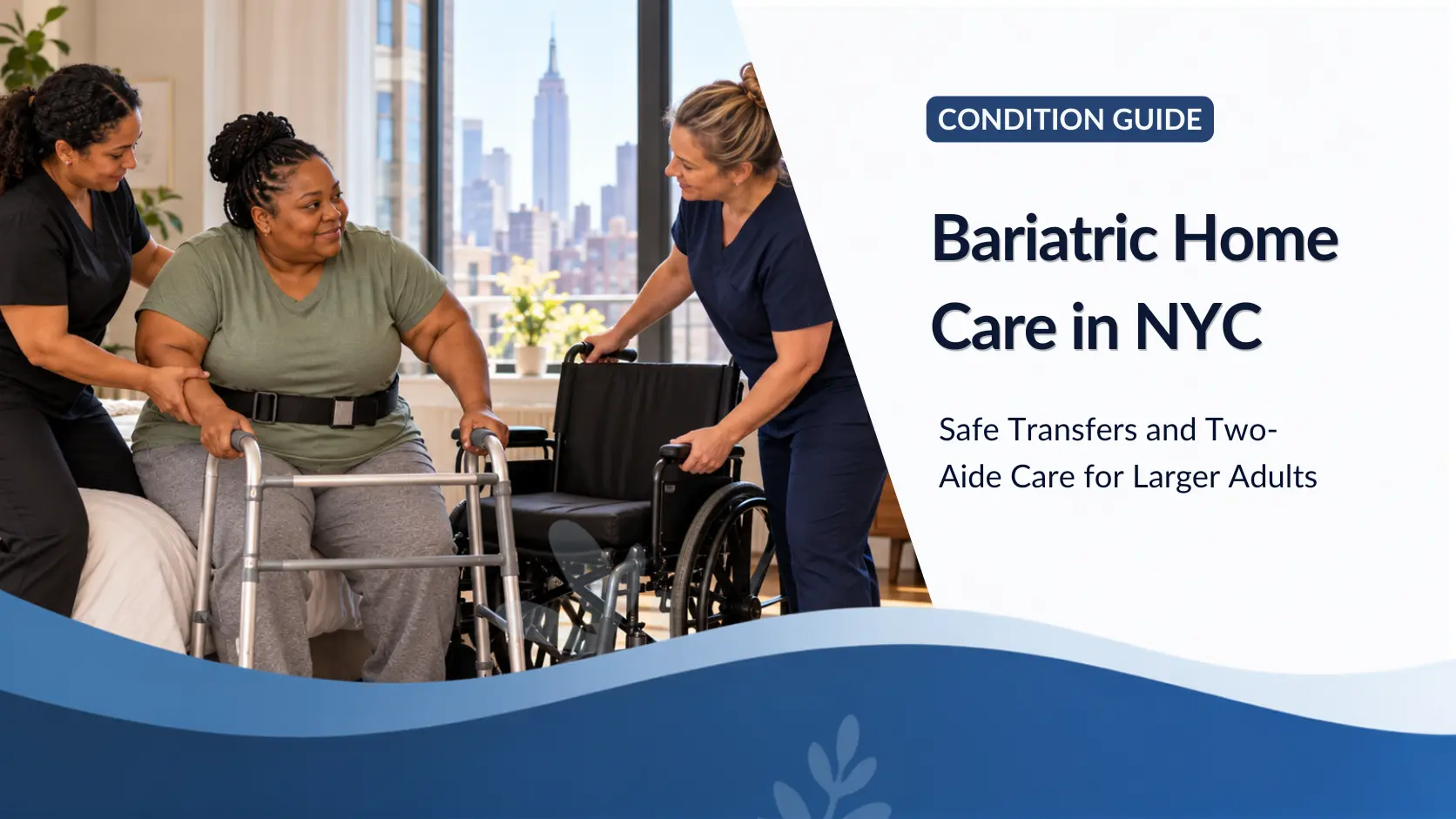
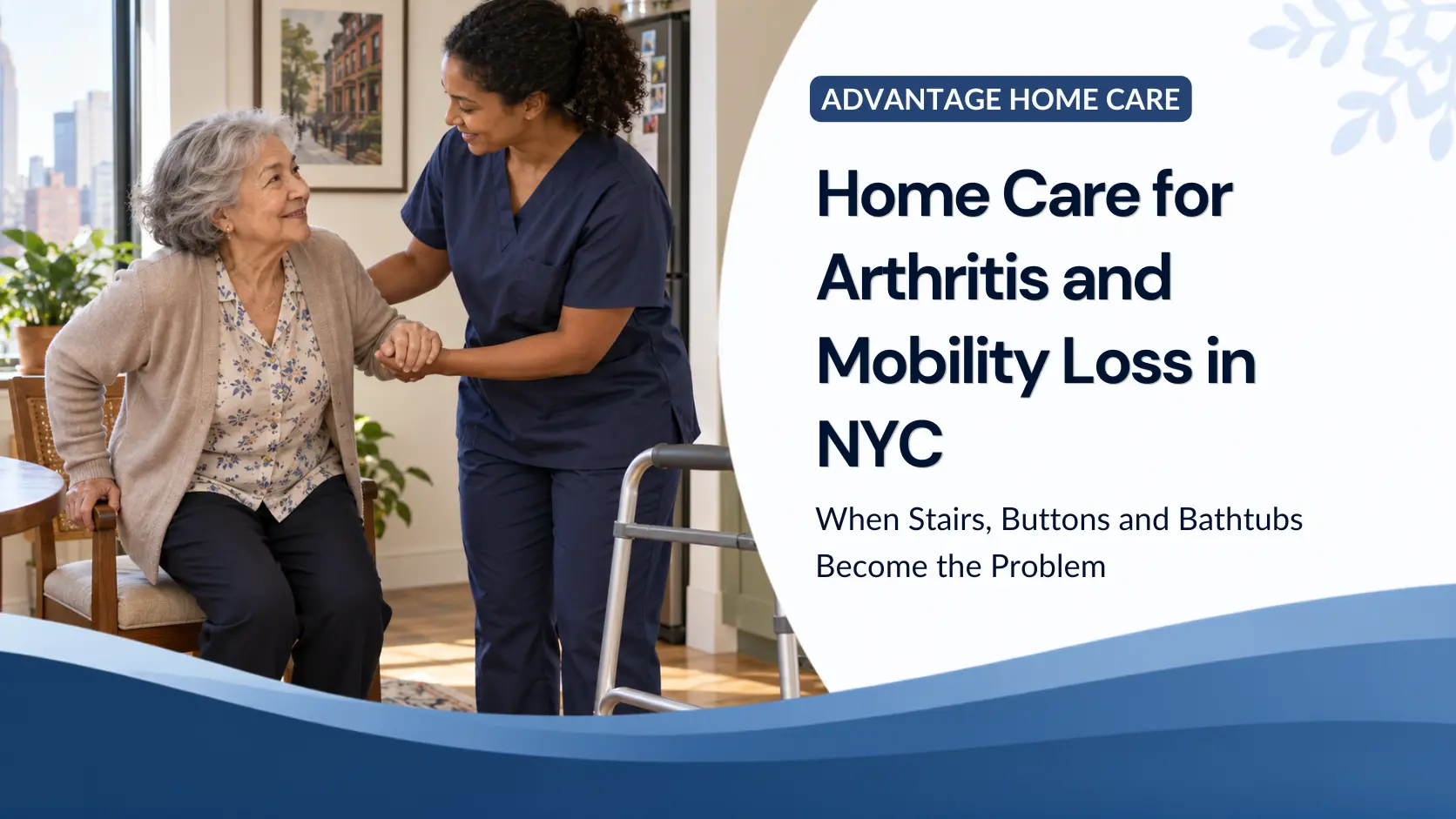
Safe Transfers & MobilityHelp moving between bed, wheelchair, shower chair, and car β one of the biggest fall-risk moments of the day.
π½οΈ
Meals & FeedingMeal prep and feeding assistance, including modified-texture meals when swallowing becomes difficult.
ποΈ
Positioning & Skin CareRegular repositioning to prevent pressure injuries once mobility is limited.
π¬
Communication SupportPatience and familiarity with speech changes, letter boards, and speech-generating devices.
π
Household Help & CompanionshipLight housekeeping, errands, and presence β which also gives family caregivers a chance to rest.
At Advantage Home Care, this support is provided by trained personal care aides and home health aides, with schedules that can grow from a few hours a day to around-the-clock care.
ALS Home Health Care vs. Personal Home Care
Families searching for “ALS home health care” often mean two different things, and the distinction matters for coverage. Home health care is skilled, medically oriented care β visits from nurses and physical, occupational, or speech therapists, usually ordered by a doctor for a limited number of hours per week, and typically covered by Medicare on an intermittent basis. Personal home care is the long-hours, day-in-day-out support described above β what most ALS families actually need as the disease progresses, and which is generally not covered by Medicare beyond limited visits. In New York it is most often covered through Medicaid. Most families end up combining both.
How Care Needs Change by Stage
Early stage
Support usually starts small: help with fine-motor tasks like buttons and meal prep, driving to appointments, and safety supervision as walking becomes less steady. A few hours of care a day is often enough, and it establishes a relationship with a caregiver before needs grow.
Middle stage
As weakness spreads, most people need hands-on help with transfers, bathing, dressing, and eating. Fall prevention becomes critical. Care hours typically expand, and family caregivers β often a spouse β begin to need regular relief to avoid burnout.
Late stage
With very limited mobility and, in many cases, feeding tubes and breathing support, care becomes continuous. Around-the-clock or split-shift aide coverage keeps the person safe and comfortable at home, working alongside the hospice or palliative team when the family chooses that path.
How Families in New York Pay for ALS Home Care
Medicare
ALS is one of the few conditions with fast-tracked federal benefits: the usual 24-month waiting period for Medicare is waived, so coverage can begin as soon as Social Security Disability benefits do. Medicare covers doctors, equipment, and intermittent skilled home health visits β but not long-hours daily aide care.
Medicaid β the main source of long-hours care
New York Medicaid covers ongoing personal care at home for eligible members, typically through a managed long-term care (MLTC) plan that authorizes weekly aide hours. Many families are surprised to learn they can qualify: New York’s rules for community-based long-term care are more flexible than most people expect. Our team walks families through the whole process β see our guide to getting approved for Medicaid home care.
Veterans benefits
The VA presumes ALS to be a service-connected condition for eligible veterans, which can unlock significant home care and aid-and-attendance benefits. If your loved one served, it is always worth applying.
Private pay
Families who don’t qualify for Medicaid, or who need care while an application is pending, can arrange private pay home care with flexible hourly scheduling.
Why Families Choose Advantage Home Care for ALS
ALS care is not ordinary home care. It requires aides who understand safe transfers with a mechanical lift, feeding precautions, repositioning schedules, and how to communicate with someone whose speech is changing β and it requires consistency, because a rotating cast of unfamiliar caregivers is exhausting for someone with ALS. We prioritize caregiver continuity, train aides for neurological conditions, and our care coordination team helps families manage authorizations, equipment, and changing care plans as the disease progresses. We provide ALS home care services throughout New York City β Brooklyn, Queens, the Bronx, Manhattan, and Staten Island.
Building an ALS Care Team in New York City
No single caregiver can meet every need that ALS creates. The families who manage best at home build a small team early and keep it coordinated as the disease progresses:
π
Home Care Aides (PCA / HHA)The daily, hands-on presence: transfers, personal care, meals, repositioning and companionship. Usually the most hours and the most consistent face in the home.
π₯
Neurologist & ALS ClinicNYC has multidisciplinary ALS centers at Columbia (the Eleanor and Lou Gehrig ALS Center), NYU Langone and Weill Cornell. Clinic visits set the medical plan our aides follow at home.
π£οΈ
Speech & Occupational TherapistsSwallowing precautions, communication devices, and the equipment and home changes that keep transfers safe as strength declines.
π«
Respiratory SupportAs breathing muscles weaken, aides help with BiPAP and cough-assist routines under the medical team’s instructions and flag changes that need attention.
π
Palliative CareSymptom management and quality-of-life support that can begin at any stage, alongside treatment — not only at the end.
π€
ALS Association & Family SupportThe ALS Association’s Greater New York chapter runs support groups and equipment programs; family caregivers also need scheduled relief to avoid burnout.
Our care coordination team keeps these pieces talking to each other — so the aide in the home follows the clinic’s protocols, equipment arrives before it is urgently needed, and Medicaid hours are reassessed when function changes.
Planning Ahead: What to Set Up Early
ALS planning that happens before a crisis leads to calmer transitions and fewer emergency decisions. Families we work with try to address these while communication is still easy:
- Legal documents: healthcare proxy, power of attorney and advance directives.
- Home modifications and equipment: a hospital bed, ramp, grab bars or roll-in shower take time to approve and install — see what New York Medicaid covers for equipment and modifications.
- Medicaid application: start it early, even while paying privately, so long-hours coverage is in place when needs grow — how to qualify for Medicaid home care in NYC.
- Caregiver schedule: an established agency relationship makes moving from part-time to full-time or around-the-clock care a phone call rather than a search.
- Family caregiver relief: scheduled hours that let a spouse or adult child rest, work and stay well over what is often a long journey.
ALS Home Care: Common Questions
What are ALS home care services?
Personal care aide or home health aide hours in the person’s own home: help with transfers and mobility, bathing, dressing and toileting, meal preparation and feeding assistance, medication reminders, communication support, and supervision. Hours are usually increased in stages as the disease progresses.
Does Medicaid cover ALS home care in New York?
Yes. For eligible New Yorkers, Medicaid funds personal care and home health aide hours, authorised through a managed long-term care plan after an assessment. See how to qualify.
What is the difference between ALS home care and ALS home health care?
In everyday use they mean the same thing. Technically, home care covers help with daily living from an aide, while home health care can also include skilled nursing and therapy visits. Most families with ALS end up using both, and a nurse assessment sets the mix.
Can we get 24-hour care for ALS at home?
Yes. Live-in and around-the-clock arrangements are common in later-stage ALS and can be funded through Medicaid where the assessment supports it. See overnight and live-in care.
How many hours will we get?
It follows the assessment, not the diagnosis, so document everything — how long transfers take, what happens at night, what the family is currently absorbing. ALS progresses, so ask for a reassessment whenever function changes rather than waiting for the annual review.
How quickly can care start?
Private pay usually within 24 to 48 hours anywhere in the five boroughs. Medicaid-funded hours depend on assessment and authorisation timelines, which a coordinator can begin the day you call.
Does Medicare pay for full-time ALS home care?
No. Medicare covers intermittent skilled home health visits — nursing and therapy — but not ongoing daily personal care. In New York, long-hours aide care is usually funded through Medicaid.
Can home care help someone with ALS stay out of a nursing home?
Yes — that is exactly what it is designed to do. With enough aide hours, safe transfer equipment, and coordination with the medical team, most people with ALS can remain at home through every stage of the disease, including with around-the-clock support later on.
ALS Care at Home, Across All Five Boroughs
Tell us what stage you are at. We will tell you what Medicaid is likely to cover, what we can staff, and how quickly.
Call 718-375-2707Apply for Home Care