OPWDD Services for Kabuki Syndrome in NYC: Support That Grows With Your Child
Kabuki syndrome brings developmental delays alongside a warm, engaging spirit. Here’s how OPWDD services help — and how Advantage Home Care supports families across NYC.
- Kabuki syndrome is a qualifying developmental disability for OPWDD services in New York.
- OPWDD funds community and day habilitation, in-home support, and respite — matched to the condition’s developmental, learning, and sometimes medical needs.
- Advantage Home Care provides these OPWDD services and guides families through eligibility and the Front Door.
Kabuki syndrome is a genetic condition marked by distinctive facial features, intellectual disability that is often mild to moderate, developmental delays, low muscle tone, and sometimes heart or other medical needs — alongside a personality families often describe as affectionate and sociable. Support that builds on those strengths makes a real difference. New York’s OPWDD system funds that kind of care, and Advantage Home Care helps NYC families access it.
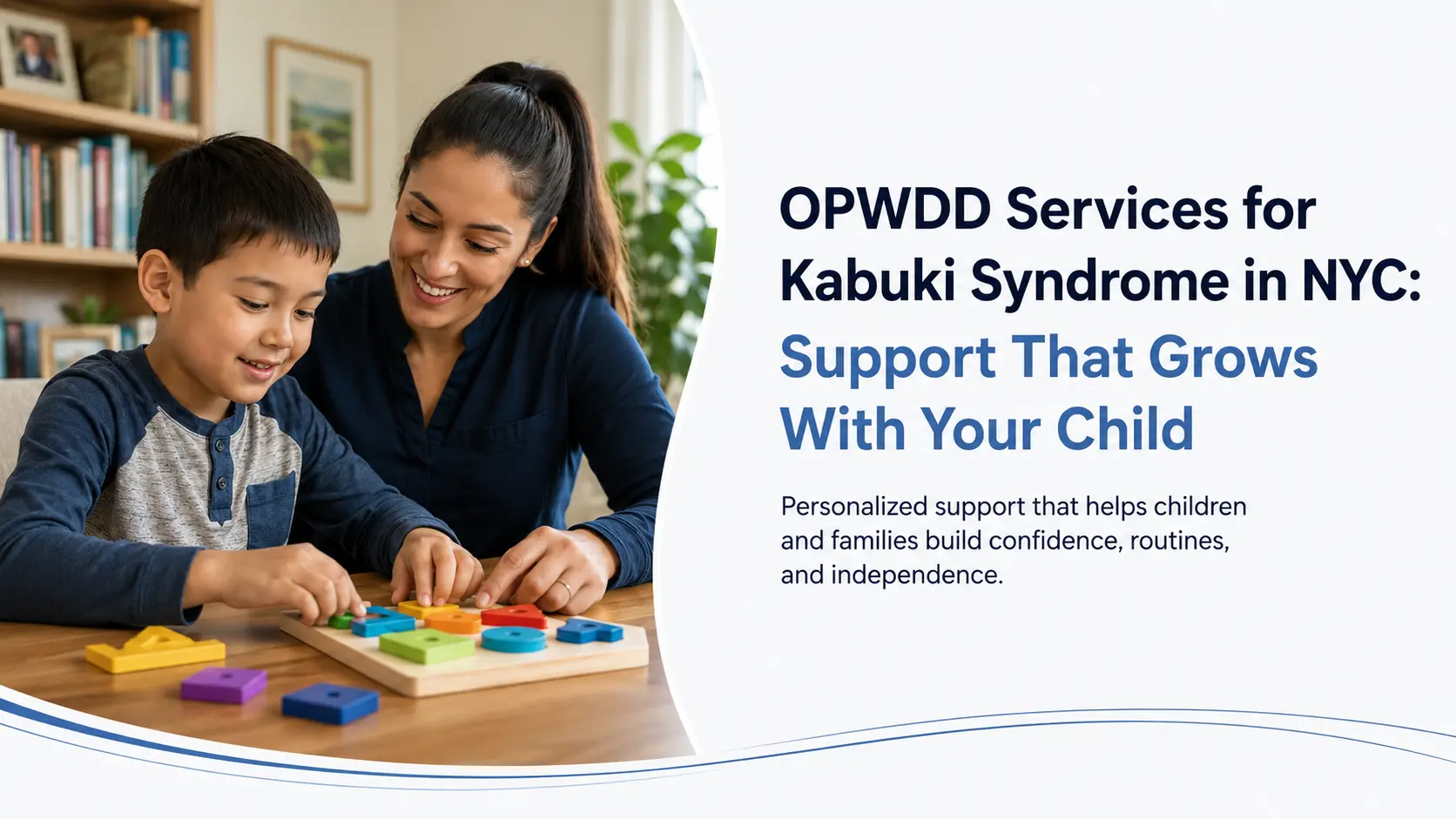
Consider a 10-year-old in Queens with Kabuki syndrome. She’s cheerful and eager to connect, but she struggles with learning, coordination, and some daily-living skills, and her parents want to help her build independence. Through OPWDD, she works with a community habilitation aide on daily-living and social skills, and attends day habilitation where she thrives among friends. She grows more capable and confident, and her family gains a partner in planning ahead. That’s what these OPWDD services are designed to do.
How OPWDD Services Help People With Kabuki Syndrome
Support is built around each person’s goals and strengths. The most relevant services usually include:
Explore our full range of OPWDD services and OPWDD support services.
Does Kabuki Syndrome Qualify for OPWDD?
Yes. Kabuki syndrome is a recognized developmental disability under OPWDD — it is genetic, present from birth, lifelong, and results in substantial functional limitations including intellectual disability. Eligibility is established through OPWDD’s “Front Door” process, which requires medical and diagnostic documentation. We help families gather what’s needed and navigate intake — see our guide to OPWDD eligibility in New York.
How Advantage Home Care Helps
Support that builds on strengths. We match individuals with staff who nurture each person’s sociability and interests while supporting learning and independence.
We guide the whole process. From the Front Door and eligibility to building a plan with your Care Coordination Organization, we help families move forward with clarity.
A partner through every transition. Our care coordination and family support team is there from childhood into adult life.
Frequently Asked Questions
Does Kabuki syndrome qualify for OPWDD services?
Yes. It is a qualifying developmental disability under OPWDD — genetic, lifelong, and causing substantial functional limitations.
What OPWDD services help most with Kabuki syndrome?
Community habilitation, day habilitation, in-home support, and respite — all available through Advantage Home Care’s OPWDD services.
Can OPWDD help my child build independence?
Yes. Community habilitation and day habilitation are designed to build daily-living and social skills over time.
How do we get started?
It begins with the OPWDD Front Door process to establish eligibility. We help families gather documentation and move from approval to services at home.
Part of our complete guide to OPWDD Services in NYC →
Get OPWDD Support for Kabuki Syndrome
Whether you’re starting the Front Door process or looking for a provider who understands Kabuki syndrome, we’re here to help. Call 718-375-2707 or reach out online.