Category: Home Care

  • Understanding OPWDD Support Services: Empowering Children and Families

    Understanding OPWDD Support Services: Empowering Children and Families

    Advantage Family Guide

    Understanding OPWDD Support Services: Empowering Children and Families

    Caring for a child with developmental disabilities is a journey of profound love. Discover how specialized OPWDD support layers can help your child build critical life skills while providing your family with essential relief.

    πŸ’‘ Guide at a Glance: Key Takeaways
    • OPWDD waivers unlock comprehensive, state-funded support directly in your home.
    • Care plans focus on a dual approach: daily living assistance and long-term independence building.
    • Respite services ensure primary family caregivers get the rest they need to prevent burnout.

    Navigating the daily routines of a child with developmental or intellectual disabilities requires immense patience, structure, and expertise. For families in New York, securing OPWDD support services is often the turning pointβ€”transforming a home environment from stressful survival mode into a space of structured growth and comfort.

    Comprehensive Care Designed for Your Child

    Every child is unique, and a one-size-fits-all approach simply does not work for developmental care. At Advantage Home Care, we provide comprehensive support layers designed to assist children with immediate daily activities while simultaneously helping them build critical, long-term life skills.

    When you enroll in our OPWDD programs, your family gains access to a robust suite of services, including:

    πŸͺ₯
    Daily Living Assistance

    Compassionate, hands-on help with essential daily activities including bathing, dressing, grooming, toileting, and feeding.

    🦽
    Mobility & Safe Transfers

    Expert support with structural mobility, ensuring safe transfers from beds to wheelchairs and navigating the home environment.

    🧼
    Hygiene & Comfort

    Maintaining pristine personal hygiene and ensuring optimal physical and emotional comfort throughout the day.

    πŸ›‘οΈ
    Health, Safety & Supervision

    Vigilant health monitoring and safety support alongside dedicated routine care and continuous supervision.

    Beyond Basic Care: Therapies and Family Relief

    While daily physical assistance is the foundation of our care, true OPWDD support extends much further. We focus on integrating your child into the community and protecting the mental health of the primary family caregivers.

    • Community Habilitation: We provide targeted skill-building and independence support. Our specialists work with your child both inside the home and out in the community to foster social skills, emotional regulation, and self-reliance.
    • Respite Services: You cannot pour from an empty cup. Our respite services provide essential, temporary relief for primary family caregivers, allowing you to rest, run errands, or spend time with other family members with total peace of mind.
    • Specialized Clinical Therapies: We coordinate advanced therapeutic interventions directly suited to your child’s needs, including Physical Therapy (PT) for motor skills, Speech Therapy (ST) for communication, and Applied Behavior Analysis (ABA) for behavioral development.

    Take the Next Step for Your Family

    Understanding OPWDD eligibility and waiver applications can be overwhelming, but you do not have to navigate the bureaucracy alone. Our dedicated care navigators are ready to help you unlock the resources your child deserves.

    Speak with an OPWDD Coordinator

    Tell us a little bit about your child’s unique needs and current situation. A specialized NYC care navigator will review your inquiry and reach out within 24 hours to discuss your options.

    • The Insider’s Guide to Care Coordination and Family Support in NYC

      The Insider’s Guide to Care Coordination and Family Support in NYC

      Advantage Family Guide

      The Insider’s Guide to Care Coordination and Family Support in NYC

      When a loved one’s health shifts, managing the logistics shouldn’t break your spirit. Discover how professional care navigators step in to lift the administrative and emotional burden.

      πŸ’‘ Guide at a Glance: Key Takeaways
      • Care coordination acts as the “general contractor” for your family’s healthcare logistics.
      • It unifies doctor orders, Medicaid PRI forms, LHCSA scheduling, and pharmacy deliveries into one stream.
      • “Family Support” exists specifically to protect primary family caregivers from severe burnout.

      Stepping into the world of long-term home care often feels like being asked to speak a foreign language overnight. Between clinical recommendations, insurance authorizations, and scheduling shift coverages, families quickly find themselves working a second full-time job. This is where dedicated care coordination and family support becomes the most valuable asset your family can have.

      What Exactly is a Care Coordinator?

      Think of a Care Coordinator as a personal project manager for a patient’s well-being. When an individual is managing a chronic illness, recovering from a stroke, or utilizing NHTD and TBI support services, they don’t just have one doctorβ€”they have an ecosystem of specialists, therapists, pharmacists, and home aides.

      The coordinator’s sole job is sitting at the center of that wheel, ensuring the left hand always knows what the right hand is doing.

      Answering Your Biggest Questions

      Q:

      “We already have doctors and a hospital social worker. Why do we need a separate Care Coordinator?”

      Doctors diagnose, and hospital discharge planners get the patient out the door. But the moment your loved one crosses their own home threshold, those institutional safety nets vanish.

      A care coordinator is your on-the-ground implementer. We make sure the physical therapist actually arrives on Tuesday, the prescription refill gets delivered on Wednesday, and the home health aide knows the exact nuances of the client’s Thursday morning routine.

      Q:

      “How does this service help us deal with Medicaid and insurance red tape?”

      New York’s Medicaid and Managed Long-Term Care (MLTC) landscape is notoriously unforgiving. One missed submission deadline or an incorrectly checked box can delay an aide’s start date by months.

      A massive part of our care coordination mandate is acting as your bureaucratic translator. We track submission windows, interface with Medicaid officers, and push the paperwork through the proper local channels so you don’t have to spend your lunch breaks on hold with the state.

      Q:

      “What is the ‘Family Support’ half of the equation?”

      A home care plan fails the exact second the primary family caregiver burns out. Family Support means giving you the systemic permission to step back into the role of a loving daughter, son, or spouse, rather than acting as an exhausted medical administrator.

      We provide family mediation when siblings disagree on a parent’s care plan, arrange temporary respite care when you need a personal break, and provide the quiet, steady reassurance that you are not doing this alone.

      The First Step is Reclaiming Your Time

      When you are consumed by the mechanics of managing care, you lose the precious, quiet moments of actually caring for your loved one. Handing the logistical reins over to an Advantage Care Coordinator doesn’t mean you are stepping awayβ€”it means you are finally getting the reinforcements you deserve.

      Open a Care Coordination Ticket

      No automated phone trees. Tell us a little bit about what your family is navigating right now, and one of our NYC care navigators will pull your file and reach out.

      • Navigating NHTD & TBI Support Services: Your Guide to Community Living

        Navigating NHTD & TBI Support Services: Your Guide to Community Living

        Bypassing the Wait: Why Families Choose Private Pay Home Care

        By The Advantage Home Care Team β€’ 4 min read

        Your aging relative might suddenly need physical support at home. Consequently, you must decide how to fund this assistance. Evaluating private pay home care is a critical decision for your family.

        State-funded structures like Medicaid offer wonderful long-term security. However, strict application criteria often cause long evaluation backlogs. These delays create unnecessary waiting periods during active family transitions.

        Therefore, many households pursue private pay home care. Families choose to fund support out-of-pocket or use long-term care insurance. This proactive choice guarantees absolute control over your loved one’s schedule. Furthermore, you control their personal environment and choose their caregiver.

        The Core Benefit: Out-of-pocket care skips institutional waiting lines completely. Services begin exactly when your household requires them. Ultimately, you can build an adaptive schedule that fits your family’s actual routine perfectly.

        Start here: For the full picture of TBI home care in NYC — waivers, aide hours and how to arrange support — read the main guide. To see what we provide, visit NHTD and TBI support services.

        Real Situations Where Private Pay Home Care is Ideal

        Unique scenarios drive every household care journey. However, families often face common life moments. During these times, opting for private pay home care offers a clear roadmap for family peace of mind.

        1. When Out-of-Pocket Home Care Must Start Immediately

        Significant health shifts often arrive without warning. For example, you might receive a sudden hospital discharge notification. Alternatively, your parent’s daily balance might change. Waiting for state assessments is dangerous if your loved one risks falling. Fortunately, self-pay options allow for immediate setup. You can place a certified caregiver in the home right away to anchor their safety.

        2. When You Demand Autonomy Over Private Care Hours

        State assistance plans frequently limit your approved hours. They also introduce rigid rules regarding caregiver tasks. Therefore, families choose self-pay options to achieve complete customization. You might need a companion for weekly errands. Alternatively, you may require overnight monitoring or 24/7 care. Ultimately, a private plan scales and pivots to fit your life dynamically.

        3. Short-Term Transitions and Respite Home Care

        Home care arrangements do not always require permanent lifestyle shifts. We frequently coordinate short-term care for households. Sometimes, the primary caregiver simply needs a two-week vacation. Other times, a relative navigates a brief recovery window after surgery. Private funding allows you to establish expert support without long-term contracts. Consequently, you gain the freedom to wind down care as recovery concludes.

        Uncompromised Reassurance with Private Pay Home Care

        Arranging personal assistance is a profound family milestone. Fortunately, taking the self-pay track provides an unmatched level of choice. It empowers you to pick the perfect caregiver personality match. Furthermore, you can structure shift blocks around your career timelines. This approach bypasses stressful validation backlogs completely. Ultimately, you create a safe, comfortable setting for your loved one on your own terms.

      • What Is a CHHA? Certified Home Health Aide Services in NYC Explained

        What Is a CHHA? Certified Home Health Aide Services in NYC Explained

        Home Care Services

        What Is a CHHA? Certified Home Health Aide Services in NYC Explained

        CHHA stands for Certified Home Health Aide. Here is what CHHA services include, how a CHHA differs from an HHA and a PCA, who pays for the hours in New York, and how to arrange care at home.

        When a family member requires more than just basic household assistance to remain safely at home, upgrading to clinical-level support becomes essential. For individuals recovering from surgery, managing chronic illnesses, or facing complex health challenges, a Certified Home Health Aide (CHHA) provides the perfect balance of medical monitoring and personal care.

        What Does CHHA Stand For?

        CHHA stands for Certified Home Health Aide — a caregiver who has completed New York State-approved training and works under the supervision of a registered nurse. You will also see the abbreviation used in a second, different sense: in New York, a Certified Home Health Agency is also abbreviated CHHA. It is a licensed agency that provides skilled, usually short-term care at home after a hospital stay. If you have seen “CHHA” on a discharge form, check which of the two is meant — the aide, or the agency.

        The rest of this guide is about the aide.

        What Does a Certified Home Health Aide Do? CHHA Services Explained

        A Certified Home Health Aide is a state-certified professional trained to assist with both personal care and specific health-related tasks. Working under the direct supervision of a Registered Nurse (RN) or therapist, a CHHA ensures that clinical care plans are strictly followed in the comfort of your own home.

        If you are exploring CHHA services for a loved one, you can expect comprehensive support, including:

        • Vital Sign Monitoring: Checking and recording blood pressure, temperature, pulse, and respiration rates.
        • Medication Assistance: Reminding patients to take medications on time and assisting with pre-poured dosages.
        • Medical Equipment Support: Helping with braces, artificial limbs, ventilators, and basic wound care under RN guidance.
        • Personal Care & Mobility: Assisting with safe transfers, bathing, dressing, and specialized physical therapy exercises.

        CHHA vs. PCA: Making the Right Choice

        While both roles are crucial, the primary difference lies in the level of clinical training. A Personal Care Aide (PCA) focuses on daily living activities and household tasks. In contrast, a Certified Home Health Aide has completed advanced state-mandated training allowing them to handle medical-adjacent duties. If your loved one has a specific medical condition, requires post-operative care, or needs vital sign tracking, a CHHA is the appropriate choice.

        Not sure which level of care is necessary? Our nursing supervisors can conduct a comprehensive assessment to match you with the exact right level of home health support.

        Request Your Free Care Assessment

        Tell us about your family’s medical and personal care needs. An Advantage Care Coordinator will review your inquiry and contact you within 24 hours.

          What service do you need? (optional)

          Where is care needed?

          We’ll call you back within 1 business day. Free consultation, no obligation.

          Prefer to talk? Call us now: 718-375-2707

          How to Get a CHHA in New York City

          Arranging a certified home health aide is a short process once you know the route. There are three:

          Whichever route applies, the sequence is the same: a phone call, a nurse assessment in the home, a written care plan, then caregiver matching. Our step-by-step walkthrough is here, and if you are weighing agencies, read how to verify a legitimate home care agency.

          Advantage Home Care provides CHHA and PCA services across Brooklyn, the Bronx, Manhattan, Queens and Staten Island, including overnight and live-in coverage and respite for family caregivers.

          Frequently Asked Questions About CHHA Services

          What does CHHA stand for?

          Certified Home Health Aide — a state-certified caregiver who works under nurse supervision. In New York the same abbreviation is also used for a Certified Home Health Agency, which is a licensed provider organisation rather than a person.

          What does CHHA mean in medical terms?

          On a care plan or discharge summary, CHHA usually identifies the level of caregiver assigned: an aide trained and certified to assist with personal care plus health-related tasks such as vital signs, medication reminders and equipment support, under an RN’s direction.

          What services does a CHHA provide?

          Bathing, dressing, grooming, toileting and transfers; meal preparation and light housekeeping; medication reminders; vital sign monitoring; help with braces, prosthetics and basic wound care under nurse guidance; and support with prescribed exercises.

          What is the difference between a CHHA and an HHA?

          In practice they describe the same role in New York — a home health aide who has completed state-approved certification. “CHHA” simply emphasises the certification. The meaningful comparison is with a PCA, who does not perform health-related tasks. See HHA vs. PCA.

          Does Medicaid cover CHHA services in New York?

          Yes. For eligible New Yorkers, Medicaid covers home health aide hours, authorised through a managed long-term care plan after a nurse assessment. Hours must be delivered by a licensed agency.

          How quickly can a CHHA start?

          Private-pay cases can often begin within 24 to 48 hours. Medicaid-funded hours depend on the assessment and authorisation timeline, which a coordinator can start on your first call.

          CHHA: Two Meanings Families Hear in New York

          What is a certified home health agency (CHHA) in New York?

          In New York, “CHHA” is also the name of an agency type: a Certified Home Health Agency is licensed to provide short-term skilled nursing and therapy at home, usually after a hospital stay, and is paid by Medicare or Medicaid for a limited episode. A Licensed Home Care Services Agency (LHCSA) like Advantage Home Care provides the long-term aides (HHA/PCA hours) that Medicaid MLTC plans authorize. Many families use both: the CHHA nurse for the first weeks, the LHCSA aides for the long run.

          Which one do I need: a certified home health agency or a home care agency?

          If a doctor ordered nursing, wound care or physical therapy at home after discharge, that is a CHHA (Medicare-covered, short-term). If your loved one needs ongoing help with bathing, meals and daily living, that is a licensed home care agency providing HHAs or PCAs, typically Medicaid-covered. Call 718-375-2707 and we will tell you which applies and coordinate with the CHHA if both are needed.

          Need a Certified Home Health Aide at Home?

          Tell us what is going on and we will tell you what level of care fits, whether Medicaid covers it, and how soon an aide can start.

          Call 718-375-2707 Request Care Online

          Looking for CHHA work rather than care? We hire and train aides across New York City — apply here.

        • Let’s Design a Care Plan That Fits Your Family

          Let’s Design a Care Plan That Fits Your Family

          Start Your Journey

          Let’s Design a Care Plan That Fits Your Family

          Whether you are inquiring about OPWDD services, home care through Medicaid, or career opportunities, our coordinators are here to listen and help you build the perfect home care plan.

          Why You Need a Custom Home Care Plan

          Navigating home healthcare can be a complex process, but you do not have to do it alone. Building a tailored home care plan ensures your loved one receives exactly the right level of support, precisely when they need it. A strong strategy minimizes stress, prevents medical setbacks, and promotes long-term independence. In fact, research from the National Institute on Aging consistently highlights that proper in-home support drastically improves overall quality of life.

          Key Elements of an Effective Home Care Plan

          When you partner with a dedicated Advantage Care Coordinator, we walk you through a comprehensive checklist to build your home care plan. This personalized approach typically includes:

          • Medical Needs Assessment: Coordinating with primary care physicians to safely manage medications, therapies, and clinical routines.
          • Daily Living Assistance: Arranging hands-on help for bathing, meal preparation, mobility, and household safety.
          • Financial Guidance: Exploring sustainable funding options, leveraging resources from trusted programs outlined on Medicaid.gov, or navigating private pay avenues.

          Understanding Your Home Care Plan Options

          Creating a successful home care plan also means understanding your state and local resources. In New York, programs like Medicaid-funded personal care and the Office for People With Developmental Disabilities (OPWDD) provide flexible, community-based care. Knowing which path to take is the first step in solidifying your future. You can read more about foundational caregiver support at the AARP Caregiving Resource Center.

          Our mission is to take the guesswork out of this process, turning a stressful transition into a clear, manageable roadmap. Tell us a little bit about what you are looking for, and we will reach out to you directly with personalized guidance.

          Send Us Your Inquiry

          All information submitted is strictly confidential and securely handled.

          • Advantage Home Care: Elevating Health, Independence, and Family Support in NYC

            Advantage Home Care: Elevating Health, Independence, and Family Support in NYC

            Complete Home Health Solutions

            Advantage Home Care: Elevating Health, Independence, and Family Support in NYC

            Whether you need comprehensive OPWDD & Autism Support, Medicaid-funded home care, or plan to start a healthcare career, our team actively guides you every step of the way.

            πŸ’™

            Medicaid Home Care

            Eligible New Yorkers can receive personal care aide and home health aide support at home through Medicaid — often at no cost to the family. We handle eligibility, MLTC enrollment, and Medicaid coordination so your loved one gets the hours they need.

            🧩

            OPWDD & Autism Support

            Specialized care requires specialized training, so we connect families with highly trained aides who provide behavioral support, routine management, and daily living assistance. Our OPWDD & Autism Support services empower children and adults with developmental disabilities.

            πŸŽ“

            PCA Training & Careers

            You can start a rewarding career with Advantage Home Care today. We offer free Personal Care Assistant (PCA) classes in NYC, plus competitive benefits and immediate job placement for dedicated caregivers across all five boroughs.

            Why Specialized OPWDD & Autism Support Matters

            Finding the right care for a loved one takes time and research. First, you must identify your family’s specific needs; next, you must navigate state programs and insurance requirements. Advantage Home Care simplifies this entire journey. Our OPWDD & Autism Support programs offer tailored behavioral strategies, and we work with the New York State Office for People With Developmental Disabilities to ensure strict compliance and high quality.

            We believe every individual deserves compassionate, top-tier care at home, so we rigorously train our aides to handle complex daily challenges — helping clients build essential life skills and foster community integration. You can learn more about developmental disability advocacy by visiting Autism Speaks. Ultimately, our goal is to maximize independence while keeping your family fully supported.

            Request Your Free Care Consultation

            Navigating home care options, Medicaid requirements, and specialized training often feels overwhelming. Our care coordinators simplify the entire process for you, so you can focus on spending quality time with your family.

            • Bilingual Support: We provide complete assistance in Spanish.
            • Fast Onboarding: We streamline your Medicaid enrollment effortlessly.
            • Local Expertise: We root our services deeply in Brooklyn and the Bronx.

            Do you prefer to speak with someone immediately?

            Call (718) 375-2707

            Send Us a Message

            Fill out the details below, and a care coordinator will reach out within 24 hours.

            • Elevating Independence: Comprehensive OPWDD Services & Health Solutions

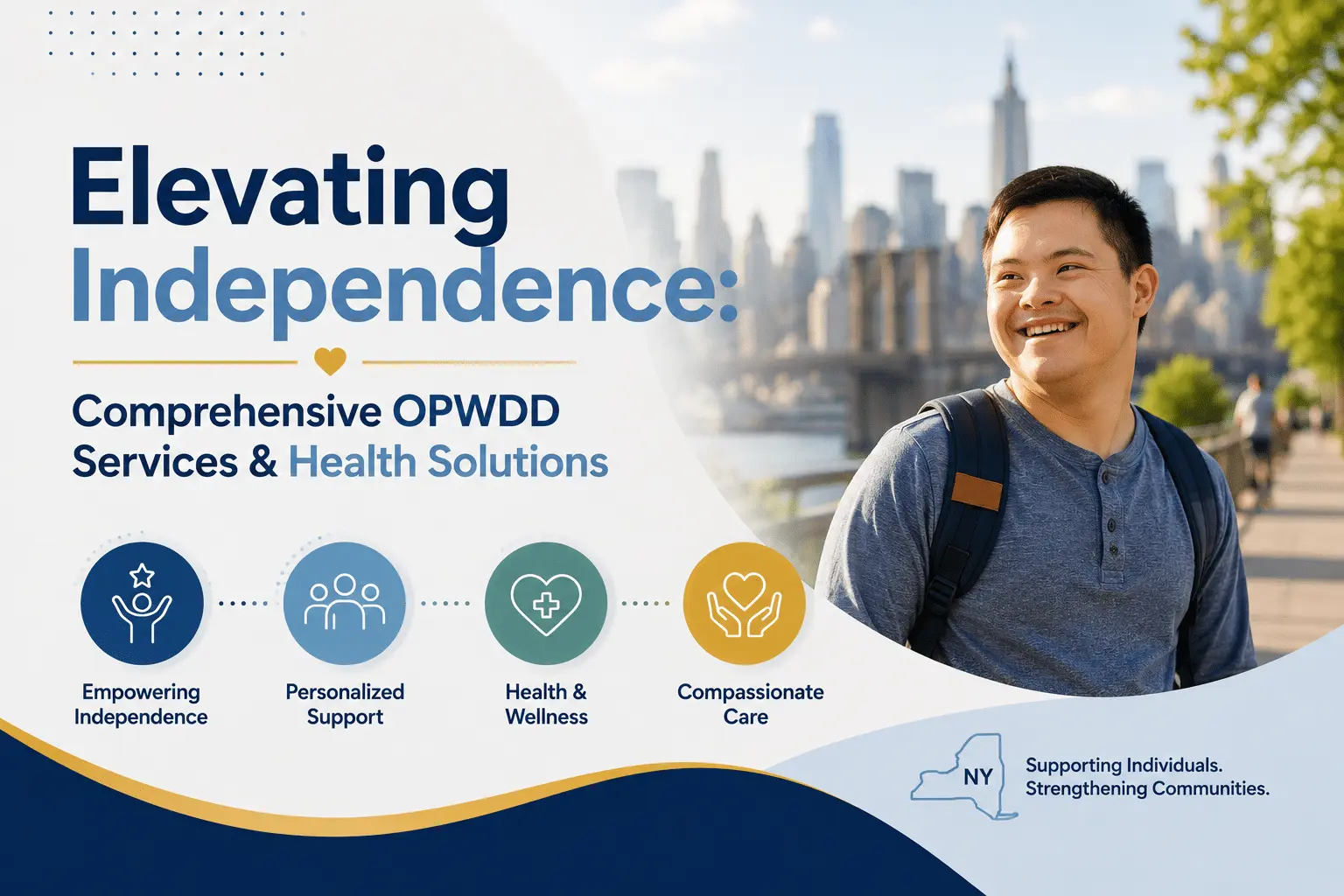
              Elevating Independence: Comprehensive OPWDD Services & Health Solutions

              Company Spotlight

              Elevating Independence: Comprehensive OPWDD Services & Health Solutions

              How Advantage Home Care is redefining the standard for community-based support, specialized care, and dedicated in-home health management.

              Finding the right agency to trust with your family’s well-being is one of the most important decisions you will make. At Advantage Home Care , our mission is to provide personalized, high-quality care and services that allows individuals to thrive safely and comfortably in the environment they know best.

              The Standard for Advantage Home Health

              A transition to home-based care shouldn’t mean a compromise in medical or personal support. Quality advantage home health focuses on a holistic approachβ€”blending expert medical oversight with deep, compassionate daily assistance. Our highly trained home health aides and nurses work to ensure that every patient’s physical and emotional needs are met, preventing hospital readmissions and promoting long-term wellness.

              Expert OPWDD Services in Your Community

              Supporting individuals with developmental disabilities requires specific expertise, patience, and state-certified training. We are proud to be a leading provider of OPWDD services in the New York area.

              • Tailored Habilitation: We focus on building daily living skills, enhancing communication, and fostering community integration.
              • Family Support: Navigating OPWDD waivers and benefits can be confusing. We handle the administrative heavy lifting so families can focus on their loved ones.
              • Autism & Behavioral Care: Our specialized aides are trained to support individuals on the autism spectrum with structured, comforting routines.

              Creating an Advantage Home Environment

              Our philosophy is simple: we want to turn your residence into an advantage homeβ€”a place where clinical safety meets ultimate comfort. Whether you are seeking short-term post-operative assistance or long-term live-in care, we adapt our environment to suit your life, not the other way around.

              Connect With Advantagehomecare Today

              If you are ready to explore better care options for your family, or if you are looking to join a team that truly values its caregivers, the advantagehomecare network is ready to welcome you. We provide seamless digital onboarding, family coordination, and 24/7 bilingual support.

            • Advantage home care: Specialized OPWDD services & Autism support in NY

              Advantage home care: Specialized OPWDD services & Autism support in NY

              Advantage Home Care: Specialized OPWDD Services & Autism Support in NY

              Discover dependable home care solutions, including highly trained aides for children with autism and comprehensive family care coordination.

              Caring for a loved one with developmental disabilities requires more than just standard assistance—it requires profound empathy, specialized training, and a dependable support system. At Advantage Home Care, we are dedicated to providing premier OPWDD services and private home care tailored to your family’s unique needs.


              OPWDD Home Care in New York

              The Office for People With Developmental Disabilities (OPWDD) provides vital resources for New Yorkers, but navigating the system can be complex. As a trusted provider of OPWDD home care in New York, Advantage Home Care bridges the gap between state resources and high-quality, in-home assistance.

              • Personalized Care Plans: We evaluate the specific needs of your family member to match them with caregivers who have the right experience.
              • Community Integration: Our aides focus not just on physical health, but on fostering independence, social skills, and active community participation.
              • Respite for Families: We provide reliable assistance home care so that family caregivers can rest, recharge, and maintain their own well-being.

              Finding a Home Health Aide for a Child with Autism

              One of the most frequent questions we receive is how to find a qualified home health aide for an autistic child near me. Caring for a child on the autism spectrum requires specific behavioral understanding, patience, and routine management.

              The Advantage Approach to Autism Care:

              We carefully vet and train our specialized aides to manage sensory sensitivities, support communication challenges, and establish comforting daily routines. We believe in providing dependable home care that allows children with autism to thrive comfortably in their own homes, surrounded by the people who love them most.


              Family Care Coordination Services

              Managing doctors’ appointments, state benefits, and daily care schedules is a full-time job. Our Family Care Coordination Services are designed to take the administrative burden off your shoulders. We act as your advocate, ensuring that all aspects of your loved one’s health and wellness are seamlessly integrated.

              • Benefit Management: Assistance with navigating Medicaid, OPWDD waivers, and MLTC enrollment.
              • Seamless Communication: We coordinate directly with doctors, therapists, and Advantage private home care staff.
              • Peace of Mind: Knowing a dedicated professional is managing the logistics allows you to focus simply on being a family.

              Connect With Our Specialized Care Team

              If you are looking for advanced home care solutions for a family member with developmental needs, our dedicated OPWDD coordinators are ready to help.

              Borough Office Location OPWDD Intake Line
              Brooklyn 1515 Sheepshead Bay Road +1 (718) 375-2707
              The Bronx 391 East 149th Street +1 (718) 975-6980

              To learn more about our specialized autism support and OPWDD services, please call our Brooklyn coordination line at 718-375-2707.

            • How to Choose the Right Home Care Agency in Brooklyn and the Bronx

              How to Choose the Right Home Care Agency in Brooklyn and the Bronx

              πŸ‘€

              Medically Reviewed By: David Zhorzholiani. MSN

              Chief Operating Officer | Advantage Home Care


              How to Choose the Right Home Care Agency in Brooklyn and the Bronx

              First, finding a trustworthy caregiver for an aging parent or disabled family member represents a crucial family decision. Specifically, this includes families seeking OPWDD services or NHTD/TBI support services.

              Furthermore, hundreds of providers operate across New York City. Consequently, separating a standard provider from a truly exceptional advantage home care agency often feels overwhelming.

              Therefore, geography matters just as much as clinical expertise. You might be searching for advantage home care brooklyn. Alternatively, you might navigate Medicaid services in the Bronx.

              Ultimately, you need an agency that understands your local community. Additionally, they must speak your family’s language and dispatch reliable caregivers without delay.

              1. What to Look for in an NYC Home Care Agency

              Importantly, agencies differ greatly in quality. For instance, New York State requires agencies to hold official licenses before they provide hands-on personal care.

              Therefore, when evaluating your options in advantage home care nyc, ensure the agency meets these strict foundational criteria:

              The Agency Evaluation Checklist:

              • LHCSA Certification: First, does the NY State Department of Health actively license them as a Home Care Services Agency?
              • Medicaid & MLTC Expertise: Next, do they have dedicated care coordinators? These experts help you navigate Managed Long-Term Care (MLTC) plans and secure state funding.
              • Rigorous Vetting: Furthermore, do they conduct comprehensive criminal background checks and medical clearances? Also, do they verify state training certificates for every caregiver?
              • Multilingual Support: Finally, New York boasts incredible diversity. Therefore, can the agency provide caregivers who speak Spanish, Russian, or Mandarin natively?
              1 Verify LHCSA License
              βž”
              2 Check MLTC Acceptance
              βž”
              3 Request Local Caregiver
              βž”
              4 Begin Safe Home Care

              Find Your Local NYC Caregiver Today

              Importantly, Advantage Home Care remains deeply rooted in your community. Specifically, we specialize in matching families across the five boroughs with highly trained, compassionate caregivers. Ultimately, these local professionals will quickly feel just like family.

              • βœ“ Licensed & Insured (LHCSA)
              • βœ“ NY Medicaid Fully Accepted
              • βœ“ Multilingual Staff Available
              • βœ“ Serving All 5 Boroughs of NYC

              Get a Free Care Assessment

              Fortunately, this process only takes 30 seconds.

                2. Why Local Footprint Matters

                First, an emergency might arise suddenly. Alternatively, a caregiver might call out sick. Consequently, the location of your agency’s operations becomes incredibly critical.

                For example, families searching for advantage home care bronx or Brooklyn rely heavily on local agencies. Specifically, they need agencies featuring a dense network of certified home health aides living nearby.

                Furthermore, a strong local presence ensures replacement caregivers arrive quickly. Additionally, local home health aides avoid multi-hour commutes. As a result, they maintain their energy and absolute reliability.

                Moreover, local agencies intimately understand neighborhood pharmacies. They also navigate local medical transport options and community-based resources perfectly.

                Making the Right Choice with Advantage Home Care

                Ultimately, choosing a home care agency requires establishing absolute trust. After all, you invite professionals into your home to care for the people you love most.

                Therefore, at Advantage Home Care, our intake coordinators and registered nurses work hand-in-hand with families. As a result, we consistently deliver personalized, dignified, and safe care right in your familiar community.

                Published: June 18, 2026 | Category: Home Care Education

                Disclaimer: We provide this guide for informational purposes only to assist families in evaluating home care providers. Always verify that the New York State Department of Health properly licenses any agency you hire.

              • Everything You Need to Know About Hiring a Personal Care Aid in NYC

                Everything You Need to Know About Hiring a Personal Care Aid in NYC

                πŸ‘€

                Medically Reviewed By: David Zhorzholiani. MSN

                Chief Operating Officer | Advantage Home Care


                Everything You Need to Know About Hiring a Personal Care Aid in NYC

                There often comes a turning point for families in New York City when an aging parent or a relative with a disability begins to struggle with daily routines. While you want them to remain safely in the comfort of their own home, balancing their needs with your own work and family life can become overwhelming. This is where a dedicated personal care aid (PCA) steps in.

                A PCA provides essential, non-medical support that empowers individuals to maintain their independence and dignity. Whether you are in Brooklyn, the Bronx, or anywhere across the five boroughs, understanding what a PCA does and how to hire one is the first step toward peace of mind.

                1. What Exactly Does a Personal Care Aid Do?

                Unlike a registered nurse who provides clinical medical care, a personal care aid focuses on “Activities of Daily Living” (ADLs). To work as a certified PCA in New York State, caregivers must complete a rigorous, state-approved 40-hour training program.

                Daily Support Provided by a PCA:

                • Personal Hygiene & Grooming: Safe assistance with bathing, toileting, brushing teeth, and getting dressed.
                • Mobility & Transferring: Helping your loved one safely move from the bed to a wheelchair, or accompanying them on walks to prevent dangerous falls.
                • Nutrition & Meal Prep: Grocery shopping, preparing nutritious meals according to dietary guidelines, and assisting with feeding if necessary.
                • Light Housekeeping: Maintaining a clean and safe living environment, including laundry, washing dishes, and taking out the trash.
                1 Assess Daily Needs
                βž”
                2 Verify Insurance/Medicaid
                βž”
                3 Match with a PCA
                βž”
                4 Restore Peace of Mind

                Find a Compassionate Personal Care Aide Today

                Let Advantage Home Care match your loved one with a certified, thoroughly vetted PCA. We help NYC families navigate the intake process, handle Medicaid paperwork, and ensure seamless, high-quality care.

                • βœ“ Certified & Background-Checked Aides
                • βœ“ Medicaid Fully Accepted
                • βœ“ Multilingual Caregivers Available
                • βœ“ Serving All 5 Boroughs of NYC

                Get a Free Care Assessment

                It only takes 30 seconds.

                  2. How to Pay for a Personal Care Aid in NY

                  One of the biggest concerns families have is the cost of long-term care. Fortunately, if your loved one meets the income and medical eligibility requirements, the cost of a personal care aid can be fully covered by New York State Medicaid.

                  The Medicaid Coverage Checklist

                  To get your PCA services covered, you will need to navigate the Managed Long-Term Care (MLTC) system. Here is what needs to happen:

                  • Active Community Medicaid: The patient must be enrolled in NY State Medicaid without a penalty period.
                  • Maximus Assessment (NYIA): An independent assessor from the state must evaluate the patient to determine how many hours of care they require each week.
                  • Enroll in an MLTC Plan: You must select a Managed Long-Term Care insurance plan (like Fidelis, VNSNY, or Healthfirst) to manage the Medicaid benefits.
                  • Select Your Agency: Choose a trusted Licensed Home Care Services Agency (LHCSA) like Advantage Home Care to provide the staff.

                  The Advantage Healthcare Difference

                  You do not have to figure this out alone. At Advantage Home Care, our dedicated intake coordinators will guide you through the entire processβ€”from the initial Medicaid application to the day your new personal care aide knocks on your door. We pride ourselves on creating the perfect match between caregiver and patient, ensuring your family receives the respect, safety, and comfort they deserve.

                  Published: June 18, 2026 | Category: Home Care Education

                  Disclaimer: This article is for informational purposes only. Medicaid eligibility and authorized care hours are determined by New York State and individual MLTC plans, not by the home care agency.

                • What Are OPWDD Services? A Complete Guide to Eligibility and Application

                  What Are OPWDD Services? A Complete Guide to Eligibility and Application

                  πŸ‘€

                  Medically Reviewed By: David Zhorzholiani. MSN

                  Chief Operating Officer | Advantage Home Care


                  What Are OPWDD Services? A Complete Guide to Eligibility and Application

                  If you have a child or family member with a developmental disability, doctors have likely told you to “apply for OPWDD.” But what exactly does that mean? Specifically, the Office for People With Developmental Disabilities (OPWDD) is the New York State agency responsible for coordinating services for New Yorkers with developmental disabilities.

                  Furthermore, navigating opwdd services can be life-changing for families. Ultimately, these state-funded programs provide everything from employment support and day programs to funding for a personal care aid. Consequently, this aide can help your loved one safely navigate daily life at home.

                  1. What Diagnoses Qualify for OPWDD?

                  To receive OPWDD support, the individual must have a qualifying developmental disability. Crucially, New York State law requires the disability to manifest before age 22. Moreover, medical professionals must expect this condition to remain permanent.

                  Qualifying Conditions Include:

                  • First, Intellectual Disability: Significantly below-average intellectual functioning existing concurrently with deficits in adaptive behavior.
                  • Second, Autism Spectrum Disorder: A neurological and developmental disorder that affects how people interact, communicate, and learn.
                  • Third, Cerebral Palsy: A group of disorders that affect a person’s ability to move and maintain balance and posture.
                  • Fourth, Epilepsy: A central nervous system disorder in which brain activity becomes abnormal, causing seizures.
                  • Finally, Neurological Impairment: Other severe, lifelong impairments to the central nervous system. For instance, a Traumatic Brain Injury occurring before age 22 may also qualify for NHTD/TBI support services.
                  1 Identify Diagnosis
                  βž”
                  2 Contact OPWDD Front Door
                  βž”
                  3 Prove Eligibility
                  βž”
                  4 Receive Care Services

                  Need Help with OPWDD Home Care? We Can Assist

                  At Advantage Home Care, we understand that securing services is a journey. Therefore, we actively help families across the Bronx, Brooklyn, and all of NYC match with specialized caregivers once you establish OPWDD eligibility.

                  • βœ“ Specialized Disability Caregivers
                  • βœ“ Medicaid & State Funding Accepted
                  • βœ“ Compassionate, Experienced Staff
                  • βœ“ Serving All 5 Boroughs of NYC

                  Connect With Us Today

                  It only takes 30 seconds.

                    2. How to Apply: The “Front Door” Process

                    You cannot simply call an agency and ask for OPWDD services. Instead, you must navigate the state’s official entry process, known as the Front Door. Consequently, this process ensures the state assesses every individual’s unique needs fairly and comprehensively.

                    Your Step-by-Step Application Checklist

                    Therefore, if you are ready to begin, follow these exact steps to initiate your application in New York City:

                    • Step 1: Make the Call. First, contact your local OPWDD regional office (for example, the Brooklyn or Bronx developmental disabilities regional office). Then, tell them you want to register for a Front Door Information Session.
                    • Step 2: Attend the Session. Next, you must attend this mandatory orientation. Due to recent updates, administrators now offer many of these sessions virtually via WebEx or Zoom.
                    • Step 3: Submit Eligibility Documents. Afterward, you will need to provide a psychological evaluation, a psychosocial report (social history), and a recent medical physical to prove the diagnosis.
                    • Step 4: Choose a CCO. Finally, once the state approves your eligibility, you will select a Care Coordination Organization (CCO). Subsequently, your CCO Care Manager will assist with care coordination and family support to help you draft a “Life Plan” and budget to pay for services like Respite or Community Habilitation.

                    Bringing Services Home

                    Once the state approves your loved one and establishes their Life Plan, you must choose a provider agency to deliver the care. Perhaps you seek a skilled advantage home care agency aide, such as a certified home health aide. Alternatively, you might need a provider for specialized home health aide (HHA) services to assist with daily living skills. Moreover, you may need respite care to give family members a much-needed break. Ultimately, our team stands ready to step in and provide exceptional support.

                    Published: June 18, 2026 | Category: OPWDD & Specialized Care

                    Disclaimer: We provide this guide for informational purposes only. Importantly, the New York State Office for People With Developmental Disabilities solely determines OPWDD eligibility requirements. Therefore, always consult directly with a Front Door representative for official guidance.

                  • Home Health Aide vs. Personal Care Aide: Which Does Your Loved One Need?

                    Home Health Aide vs. Personal Care Aide: Which Does Your Loved One Need?

                    πŸ‘€

                    Medically Reviewed By: David Zhorzholiani. MSN

                    Chief Operating Officer | Advantage Home Care


                    Home Health Aide vs. Personal Care Aide: Which Does Your Loved One Need?

                    When families first reach out to an advantage home care agency, they are often overwhelmed by the medical terminology. One of the most frequent sources of confusion is understanding the difference between a Home Health Aide (HHA) and a Personal Care Aide (PCA). While both roles provide essential, compassionate support that allows seniors and disabled individuals to safely remain in their homes, their training and legally permitted tasks differ under New York State Department of Health regulations.

                    Choosing the right level of care is critical for your loved one’s safety and comfort. Here is a clear breakdown of the differences to help you make an informed decision.

                    1. What is a Personal Care Aide (PCA)?

                    A personal care aid (PCA) is primarily focused on assisting with Activities of Daily Living (ADLs) and ensuring a safe, clean home environment. They are the backbone of long-term, non-medical home care. In New York, PCAs undergo a specific 40-hour state-approved training program.

                    Typical PCA Responsibilities Include:

                    • Personal Hygiene: Assistance with bathing, grooming, dressing, and toileting.
                    • Mobility Support: Helping the patient transfer from a bed to a wheelchair and assisting with walking to prevent falls.
                    • Household Tasks: Meal preparation according to dietary restrictions, light housekeeping, laundry, and running errands (like grocery shopping).
                    1 Assess Daily Needs
                    βž”
                    2 Consult with Doctor
                    βž”
                    3 Determine HHA or PCA
                    βž”
                    4 Match with Caregiver

                    Find the Perfect Caregiver Fast & Easy

                    Not sure what level of care is right for your family? Our clinical intake team helps NYC families assess their needs, navigate Medicaid coverage, and place highly trained HHAs or PCAs in the home immediately.

                    • βœ“ Free Clinical Assessments
                    • βœ“ Medicaid & Private Pay Accepted
                    • βœ“ Experienced, Compassionate Caregivers
                    • βœ“ Serving All 5 Boroughs of NYC

                    Get a Care Consultation

                    It only takes 30 seconds.

                      2. What is a Home Health Aide (HHA)?

                      A Home Health Aide (HHA) performs all the same duties as a PCA, but with added, basic clinical responsibilities. To achieve an HHA certificate in NY, caregivers must complete a more rigorous 75-hour training program and operate under the direct supervision of a Registered Nurse (RN). You will frequently see HHAs prescribed after a hospital discharge or surgery.

                      The HHA Care Needs Checklist

                      If you check any of the following boxes, your loved one likely requires an HHA rather than a PCA:

                      • Vital Signs: Does the patient need regular monitoring of their blood pressure, pulse, temperature, or respiration rates?
                      • Medical Equipment: Do they require assistance with complex medical equipment, such as braces, artificial limbs, or specialized lifts?
                      • Simple Wound Care: Do they need help changing clean, simple dressings on healing wounds?
                      • Medication Assistance: Do they need help administering pre-poured medications or applying prescribed topical ointments?

                      Making the Right Choice for Your Family

                      Deciding between a PCA and an HHA ultimately comes down to the patient’s medical complexity. At Advantage Home Care, our standard of advantage healthcare excellence ensures that every family receives a thorough initial assessment by a Registered Nurse. We will review your loved one’s medical history, consult with their primary care physician, and match them with a caregiver whose qualifications perfectly align with their needs.

                      Published: June 18, 2026 | Category: Home Care Education

                      Disclaimer: This article is for informational purposes only and does not constitute medical advice. Always consult with a licensed healthcare professional or hospital discharge planner to determine the appropriate level of home care required.

                      HHA vs PCA: Quick Answers

                      What is the difference between a PCA and an HHA?

                      A Personal Care Aide (PCA) helps with daily living β€” bathing, dressing, toileting, meals, light housekeeping and escorting. A Home Health Aide (HHA) does all of that plus health-related tasks under nurse supervision, such as taking vital signs and helping with prescribed exercises. HHA training is longer (about 75 hours vs 40 for PCA under current New York rules).

                      What do HHA and PCA stand for?

                      HHA = Home Health Aide; PCA = Personal Care Aide. In New York City “home attendant” usually means a Medicaid-paid PCA. En espaΓ±ol: HHA es Asistente de Salud en el Hogar y PCA es Asistente de Cuidado Personal β€” la diferencia es que el HHA tambiΓ©n realiza tareas de salud bajo supervisiΓ³n de enfermerΓ­a.

                      Which one will Medicaid authorize β€” HHA or PCA?

                      The nurse assessment (NYIA, then your MLTC plan) decides based on functional need: personal care needs alone usually mean PCA hours; a health-related need such as vital-sign monitoring or unstable medical conditions usually means HHA hours. You do not choose the level yourself, but documenting nighttime and health needs at the assessment matters.

                      Can I get a job as an HHA or PCA with Advantage Home Care?

                      Yes. We hire certified HHAs and PCAs across the five boroughs, and if you have no certificate yet our free PCA training in Brooklyn (English or Spanish) gets you certified and hired. Apply online or call 718-375-2707.