Category: NYC Resources

  • Home Care in Jamaica, Richmond Hill and Southeast Queens: A Local Guide

    Home Care in Jamaica, Richmond Hill and Southeast Queens: A Local Guide

    Southeast Queens

    Home Care in Jamaica, Richmond Hill and Southeast Queens: A Local Guide

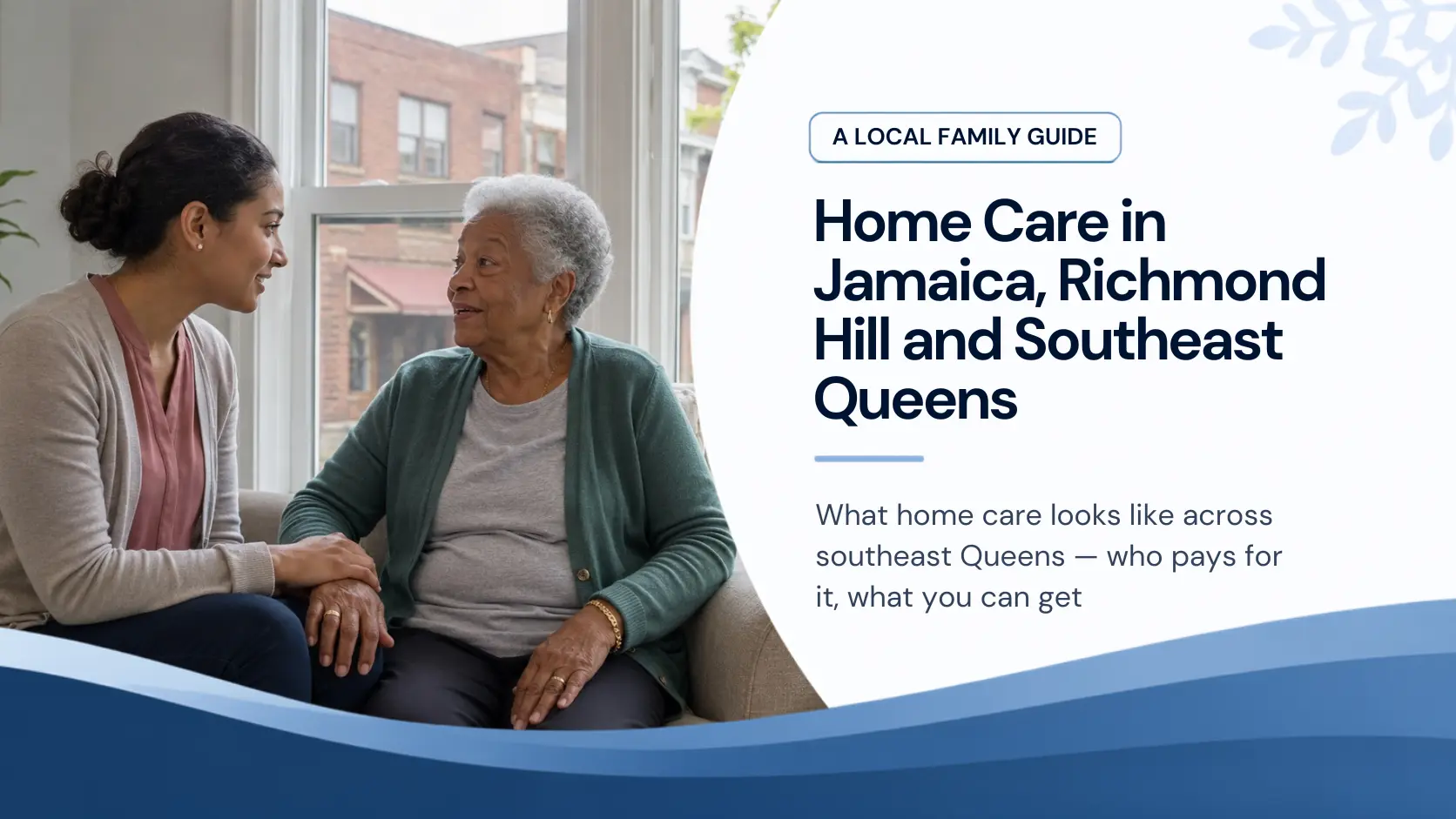
    What home care looks like across southeast Queens — who pays for it, what you can get, and how to arrange it without anyone taking a day off work.

    The short answer

    Advantage Home Care staffs Jamaica, Richmond Hill, Ozone Park, Woodhaven, South Ozone Park, Hollis, St. Albans, Queens Village, Springfield Gardens, Rosedale and Laurelton. For eligible New Yorkers Medicaid covers personal care aide and home health aide hours at no out-of-pocket cost; private pay typically starts within 24 to 48 hours. Call 718-375-2707.

    What Families Here Are Usually Dealing With

    Southeast Queens is largely a homeowner’s borough — one- and two-family houses, often multigenerational, frequently with the adult children working long hours and a grandparent at home alone during the day. The care question here is rarely “should we get help.” It is “who is with Mummy between eight and six.”

    It is also one of the most culturally specific parts of the city. Richmond Hill and South Ozone Park are heavily Indo-Caribbean and Punjabi. Jamaica, Hollis and St. Albans have deep-rooted Caribbean and African American communities. There are large Bangladeshi and Hispanic populations across the area. Food, faith, how a household is run and who is comfortable providing personal care all vary — and a mismatch on any of those is why placements fail.

    We match on language, culture and gender preference as standard. Say what matters to your household on the first call. For the borough-wide picture, see our Queens guide.

    What We Provide Locally

    🛀 Personal care aides

    Bathing, dressing, toileting, transfers, meals, housekeeping and errands. PCA services

    🩹 Home health aides

    Personal care plus health-related tasks under nurse supervision. HHA services

    ☀️ Daytime cover

    The most requested pattern here — someone present while the family is at work.

    🌅 Overnight and live-in

    For households where the nights have become the problem. Overnight care

    🧠 OPWDD support

    In-home support and habilitation for developmental disabilities. OPWDD services

    👤 Care coordination

    One contact joining doctors, plans and caregivers. Care coordination

    Paying for It

    Owning the house does not disqualify anyone, and neither does a pension that looks too high. Both are the two most common reasons families here never apply, and both are usually wrong.

    If the family is already doing it. A great many households here are covering care informally — a daughter before her shift, a neighbour at lunchtime, a cousin at weekends. That works until it does not, and the collapse is usually sudden. Paid hours alongside the family arrangement is not a replacement for it; it is what keeps it sustainable. See caregiver burnout and respite care.

    Coming Home From Hospital

    Discharges here usually come through Jamaica Hospital Medical Center, Queens Hospital Center or a local rehab facility. Start the home care conversation while the person is still admitted — Medicaid hours cannot be arranged overnight. See our safe discharge guide and discharge checklist.

    Getting Started

    Everything is arranged by phone; the only in-person step is the nurse assessment at home. Describe the day, and a coordinator will tell you what fits and what it costs. See how to get started with home care.

    Quick Answers

    Do you provide home care in Jamaica and Richmond Hill?

    Yes — along with Ozone Park, Woodhaven, South Ozone Park, Hollis, St. Albans, Queens Village, Springfield Gardens, Rosedale and Laurelton.

    Can we request a caregiver from our own community?

    Yes. We match on language, culture and gender preference — including Punjabi, Hindi, Bengali, Urdu, Spanish and Caribbean English-speaking caregivers. Ask on the first call.

    Can we get care only during working hours?

    Yes, and it is the most common pattern in southeast Queens. Weekday daytime cover while the family is at work is straightforward to staff.

    Will owning our home stop us qualifying for Medicaid?

    Generally no. A primary residence is treated differently from other assets, particularly where a spouse still lives there. It is worth applying rather than assuming.

    How quickly can care start?

    Private pay usually within 24 to 48 hours. Medicaid-funded hours depend on assessment and authorisation timelines, which we can start the day you call.

    Do we need to come to an office?

    No. Intake is by phone and the nurse assessment happens in your home.

    Jamaica and Richmond Hill Home Care: Quick Answers

    Is there a home care agency in Jamaica, Queens?

    Yes. Advantage Home Care serves Jamaica, Richmond Hill, South Ozone Park, Hollis and St. Albans with Caribbean-, Bengali-, Punjabi- and Spanish-speaking caregivers, Medicaid and private-pay. Call 718-375-2707.

    How do I start home care in Jamaica or Richmond Hill?

    Call 718-375-2707. If Medicaid will pay, we begin the application and NYIA assessment with you at no charge and staff the hours once your MLTC plan authorizes them; private-pay care can usually start within 24–48 hours. Borough-wide details: home care in Queens.

    Care in Southeast Queens, Without the Day Off Work

    One call tells you what your family qualifies for, what we can staff, and how soon someone can start.

    Call 718-375-2707 Apply for Home Care
  • Home Care in Pelham Bay, Parkchester and the East Bronx: A Local Guide

    Home Care in Pelham Bay, Parkchester and the East Bronx: A Local Guide

    East Bronx

    Home Care in Pelham Bay, Parkchester and the East Bronx: A Local Guide

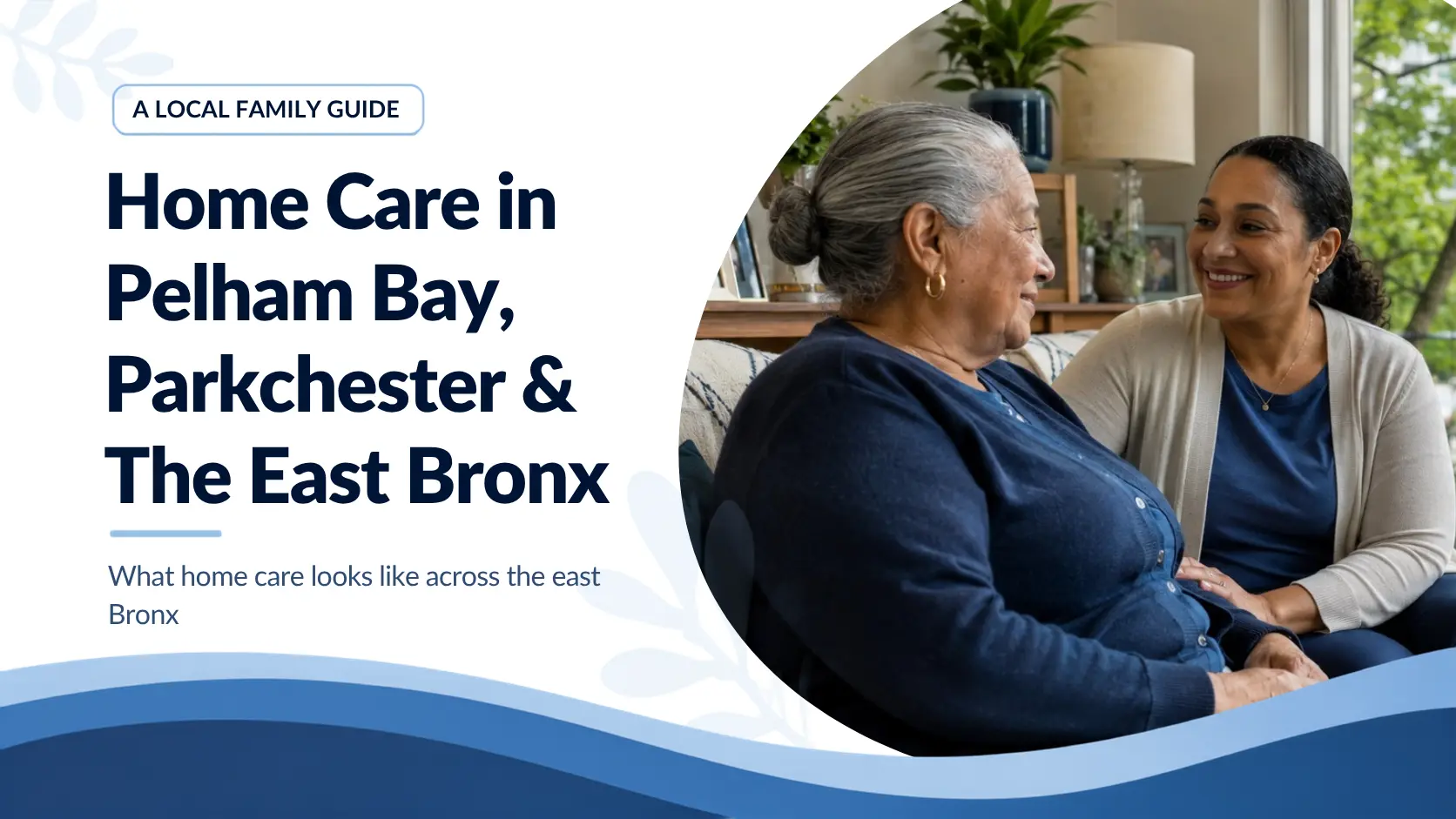
    What home care looks like across the east Bronx β€” who pays for it, what you can get, and how quickly we can staff your building.

    The short answer

    Advantage Home Care staffs Pelham Bay, Parkchester, Throggs Neck, Country Club, Morris Park, Westchester Square, Castle Hill, Soundview, City Island and Co-op City from our Bronx office at 391 East 149th Street. For eligible New Yorkers Medicaid covers personal care aide and home health aide hours at no out-of-pocket cost; private pay typically starts within 24 to 48 hours. Call 718-375-2707.

    Why Local Staffing Matters Here

    The east Bronx is a mix that few agencies staff well: large apartment complexes like Parkchester and Co-op City on one side, and one- and two-family houses through Throggs Neck, Country Club and Morris Park on the other. The two need different things. In the complexes, the challenge is building access, lifts, and getting a consistent aide into the same apartment every day. In the houses, it is stairs and isolation.

    What both have in common is that reliability is everything. An aide who lives twenty minutes away covers a shift when someone calls in sick; an aide travelling ninety minutes from another borough does not. We hold a deep caregiver roster across the Bronx precisely so that weekend and short-notice coverage actually happens.

    The area is also strongly Spanish-speaking, with a large Bangladeshi community around Parkchester and long-established Italian and Albanian communities through Morris Park and Pelham Bay. We match caregivers on language, culture and gender preference as standard. For the borough-wide picture, see our Bronx guide.

    What We Provide Locally

    πŸ›€ Personal care aides

    Bathing, dressing, toileting, transfers, meals, housekeeping and errands. PCA services

    🩹 Home health aides

    Personal care plus health-related tasks under nurse supervision. HHA services in the Bronx

    πŸŒ… Overnight and live-in

    Around-the-clock cover where nights are the risk. Overnight care

    β˜• Respite

    Planned breaks for the family caregiver. Respite care

    🧠 OPWDD support

    In-home support and habilitation for developmental disabilities. OPWDD services

    🧸 NHTD and TBI waiver support

    For nursing-home-level needs and brain injury. Waiver support

    Paying for It

    Our Bronx office is at 391 East 149th Street, 3rd Floor, Room 319 β€” near the 2 and 5 at Third Avenue–149th Street. You never need to visit: intake is by phone and the nurse assessment happens at home. Full contact details are on our contact page.

    Coming Home From Hospital

    Discharges in this part of the borough typically come through Jacobi, Montefiore Einstein or a local rehab facility. Begin arranging home care while the person is still admitted, because Medicaid hours take longer than a discharge notice does. See our safe discharge guide and discharge checklist.

    Getting Started

    Call and describe what has become difficult and when. A coordinator will tell you which service fits, whether Medicaid is likely to cover it, and what happens next. See how to get started with home care.

    Quick Answers

    Do you provide home care in Pelham Bay and Parkchester?

    Yes β€” along with Throggs Neck, Country Club, Morris Park, Westchester Square, Castle Hill, Soundview, City Island and Co-op City.

    Can we get a Spanish or Bengali speaking caregiver?

    Yes. Language matching is standard, and Spanish and Bengali are among the most requested in this part of the Bronx. Ask on the first call.

    Do you cover large complexes like Parkchester and Co-op City?

    Yes, and we staff them regularly. Consistency of caregiver matters even more in a big complex, so we prioritise keeping the same aide on the same apartment.

    How quickly can care start?

    Private pay usually within 24 to 48 hours. Medicaid-funded hours depend on assessment and authorisation timelines, which we can begin the day you call.

    Does Medicaid cover home care in the Bronx?

    Yes, for eligible residents. Hours are authorised through a managed long-term care plan after a nurse assessment, at no out-of-pocket cost.

    Can we get weekend or evening cover?

    Yes. Weekend and evening shifts are exactly where a local caregiver roster makes the difference, and it is one of the reasons we staff the Bronx from a Bronx office.

    Pelham Bay, Parkchester and the East Bronx: Quick Answers

    Is there a home care agency in Parkchester?

    Yes. Advantage Home Care staffs home health aides and personal care aides in Parkchester, Soundview, Castle Hill and Pelham Bay from our Bronx office at 391 East 149th Street, with Medicaid and private-pay options. Call 718-375-2707.

    Which guide should East Bronx families read?

    This one for Parkchester and the wider East Bronx; our Pelham Bay and East Bronx family guide for Pelham Bay, Throgs Neck and Co-op City; and home care in the Bronx for the borough overview and Medicaid steps.

    Care in the East Bronx, Staffed Locally

    Tell us the building, the schedule and the language you need. We will tell you what we can staff and how soon.

    Call 718-375-2707 Apply for Home Care
  • Home Care in Washington Heights, Inwood and Upper Manhattan: A Local Guide

    Home Care in Washington Heights, Inwood and Upper Manhattan: A Local Guide

    Upper Manhattan

    Home Care in Washington Heights, Inwood and Upper Manhattan: A Local Guide

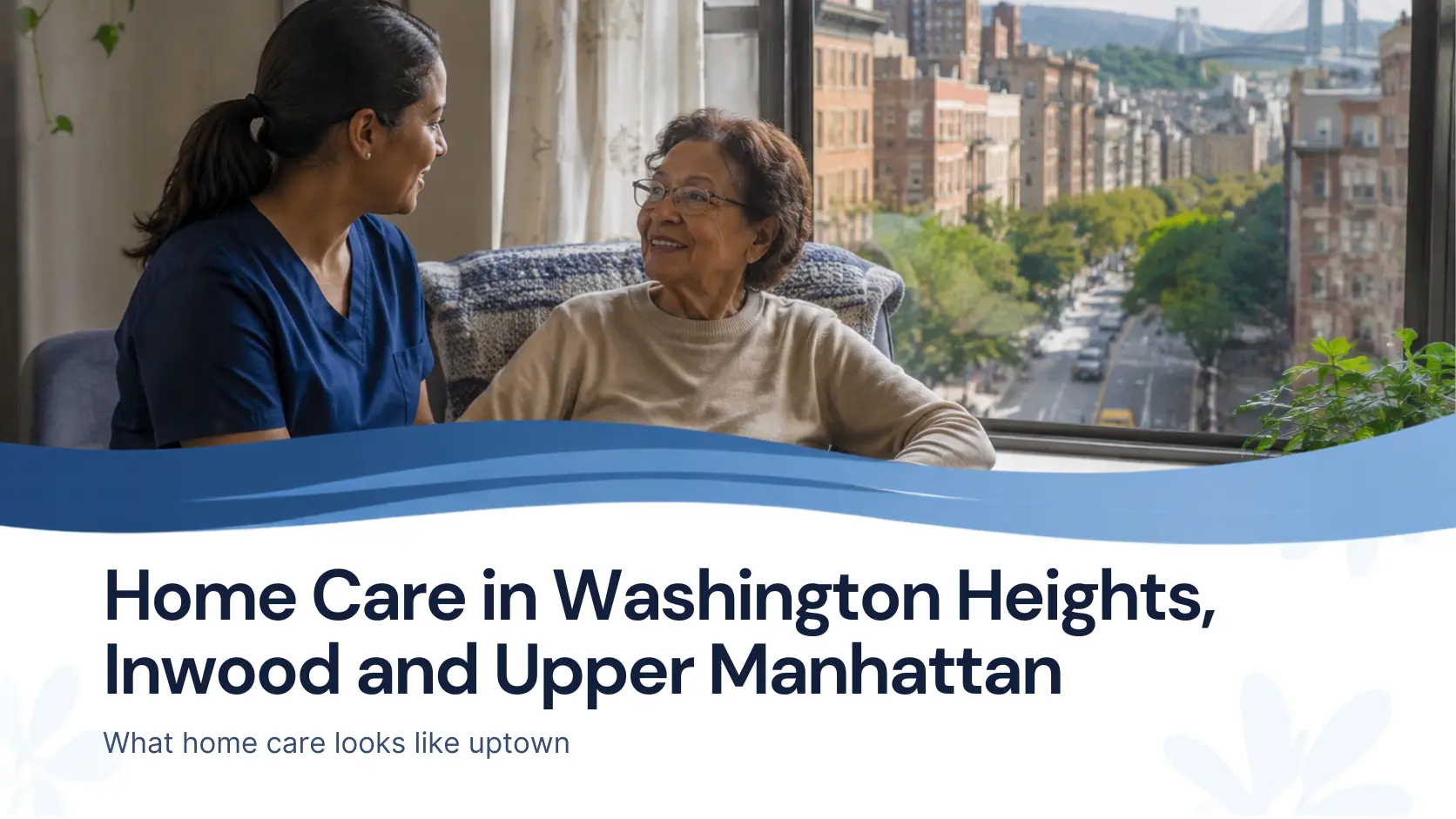
    What home care looks like uptown β€” who pays for it, what you can get, and why a Spanish-speaking caregiver is not a nice-to-have here.

    The short answer

    Advantage Home Care staffs Washington Heights, Inwood, Hudson Heights, Fort George, Marble Hill, Hamilton Heights, Harlem and Morningside Heights. For eligible New Yorkers Medicaid covers personal care aide and home health aide hours at no out-of-pocket cost; private pay typically starts within 24 to 48 hours. Spanish-speaking coordinators available. Call 718-375-2707.

    Language First, Everything Else Second

    Upper Manhattan is one of the most Spanish-speaking parts of the United States. A great many older residents here have lived in the neighbourhood for forty or fifty years and are most comfortable β€” and in later life, sometimes only comfortable β€” in Spanish.

    That is not a preference to note at the bottom of an intake form. If an aide cannot understand “me duele el pecho” or explain what a new medication is for, the care is not safe. And with dementia the issue sharpens: people frequently lose a language learned in adulthood and revert to their first, so a parent who spoke fluent English for decades may need a Spanish-speaking caregiver for the first time in their life.

    We match caregivers on language, culture and gender preference as standard, and our coordinators handle intake in Spanish. Say what you need on the first call. See also our guide to home care in Manhattan.

    What We Provide Locally

    πŸ›€ Personal care aides

    Bathing, dressing, toileting, transfers, meals, housekeeping and errands. PCA services

    🩹 Home health aides

    Personal care plus health-related tasks under nurse supervision. HHA services

    🧠 Dementia and memory care

    Supervision, routine and safety at home. Dementia home care

    πŸŒ… Overnight and live-in

    For households where nights have become the problem. Overnight care

    β˜• Respite

    Planned breaks for the family caregiver. Respite care

    πŸ‘€ Care coordination

    One contact joining doctors, plans and caregivers. Care coordination

    Paying for It

    Most families uptown qualify for Medicaid-funded hours. Where income sits above the limit, a pooled income trust is the standard route rather than a dead end.

    The uptown walk-up. A great deal of housing here is pre-war buildings with steep stairs, small bathrooms and lifts that are not always working. That shapes what care actually needs to look like β€” help with the stairs, shopping brought in, a bathroom made safe. Work through our home safety checklist, and ask about equipment: Medicaid covers items like shower seats and grab bars where clinically justified.

    Coming Home From Hospital

    Most discharges uptown come through NewYork-Presbyterian/Columbia, Harlem Hospital or Mount Sinai Morningside. The window between “we are discharging on Thursday” and Thursday is not enough time to arrange Medicaid hours β€” start while the person is still admitted. See our safe discharge guide and discharge checklist.

    Getting Started

    Everything is arranged by phone, in English or Spanish; the nurse assessment happens in the apartment. See how to get started with home care.

    Quick Answers

    Do you provide home care in Washington Heights and Inwood?

    Yes β€” along with Hudson Heights, Fort George, Marble Hill, Hamilton Heights, Harlem and Morningside Heights.

    ΒΏTienen cuidadores que hablan espaΓ±ol?

    SΓ­. Language matching is standard and Spanish is the most requested language uptown, for both caregivers and coordinators. Just say so when you call.

    Does Medicaid cover home care in Manhattan?

    Yes, for eligible residents. Personal care aide and home health aide hours are authorised through a managed long-term care plan after an assessment, at no out-of-pocket cost.

    My parent has dementia and has stopped speaking English. Is that normal?

    It is common. People with dementia often revert to their first language, which is a good reason to revisit language matching even if it was not needed when care began.

    Can you staff a walk-up building?

    Yes. Tell us the floor and whether there is a working lift so we match a caregiver who can manage it safely alongside the care itself.

    How quickly can care start?

    Private pay usually within 24 to 48 hours. Medicaid-funded hours depend on assessment and authorisation timelines, which we can start the day you call.

    Washington Heights and Inwood Home Care: Quick Answers

    Is there a home care agency in Washington Heights?

    Yes. Advantage Home Care staffs bilingual (Spanish/English) home health aides and personal care aides across Washington Heights, Inwood, Hamilton Heights and Harlem, working with families’ Medicaid MLTC plans or privately. Call 718-375-2707.

    How do I start home care in Washington Heights or Inwood?

    Call 718-375-2707. If Medicaid will pay, we begin the application and NYIA assessment with you at no charge and staff the hours once your MLTC plan authorizes them; private-pay care can usually start within 24–48 hours. Borough-wide details: home care in Manhattan.

    Care Uptown, in Your Language

    Tell us the neighbourhood, the schedule and the language you need β€” we will tell you what we can staff and how soon.

    Call 718-375-2707 Apply for Home Care
  • OPWDD Services for Coffin-Lowry Syndrome in NYC: Skilled Home and Community Support

    OPWDD Services for Coffin-Lowry Syndrome in NYC: Skilled Home and Community Support

    OPWDD for Coffin-Lowry Syndrome

    OPWDD Services for Coffin-Lowry Syndrome in NYC: Skilled Home and Community Support

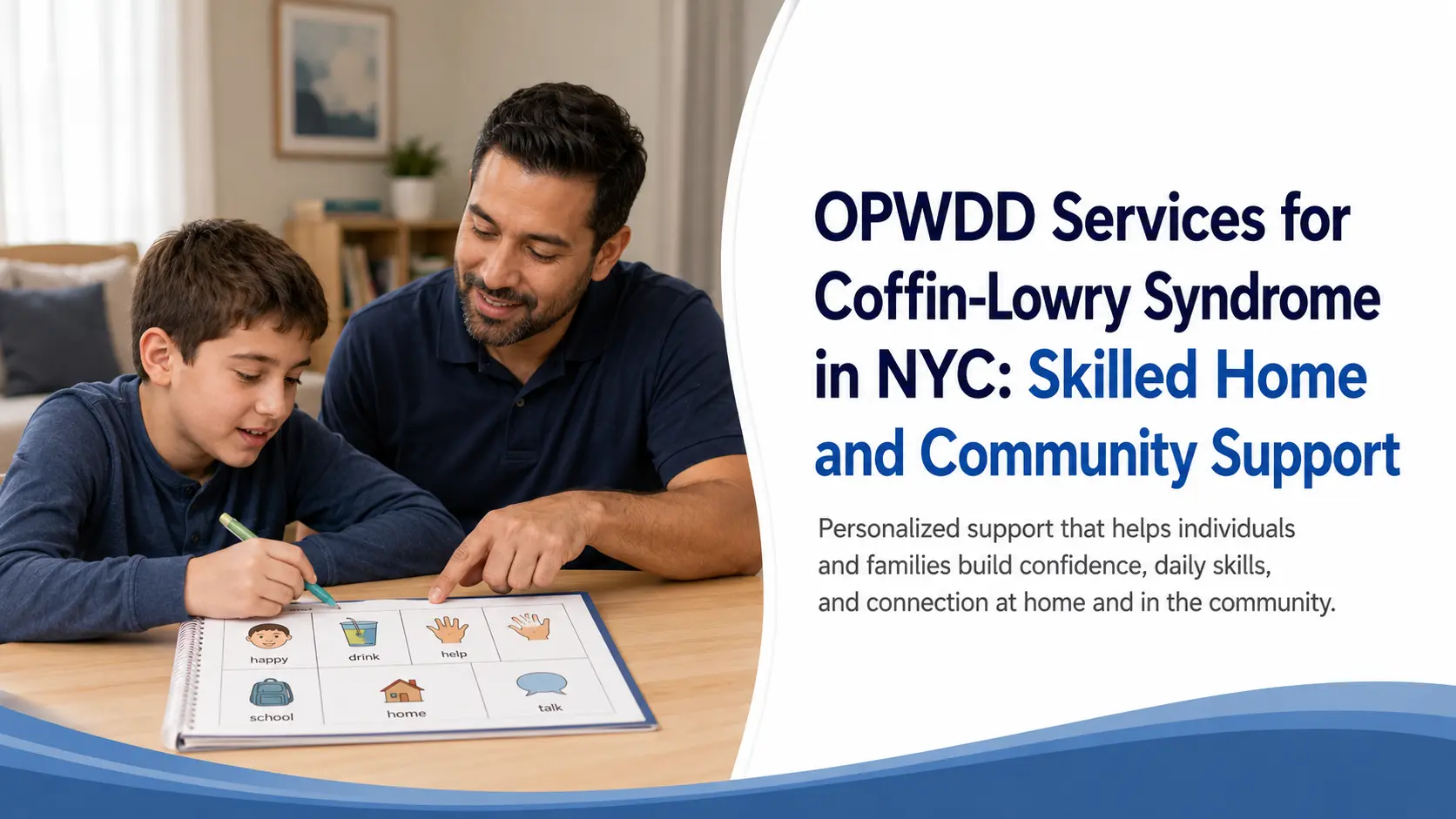
    Coffin-Lowry syndrome brings developmental, physical, and communication needs that call for skilled, patient support. Here’s how OPWDD services help β€” and how Advantage Home Care supports families.

    πŸ’‘ Key Takeaways
    • Coffin-Lowry syndrome is a qualifying developmental disability for OPWDD services in New York.
    • OPWDD funds in-home support, community and day habilitation, and respite β€” matched to the condition’s developmental, physical, and communication needs.
    • Advantage Home Care provides these OPWDD services and guides families through eligibility and the Front Door.

    Coffin-Lowry syndrome is a genetic condition that typically brings intellectual disability, developmental delays, distinctive physical features, and sometimes skeletal or motor differences β€” often more pronounced in boys. Support has to be skilled, patient, and built around each person’s abilities. New York’s OPWDD system funds that kind of care, and Advantage Home Care helps NYC families access it.

    A real-world example

    Consider a 13-year-old in Brooklyn with Coffin-Lowry syndrome. He has an intellectual disability, needs help with many daily tasks, and communicates in ways his family has learned to understand deeply. Through OPWDD, he receives in-home support from staff trained in his daily-care and communication needs, and works with a community habilitation aide on skills and community access. He grows more capable, and his family gains reliable help and reassurance. That’s what these OPWDD services are designed to do.

    How OPWDD Services Help People With Coffin-Lowry Syndrome

    Support is built around each person’s developmental, physical, and communication needs. The most relevant services usually include:

    Explore our full range of OPWDD services and OPWDD support services.

    Does Coffin-Lowry Syndrome Qualify for OPWDD?

    Yes. Coffin-Lowry syndrome is a recognized developmental disability under OPWDD β€” it is genetic, present from early life, lifelong, and results in substantial functional limitations including intellectual disability. Eligibility is established through OPWDD’s “Front Door” process, which requires medical and diagnostic documentation. We help families gather what’s needed and navigate intake β€” see our guide to OPWDD eligibility in New York.

    How Advantage Home Care Helps

    Skilled, patient staff. We match individuals with support staff experienced in daily care, communication, and the patience Coffin-Lowry support requires.

    We guide the whole process. From the Front Door and eligibility to building a plan with your Care Coordination Organization, we make a complex process manageable.

    A partner as needs change. Our care coordination and family support team keeps the plan aligned with your loved one’s needs over time.

    Frequently Asked Questions

    Does Coffin-Lowry syndrome qualify for OPWDD services?

    Yes. It is a qualifying developmental disability under OPWDD β€” genetic, lifelong, and causing substantial functional limitations.

    What OPWDD services help most with Coffin-Lowry syndrome?

    In-home support, community habilitation, day habilitation, and respite β€” all available through Advantage Home Care’s OPWDD services.

    Can staff help with communication and daily care?

    Yes. We match families with staff experienced in daily care and each person’s communication style, as part of a plan built around the individual.

    How do we get started?

    It begins with the OPWDD Front Door process to establish eligibility. We help families gather documentation and move from approval to services at home.

    Related OPWDD condition guides: Kabuki Syndrome, Rubinstein-Taybi Syndrome, and Epilepsy.

    Part of our complete guide to OPWDD Services in NYC

    Get OPWDD Support for Coffin-Lowry Syndrome

    Whether you’re starting the Front Door process or looking for a provider who understands Coffin-Lowry, we’re here to help. Call 718-375-2707 or reach out online.

    Get Started β†’

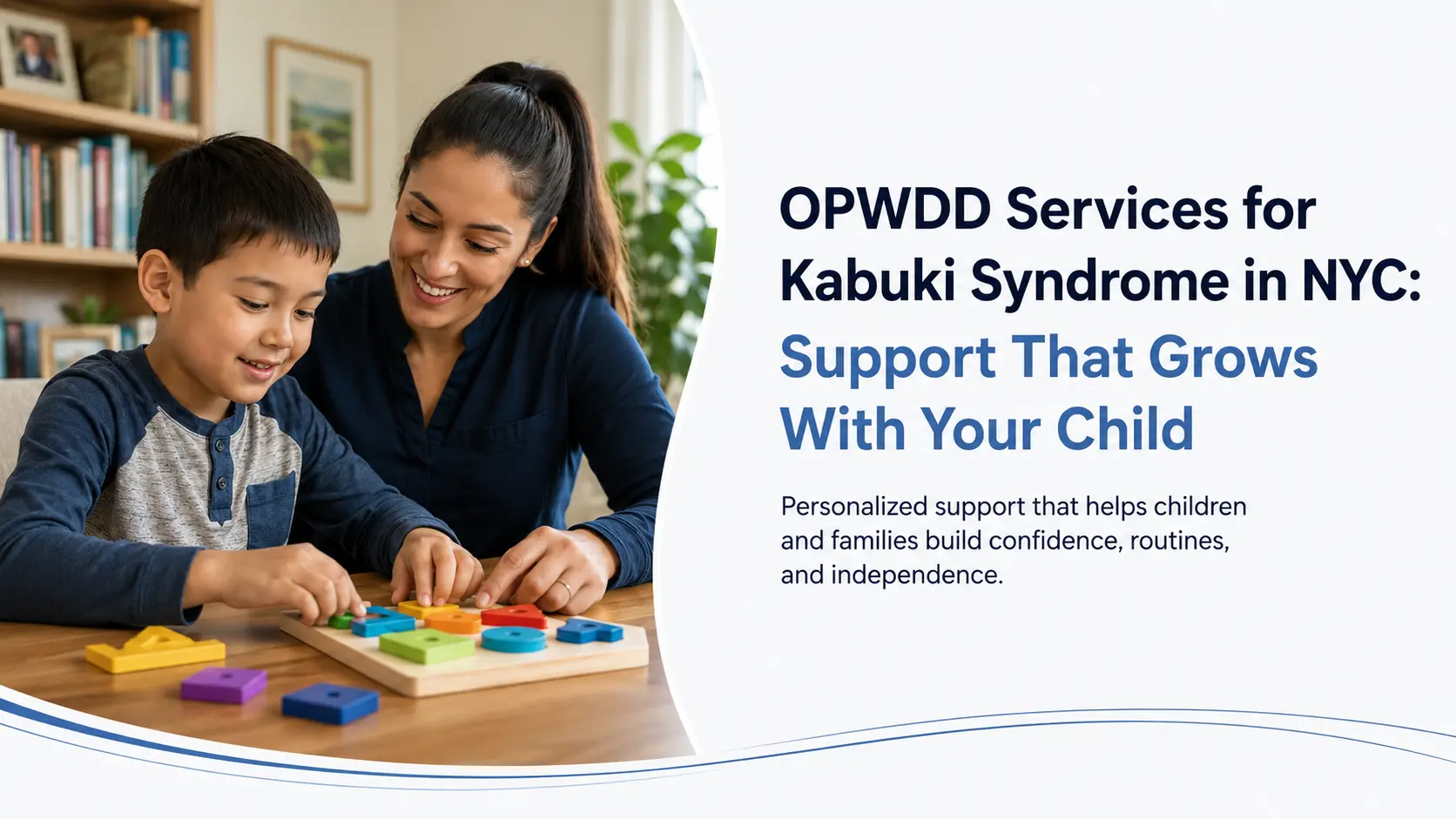
  • OPWDD Services for Kabuki Syndrome in NYC: Support That Grows With Your Child

    OPWDD Services for Kabuki Syndrome in NYC: Support That Grows With Your Child

    OPWDD for Kabuki Syndrome

    OPWDD Services for Kabuki Syndrome in NYC: Support That Grows With Your Child

    Kabuki syndrome brings developmental delays alongside a warm, engaging spirit. Here’s how OPWDD services help β€” and how Advantage Home Care supports families across NYC.

    πŸ’‘ Key Takeaways
    • Kabuki syndrome is a qualifying developmental disability for OPWDD services in New York.
    • OPWDD funds community and day habilitation, in-home support, and respite β€” matched to the condition’s developmental, learning, and sometimes medical needs.
    • Advantage Home Care provides these OPWDD services and guides families through eligibility and the Front Door.

    Kabuki syndrome is a genetic condition marked by distinctive facial features, intellectual disability that is often mild to moderate, developmental delays, low muscle tone, and sometimes heart or other medical needs β€” alongside a personality families often describe as affectionate and sociable. Support that builds on those strengths makes a real difference. New York’s OPWDD system funds that kind of care, and Advantage Home Care helps NYC families access it.

    A real-world example

    Consider a 10-year-old in Queens with Kabuki syndrome. She’s cheerful and eager to connect, but she struggles with learning, coordination, and some daily-living skills, and her parents want to help her build independence. Through OPWDD, she works with a community habilitation aide on daily-living and social skills, and attends day habilitation where she thrives among friends. She grows more capable and confident, and her family gains a partner in planning ahead. That’s what these OPWDD services are designed to do.

    How OPWDD Services Help People With Kabuki Syndrome

    Support is built around each person’s goals and strengths. The most relevant services usually include:

    Explore our full range of OPWDD services and OPWDD support services.

    Does Kabuki Syndrome Qualify for OPWDD?

    Yes. Kabuki syndrome is a recognized developmental disability under OPWDD β€” it is genetic, present from birth, lifelong, and results in substantial functional limitations including intellectual disability. Eligibility is established through OPWDD’s “Front Door” process, which requires medical and diagnostic documentation. We help families gather what’s needed and navigate intake β€” see our guide to OPWDD eligibility in New York.

    How Advantage Home Care Helps

    Support that builds on strengths. We match individuals with staff who nurture each person’s sociability and interests while supporting learning and independence.

    We guide the whole process. From the Front Door and eligibility to building a plan with your Care Coordination Organization, we help families move forward with clarity.

    A partner through every transition. Our care coordination and family support team is there from childhood into adult life.

    Frequently Asked Questions

    Does Kabuki syndrome qualify for OPWDD services?

    Yes. It is a qualifying developmental disability under OPWDD β€” genetic, lifelong, and causing substantial functional limitations.

    What OPWDD services help most with Kabuki syndrome?

    Community habilitation, day habilitation, in-home support, and respite β€” all available through Advantage Home Care’s OPWDD services.

    Can OPWDD help my child build independence?

    Yes. Community habilitation and day habilitation are designed to build daily-living and social skills over time.

    How do we get started?

    It begins with the OPWDD Front Door process to establish eligibility. We help families gather documentation and move from approval to services at home.

    Related OPWDD condition guides: Coffin-Lowry Syndrome, Cornelia de Lange Syndrome, and Intellectual Disability.

    Part of our complete guide to OPWDD Services in NYC

    Get OPWDD Support for Kabuki Syndrome

    Whether you’re starting the Front Door process or looking for a provider who understands Kabuki syndrome, we’re here to help. Call 718-375-2707 or reach out online.

    Get Started β†’

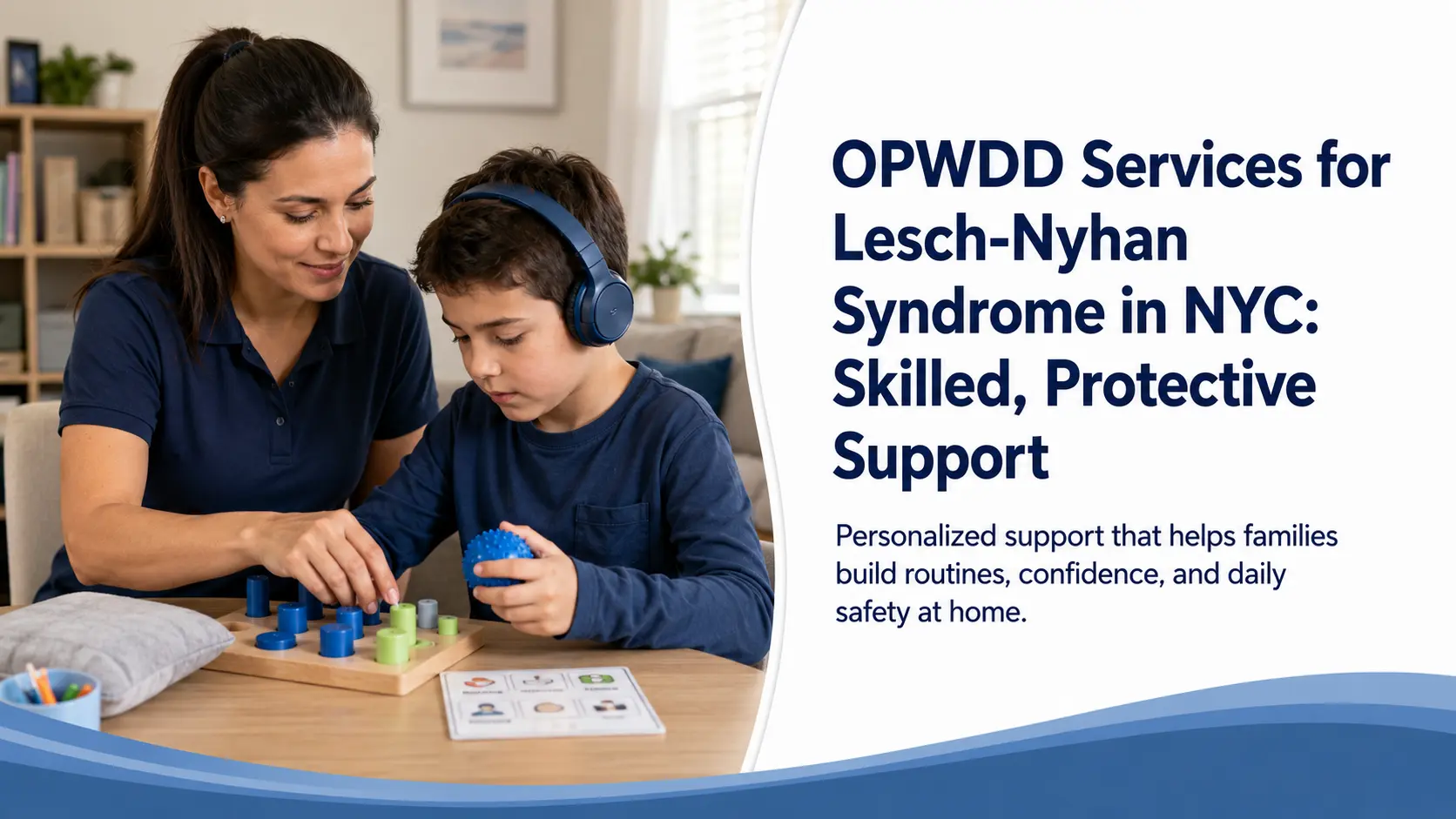
  • OPWDD Services for Lesch-Nyhan Syndrome in NYC: Skilled, Protective Support

    OPWDD Services for Lesch-Nyhan Syndrome in NYC: Skilled, Protective Support

    OPWDD for Lesch-Nyhan Syndrome

    OPWDD Services for Lesch-Nyhan Syndrome in NYC: Skilled, Protective Support

    Lesch-Nyhan syndrome calls for highly skilled, protective, compassionate care. Here’s how OPWDD services help β€” and how Advantage Home Care supports families across NYC.

    πŸ’‘ Key Takeaways
    • Lesch-Nyhan syndrome is a qualifying developmental disability for OPWDD services in New York.
    • OPWDD funds skilled in-home support, community habilitation, and respite β€” matched to the condition’s significant physical, behavioral, and safety needs.
    • Advantage Home Care provides these OPWDD services and guides families through eligibility and the Front Door.

    Lesch-Nyhan syndrome is a rare genetic condition that affects boys, bringing intellectual disability, movement difficulties, and β€” most challengingly β€” compulsive self-injurious behavior that the person cannot control and often does not want. It calls for skilled, protective, and deeply compassionate care. New York’s OPWDD system funds that kind of support, and Advantage Home Care helps NYC families access it.

    A real-world example

    Consider a 12-year-old in Manhattan with Lesch-Nyhan syndrome. He uses a wheelchair, needs help with every daily task, and requires careful, respectful protection from self-injury β€” something his exhausted parents manage around the clock. Through OPWDD, he receives skilled in-home support from staff trained in his physical and protective needs, and his family gets respite that offers rare, genuine rest. He’s safer and better supported; his parents can breathe. That’s what these OPWDD services make possible.

    How OPWDD Services Help People With Lesch-Nyhan Syndrome

    Support is built around skilled care, protection, and safety. The most relevant services usually include:

    Explore our full range of OPWDD services and OPWDD support services.

    Does Lesch-Nyhan Syndrome Qualify for OPWDD?

    Yes. Lesch-Nyhan syndrome is a recognized developmental disability under OPWDD β€” it is genetic, present from early life, lifelong, and results in substantial functional limitations including intellectual disability. Eligibility is established through OPWDD’s “Front Door” process, which requires medical and diagnostic documentation. We help families gather what’s needed and navigate intake β€” see our guide to OPWDD eligibility in New York.

    How Advantage Home Care Helps

    Highly skilled, protective staff. We match individuals with support staff experienced in the physical care, protective needs, and compassion Lesch-Nyhan support requires.

    We guide the whole process. From the Front Door and eligibility to building a plan with your Care Coordination Organization, we make a complex process manageable.

    A partner as needs change. Our care coordination and family support team keeps the plan aligned with your loved one’s needs over time.

    Frequently Asked Questions

    Does Lesch-Nyhan syndrome qualify for OPWDD services?

    Yes. It is a qualifying developmental disability under OPWDD β€” genetic, lifelong, and causing substantial functional limitations.

    What OPWDD services help most with Lesch-Nyhan syndrome?

    Skilled in-home support, community habilitation, respite, and care coordination β€” all available through Advantage Home Care’s OPWDD services.

    Can staff help protect against self-injury?

    We match families with staff experienced in the respectful, protective care the condition requires, as part of a plan built around the individual.

    How do we get started?

    It begins with the OPWDD Front Door process to establish eligibility. We help families gather documentation and move from approval to services at home.

    Related OPWDD condition guides: Intellectual Disability, Epilepsy, and Cri-du-chat Syndrome.

    Part of our complete guide to OPWDD Services in NYC

    Get OPWDD Support for Lesch-Nyhan Syndrome

    Whether you’re starting the Front Door process or looking for a provider who understands complex, protective care, we’re here to help. Call 718-375-2707 or reach out online.

    Get Started β†’

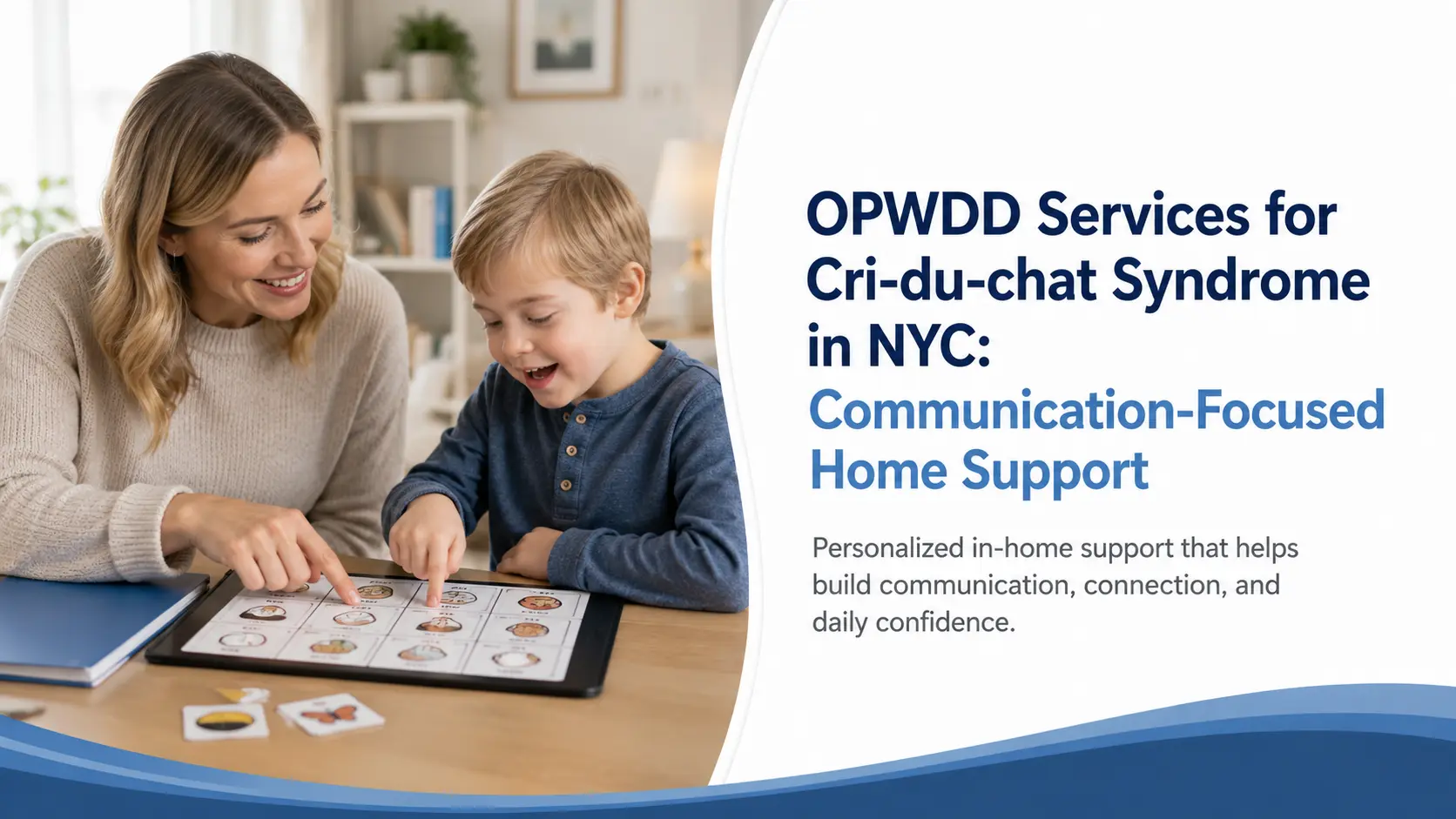
  • OPWDD Services for Cri-du-chat Syndrome in NYC: Communication-Focused Home Support

    OPWDD Services for Cri-du-chat Syndrome in NYC: Communication-Focused Home Support

    OPWDD for Cri-du-chat Syndrome

    OPWDD Services for Cri-du-chat Syndrome in NYC: Communication-Focused Home Support

    Cri-du-chat syndrome brings significant developmental and communication needs. Here’s how OPWDD services help β€” and how Advantage Home Care supports families across New York City.

    πŸ’‘ Key Takeaways
    • Cri-du-chat syndrome is a qualifying developmental disability for OPWDD services in New York.
    • OPWDD funds in-home support, communication help, community habilitation, and respite β€” matched to the condition’s developmental and speech needs.
    • Advantage Home Care provides these OPWDD services and guides families through eligibility and the Front Door.

    Cri-du-chat syndrome is a genetic condition caused by a missing piece of chromosome 5, and it typically brings intellectual disability, delayed development, low muscle tone, and significant speech and communication challenges. With patient, skilled support, children and adults with the condition can grow, connect, and thrive at home. New York’s OPWDD system funds that kind of care, and Advantage Home Care helps NYC families access it.

    A real-world example

    Consider a 6-year-old in the Bronx with Cri-du-chat syndrome. She has very limited speech, needs help with most daily tasks, and communicates through gestures and expressions the people who know her best have learned to read. Through OPWDD, she receives in-home support from staff who work with her communication and daily routines, and her family gets respite for genuine rest. She’s supported and understood; her parents have a real partner. That’s what these OPWDD services are designed to do.

    How OPWDD Services Help People With Cri-du-chat Syndrome

    Support is built around communication, daily needs, and safety. The most relevant services usually include:

    Explore our full range of OPWDD services and OPWDD support services.

    Does Cri-du-chat Syndrome Qualify for OPWDD?

    Yes. Cri-du-chat syndrome is a recognized developmental disability under OPWDD β€” it is genetic, present from birth, lifelong, and results in substantial functional limitations including intellectual disability. Eligibility is established through OPWDD’s “Front Door” process, which requires medical and diagnostic documentation. We help families gather what’s needed and navigate intake β€” see our guide to OPWDD eligibility in New York.

    How Advantage Home Care Helps

    Communication-focused staff. We match individuals with support staff experienced in alternative communication and the daily support Cri-du-chat care requires.

    We guide the whole process. From the Front Door and eligibility to building a plan with your Care Coordination Organization, we make a complex process manageable.

    A partner as needs change. Our care coordination and family support team keeps the plan aligned with your loved one’s needs over time.

    Frequently Asked Questions

    Does Cri-du-chat syndrome qualify for OPWDD services?

    Yes. It is a qualifying developmental disability under OPWDD β€” genetic, lifelong, and causing substantial functional limitations.

    What OPWDD services help most with Cri-du-chat syndrome?

    In-home support, communication support, community habilitation, and respite β€” all available through Advantage Home Care’s OPWDD services.

    Can staff help with communication tools?

    Yes. We match families with staff experienced in alternative and augmentative communication as part of a plan built around the individual.

    How do we get started?

    It begins with the OPWDD Front Door process to establish eligibility. We help families gather documentation and move from approval to services at home.

    Related OPWDD condition guides: Angelman Syndrome, Smith-Magenis Syndrome, and Phelan-McDermid Syndrome.

    Part of our complete guide to OPWDD Services in NYC

    Get OPWDD Support for Cri-du-chat Syndrome

    Whether you’re starting the Front Door process or looking for a provider who understands Cri-du-chat, we’re here to help. Call 718-375-2707 or reach out online.

    Get Started β†’

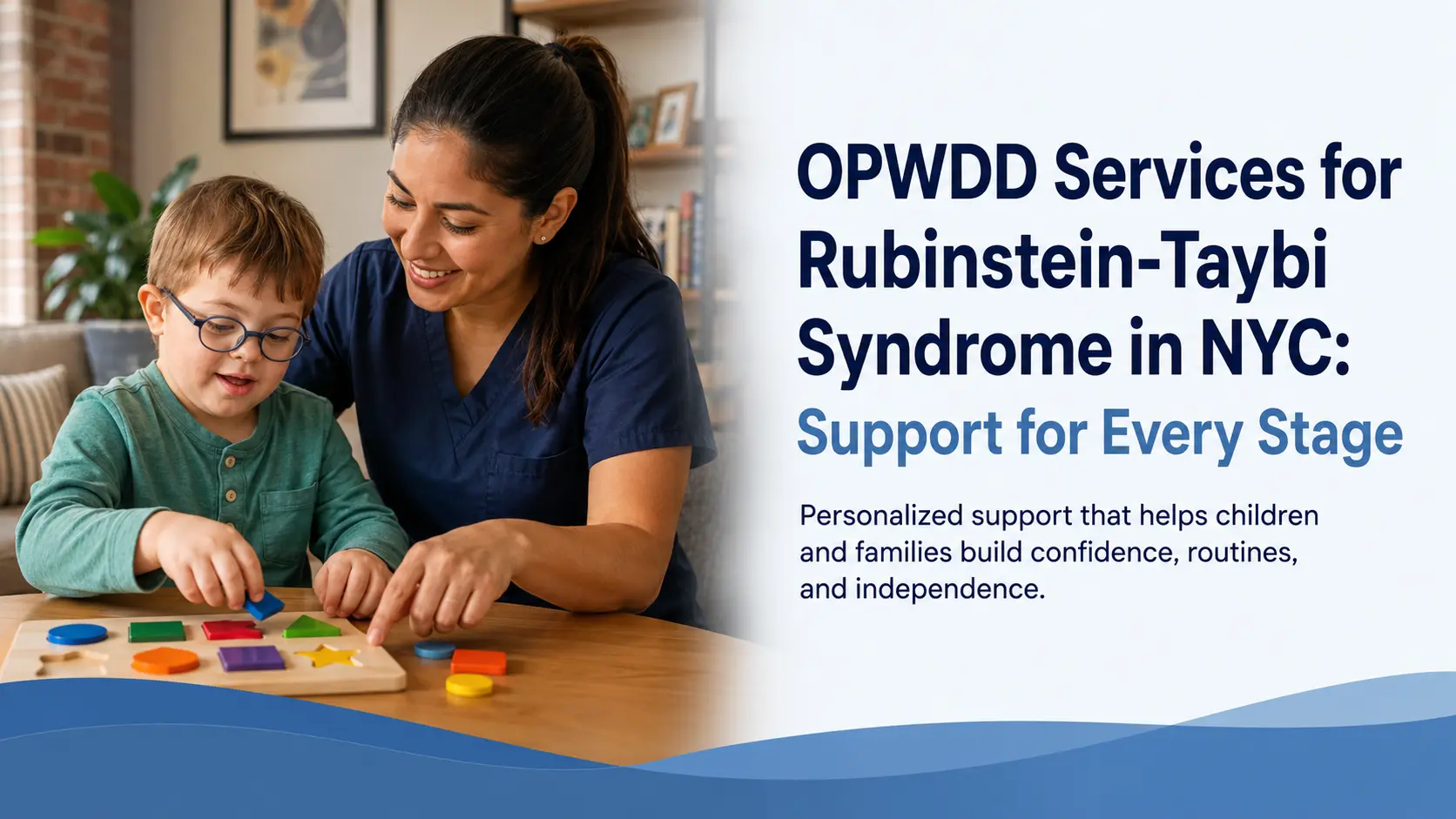
  • OPWDD Services for Rubinstein-Taybi Syndrome in NYC: Support for Every Stage

    OPWDD Services for Rubinstein-Taybi Syndrome in NYC: Support for Every Stage

    OPWDD for Rubinstein-Taybi Syndrome

    OPWDD Services for Rubinstein-Taybi Syndrome in NYC: Support for Every Stage

    Rubinstein-Taybi syndrome brings developmental delays alongside a warm, engaging personality. Here’s how OPWDD services help β€” and how Advantage Home Care supports families across NYC.

    πŸ’‘ Key Takeaways
    • Rubinstein-Taybi syndrome is a qualifying developmental disability for OPWDD services in New York.
    • OPWDD funds community and day habilitation, in-home support, and respite β€” matched to the condition’s developmental and learning needs.
    • Advantage Home Care provides these OPWDD services and guides families through eligibility and the Front Door.

    Rubinstein-Taybi syndrome is a genetic condition marked by intellectual disability, developmental delays, distinctive physical features such as broad thumbs and toes, and often a notably social, affectionate nature. Support that builds on each person’s strengths while meeting their challenges makes a lasting difference. New York’s OPWDD system funds that kind of care, and Advantage Home Care helps NYC families access it.

    A real-world example

    Consider a 14-year-old in Brooklyn with Rubinstein-Taybi syndrome. He’s sociable and eager to be part of everything, but he struggles with academics and daily-living skills, and his parents worry about his path to independence. Through OPWDD, he works with a community habilitation aide on daily-living and social skills, and attends day habilitation where his warmth makes him a favorite. He grows more capable and confident, and his family gains a partner in planning his future. That’s what these OPWDD services are designed to do.

    How OPWDD Services Help People With Rubinstein-Taybi Syndrome

    Support is built around each person’s goals and strengths. The most relevant services usually include:

    Explore our full range of OPWDD services and OPWDD support services.

    Does Rubinstein-Taybi Syndrome Qualify for OPWDD?

    Yes. Rubinstein-Taybi syndrome is a recognized developmental disability under OPWDD β€” it is genetic, present from birth, lifelong, and results in substantial functional limitations including intellectual disability. Eligibility is established through OPWDD’s “Front Door” process, which requires medical and diagnostic documentation. We help families gather what’s needed and navigate intake β€” see our guide to OPWDD eligibility in New York.

    How Advantage Home Care Helps

    Support that builds on strengths. We match individuals with staff who nurture each person’s sociability and interests while supporting independence and daily needs.

    We guide the whole process. From the Front Door and eligibility to building a plan with your Care Coordination Organization, we help families move forward with clarity.

    A partner through every transition. Our care coordination and family support team is there from childhood into adult life.

    Frequently Asked Questions

    Does Rubinstein-Taybi syndrome qualify for OPWDD services?

    Yes. It is a qualifying developmental disability under OPWDD β€” genetic, lifelong, and causing substantial functional limitations.

    What OPWDD services help most with Rubinstein-Taybi syndrome?

    Community habilitation, day habilitation, in-home support, and respite β€” all available through Advantage Home Care’s OPWDD services.

    Can OPWDD help my child build independence?

    Yes. Community habilitation and day habilitation are designed to build daily-living and social skills over time.

    How do we get started?

    It begins with the OPWDD Front Door process to establish eligibility. We help families gather documentation and move from approval to services at home.

    Related OPWDD condition guides: Cornelia de Lange Syndrome, Coffin-Lowry Syndrome, and Intellectual Disability.

    Part of our complete guide to OPWDD Services in NYC

    Get OPWDD Support for Rubinstein-Taybi Syndrome

    Whether you’re starting the Front Door process or looking for a provider who understands Rubinstein-Taybi, we’re here to help. Call 718-375-2707 or reach out online.

    Get Started β†’

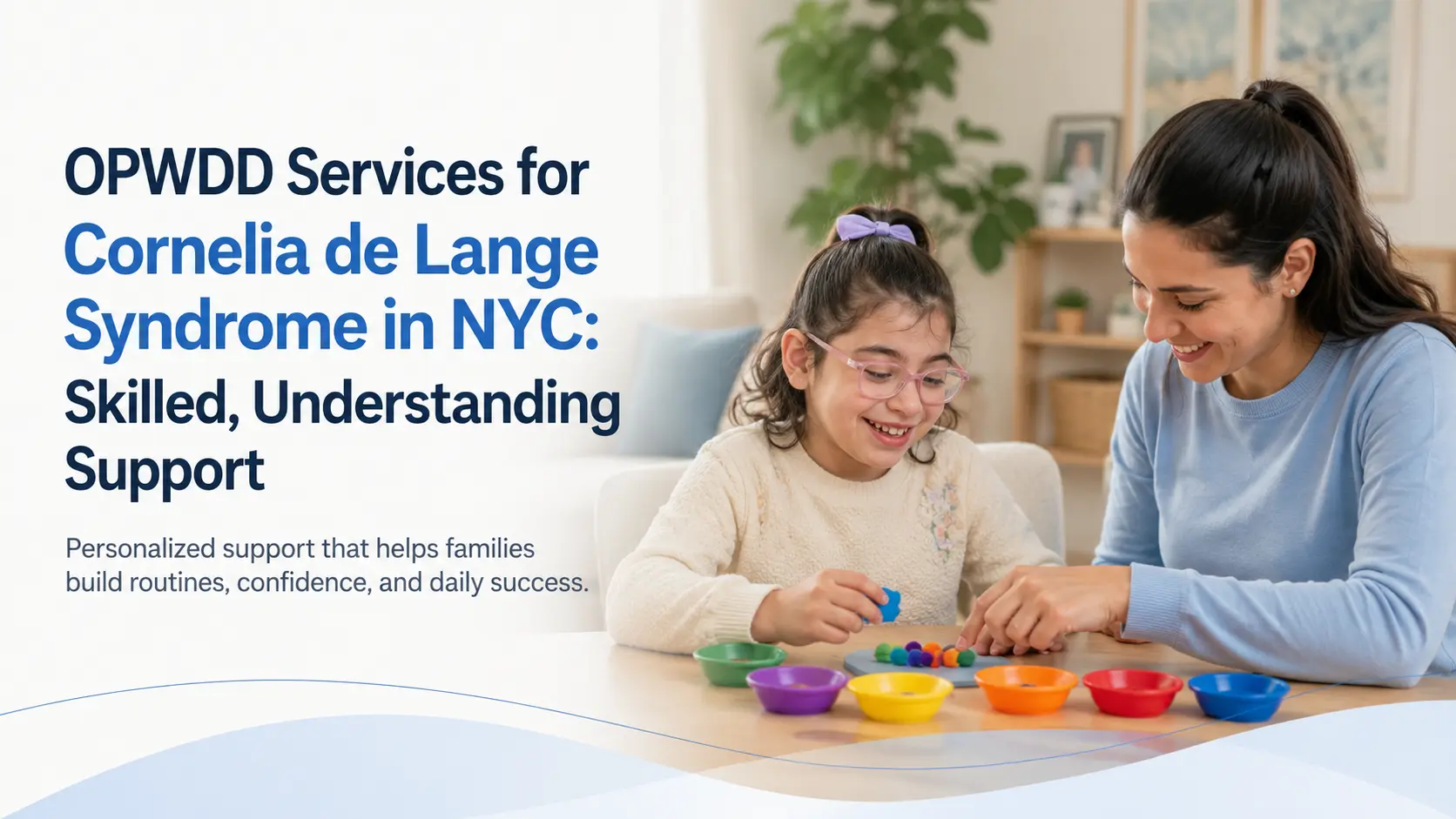
  • OPWDD Services for Cornelia de Lange Syndrome in NYC: Skilled, Understanding Support

    OPWDD Services for Cornelia de Lange Syndrome in NYC: Skilled, Understanding Support

    OPWDD for Cornelia de Lange Syndrome

    OPWDD Services for Cornelia de Lange Syndrome in NYC: Skilled, Understanding Support

    Cornelia de Lange syndrome brings a distinctive mix of developmental, communication, and medical needs. Here’s how OPWDD services help β€” and how Advantage Home Care supports families across NYC.

    πŸ’‘ Key Takeaways
    • Cornelia de Lange syndrome (CdLS) is a qualifying developmental disability for OPWDD services in New York.
    • OPWDD funds in-home support, communication help, community habilitation, and respite β€” matched to the condition’s developmental and medical needs.
    • Advantage Home Care provides these OPWDD services and guides families through eligibility and the Front Door.

    Cornelia de Lange syndrome is a genetic condition that typically brings intellectual disability, growth and limb differences, communication challenges, and often gastrointestinal and behavioral needs. Every person with CdLS is different, and support has to be just as individual β€” skilled, patient, and attuned to how each person communicates. New York’s OPWDD system funds that kind of care, and Advantage Home Care helps NYC families access it.

    A real-world example

    Consider a 9-year-old in Queens with Cornelia de Lange syndrome. She has limited speech, needs help with most daily tasks, and communicates in her own ways that the people closest to her have learned to read. Through OPWDD, she receives in-home support from staff trained in her communication and daily-care needs, and her family gets respite that offers real rest. She’s supported and understood; her parents finally feel they have a partner. That’s what these OPWDD services are designed to do.

    How OPWDD Services Help People With Cornelia de Lange Syndrome

    Support is built around communication, daily needs, and safety. The most relevant services usually include:

    Explore our full range of OPWDD services and OPWDD support services.

    Does Cornelia de Lange Syndrome Qualify for OPWDD?

    Yes. Cornelia de Lange syndrome is a recognized developmental disability under OPWDD β€” it is genetic, present from birth, lifelong, and results in substantial functional limitations including intellectual disability. Eligibility is established through OPWDD’s “Front Door” process, which requires medical and diagnostic documentation. We help families gather what’s needed and navigate intake β€” see our guide to OPWDD eligibility in New York.

    How Advantage Home Care Helps

    Skilled, understanding staff. We match individuals with support staff experienced in communication, daily care, and the patience CdLS support requires.

    We guide the whole process. From the Front Door and eligibility to building a plan with your Care Coordination Organization, we make a complex process manageable.

    A partner as needs change. Our care coordination and family support team keeps the plan aligned with your loved one’s needs over time.

    Frequently Asked Questions

    Does Cornelia de Lange syndrome qualify for OPWDD services?

    Yes. It is a qualifying developmental disability under OPWDD β€” genetic, lifelong, and causing substantial functional limitations.

    What OPWDD services help most with Cornelia de Lange syndrome?

    In-home support, communication support, community habilitation, and respite β€” all available through Advantage Home Care’s OPWDD services.

    Can staff help with communication?

    Yes. We match families with staff experienced in alternative communication and each person’s individual style.

    How do we get started?

    It begins with the OPWDD Front Door process to establish eligibility. We help families gather documentation and move from approval to services at home.

    Related OPWDD condition guides: Rubinstein-Taybi Syndrome, Kabuki Syndrome, and Intellectual Disability.

    Part of our complete guide to OPWDD Services in NYC

    Get OPWDD Support for Cornelia de Lange Syndrome

    Whether you’re starting the Front Door process or looking for a provider who understands CdLS, we’re here to help. Call 718-375-2707 or reach out online.

    Get Started β†’

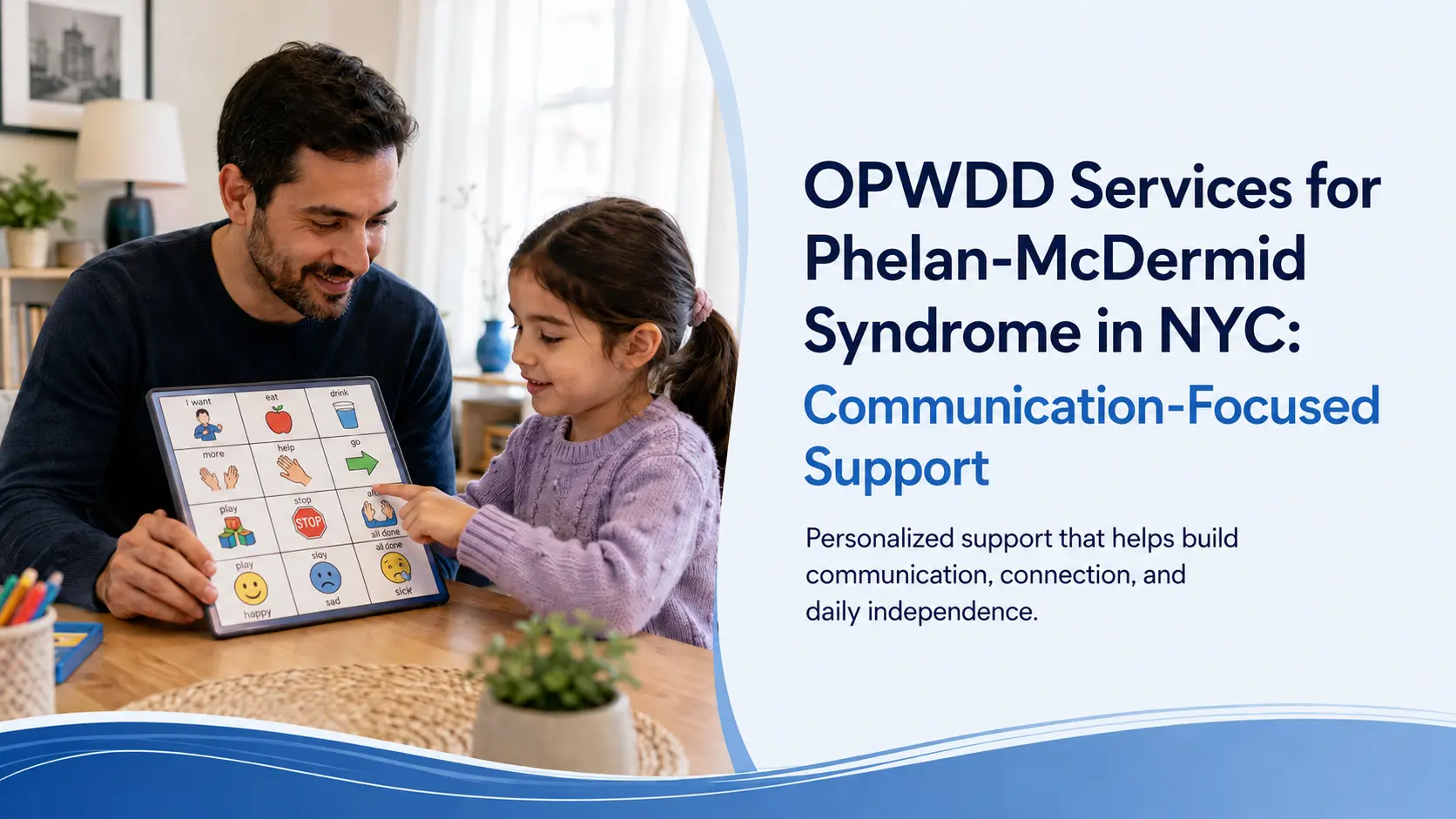
  • OPWDD Services for Phelan-McDermid Syndrome in NYC: Communication-Focused Support

    OPWDD Services for Phelan-McDermid Syndrome in NYC: Communication-Focused Support

    OPWDD for Phelan-McDermid Syndrome

    OPWDD Services for Phelan-McDermid Syndrome in NYC: Communication-Focused Support

    Phelan-McDermid syndrome brings significant developmental and communication challenges. Here’s how OPWDD services help β€” and how Advantage Home Care supports families across NYC.

    πŸ’‘ Key Takeaways
    • Phelan-McDermid syndrome is a qualifying developmental disability for OPWDD services in New York.
    • OPWDD funds in-home support, communication help, community habilitation, and respite β€” matched to the condition’s developmental and speech needs.
    • Advantage Home Care provides these OPWDD services and guides families through eligibility and the Front Door.

    Phelan-McDermid syndrome is a genetic condition that typically brings intellectual disability, absent or very limited speech, low muscle tone, and often autism-related features. Communication and daily support are central needs, and finding staff who truly understand them matters enormously. New York’s OPWDD system funds that kind of care, and Advantage Home Care helps NYC families access it.

    A real-world example

    Consider a 7-year-old in the Bronx with Phelan-McDermid syndrome. He’s nonverbal, has low muscle tone, and needs help with most daily tasks β€” but he’s curious and connects deeply with people who take the time to understand him. Through OPWDD, he receives in-home support from staff who work with his communication tools and daily routines, and his family gets respite for real rest. He’s supported and understood; his parents have a true partner. That’s what these OPWDD services are designed to do.

    How OPWDD Services Help People With Phelan-McDermid Syndrome

    Support is built around communication, daily needs, and safety. The most relevant services usually include:

    Explore our full range of OPWDD services and OPWDD support services.

    Does Phelan-McDermid Syndrome Qualify for OPWDD?

    Yes. Phelan-McDermid syndrome is a recognized developmental disability under OPWDD β€” it is genetic, present from early life, lifelong, and results in substantial functional limitations including intellectual disability. Eligibility is established through OPWDD’s “Front Door” process, which requires medical and diagnostic documentation. We help families gather what’s needed and navigate intake β€” see our guide to OPWDD eligibility in New York.

    How Advantage Home Care Helps

    Communication-focused staff. We match individuals with support staff experienced in alternative communication and the daily support Phelan-McDermid care requires.

    We guide the whole process. From the Front Door and eligibility to building a plan with your Care Coordination Organization, we make a complex process manageable.

    A partner as needs change. Our care coordination and family support team keeps the plan aligned with your loved one’s needs over time.

    Frequently Asked Questions

    Does Phelan-McDermid syndrome qualify for OPWDD services?

    Yes. It is a qualifying developmental disability under OPWDD β€” genetic, lifelong, and causing substantial functional limitations.

    What OPWDD services help most with Phelan-McDermid syndrome?

    In-home support, communication support, community habilitation, and respite β€” all available through Advantage Home Care’s OPWDD services.

    Can staff help with communication tools?

    Yes. We match families with staff experienced in alternative and augmentative communication as part of a plan built around the individual.

    How do we get started?

    It begins with the OPWDD Front Door process to establish eligibility. We help families gather documentation and move from approval to services at home.

    Related OPWDD condition guides: Autism, Angelman Syndrome, and Intellectual Disability.

    Part of our complete guide to OPWDD Services in NYC

    Get OPWDD Support for Phelan-McDermid Syndrome

    Whether you’re starting the Front Door process or looking for a provider who understands Phelan-McDermid, we’re here to help. Call 718-375-2707 or reach out online.

    Get Started β†’

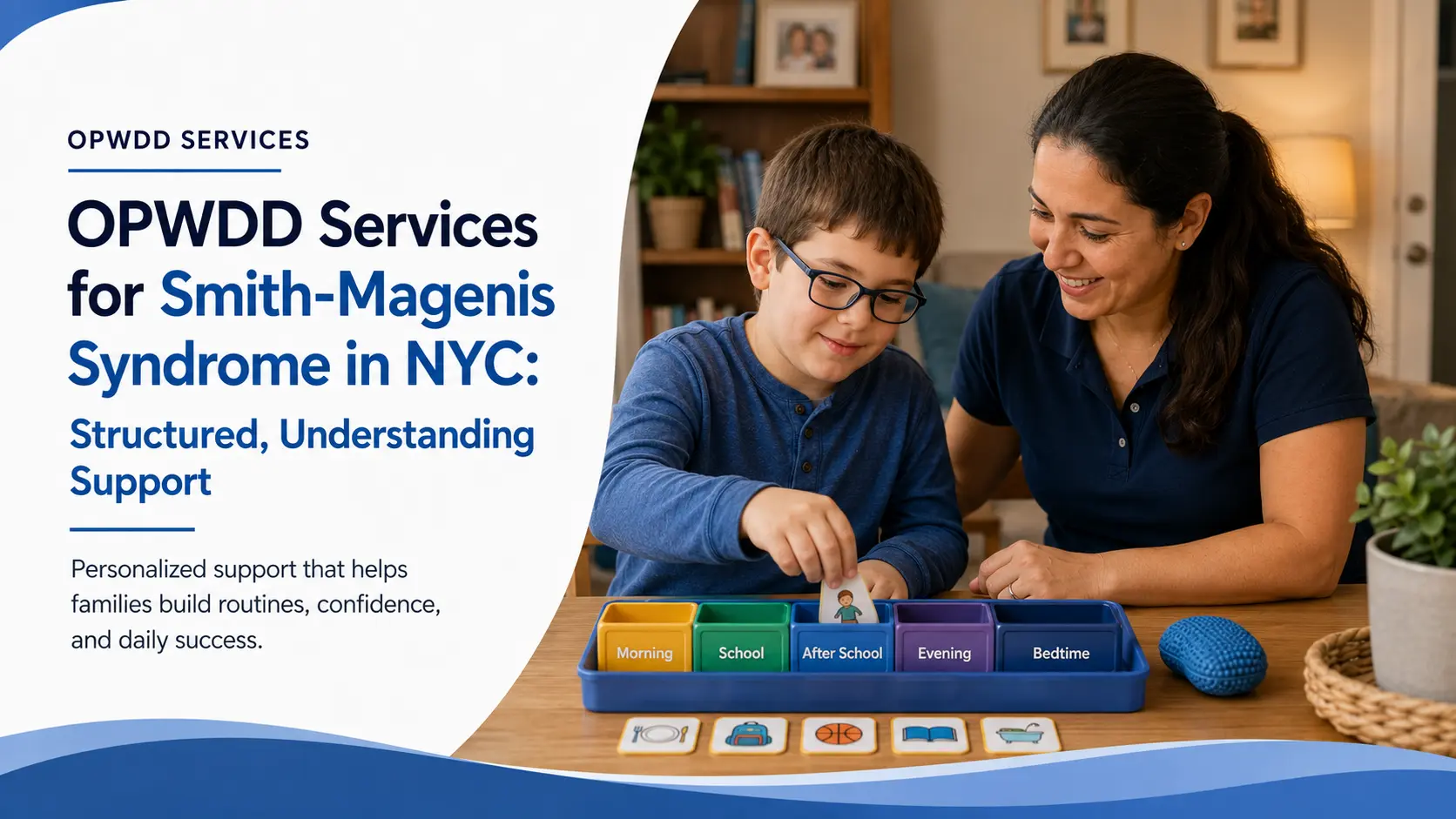
  • OPWDD Services for Smith-Magenis Syndrome in NYC: Structured, Understanding Support

    OPWDD Services for Smith-Magenis Syndrome in NYC: Structured, Understanding Support

    OPWDD for Smith-Magenis Syndrome

    OPWDD Services for Smith-Magenis Syndrome in NYC: Structured, Understanding Support

    Smith-Magenis syndrome calls for structure, patience, and support that understands its sleep and behavioral challenges. Here’s how OPWDD services help β€” and how Advantage Home Care supports families.

    πŸ’‘ Key Takeaways
    • Smith-Magenis syndrome is a qualifying developmental disability for OPWDD services in New York.
    • OPWDD funds in-home support, community and day habilitation, and respite β€” valuable given the sleep and behavioral challenges the condition brings.
    • Advantage Home Care provides these OPWDD services and guides families through eligibility and the Front Door.

    Smith-Magenis syndrome is a genetic condition that brings intellectual disability along with a distinctive set of challenges β€” including disrupted sleep patterns and behavioral difficulties that can be exhausting for the whole family. Support that truly understands the condition makes an enormous difference. New York’s OPWDD system funds that kind of care, and Advantage Home Care helps NYC families access it.

    A real-world example

    Consider a 10-year-old on Staten Island with Smith-Magenis syndrome. He’s affectionate and funny, but his inverted sleep cycle means the family rarely gets a full night’s rest, and his behavioral outbursts leave everyone drained. Through OPWDD, he receives in-home support from staff who understand his routines and triggers, and the family receives respite that finally gives them a chance to sleep and recover. The household grows calmer and more consistent, and his parents feel understood rather than alone. That’s what these OPWDD services are for.

    How OPWDD Services Help People With Smith-Magenis Syndrome

    Support is built around structure, understanding, and family relief. The most relevant services usually include:

    Explore our full range of OPWDD services and OPWDD support services.

    Does Smith-Magenis Syndrome Qualify for OPWDD?

    Yes. Smith-Magenis syndrome is a recognized developmental disability under OPWDD β€” it is genetic, present from birth, lifelong, and results in substantial functional limitations including intellectual disability. Eligibility is established through OPWDD’s “Front Door” process, which requires medical and diagnostic documentation. We help families gather what’s needed and navigate intake β€” see our guide to OPWDD eligibility in New York.

    How Advantage Home Care Helps

    Staff who understand the condition. We match individuals with support staff experienced in the routines, structure, and patience Smith-Magenis care requires.

    We guide the whole process. From the Front Door and eligibility to building a plan with your Care Coordination Organization, we help families move forward with confidence.

    A partner as needs change. Our care coordination and family support team keeps the plan current as your loved one grows.

    Frequently Asked Questions

    Does Smith-Magenis syndrome qualify for OPWDD services?

    Yes. It is a qualifying developmental disability under OPWDD β€” genetic, lifelong, and causing substantial functional limitations.

    What OPWDD services help most with Smith-Magenis syndrome?

    In-home support, community habilitation, day habilitation, and respite β€” all available through Advantage Home Care’s OPWDD services.

    Can support help with sleep and behavioral challenges?

    We match families with staff experienced in structure and routine, and respite is especially valuable for the sleep challenges this condition often brings.

    How do we get started?

    It begins with the OPWDD Front Door process to establish eligibility. We help families gather documentation and move from approval to services at home.

    Related OPWDD condition guides: Angelman Syndrome, Prader-Willi Syndrome, and Cri-du-chat Syndrome.

    Part of our complete guide to OPWDD Services in NYC β†’

    Get OPWDD Support for Smith-Magenis Syndrome

    Whether you’re starting the Front Door process or looking for a provider who understands Smith-Magenis, we’re here to help. Call 718-375-2707 or reach out online.

    Get Started β†’

  • OPWDD Services for Familial Dysautonomia in NYC: Skilled Home Support

    OPWDD Services for Familial Dysautonomia in NYC: Skilled Home Support

    OPWDD for Familial Dysautonomia

    OPWDD Services for Familial Dysautonomia in NYC: Skilled Home Support

    Familial dysautonomia is named specifically in New York’s OPWDD law as a qualifying condition. Here’s how OPWDD services help β€” and how Advantage Home Care supports families across NYC.

    πŸ’‘ Key Takeaways
    • Familial dysautonomia (Riley-Day syndrome) is specifically recognized as a qualifying developmental disability under New York’s OPWDD.
    • OPWDD funds skilled in-home support, community habilitation, and respite β€” matched to the condition’s significant medical and daily-care needs.
    • Advantage Home Care provides these OPWDD services and guides families through eligibility and the Front Door.

    Familial dysautonomia is a rare genetic condition that affects the autonomic and sensory nervous system β€” the body’s control of things like blood pressure, temperature, swallowing, and the ability to feel pain. It brings real medical complexity and daily-care needs, and it is one of the conditions New York names directly in its OPWDD statute. Advantage Home Care helps NYC families access the skilled support these families deserve.

    A real-world example

    Consider a 14-year-old in Manhattan with familial dysautonomia. She needs help with feeding and swallowing precautions, careful monitoring during autonomic episodes, and support with many daily tasks β€” and her parents live with constant vigilance. Through OPWDD, she receives skilled in-home support from staff trained in her specific needs, and her family gets respite that offers rare, genuine rest. She’s safer and better supported; her parents can finally breathe. That’s what these OPWDD services make possible.

    How OPWDD Services Help People With Familial Dysautonomia

    Support is built around medical awareness, safety, and daily needs. The most relevant services usually include:

    Explore our full range of OPWDD services and OPWDD support services.

    Does Familial Dysautonomia Qualify for OPWDD?

    Yes β€” and notably, it is one of the conditions named specifically in New York’s statutory definition of a developmental disability. As a genetic condition present from early life that is lifelong and results in substantial functional limitations, it qualifies for OPWDD services. Eligibility is established through OPWDD’s “Front Door” process, which requires medical and diagnostic documentation. We help families gather what’s needed and navigate intake β€” see our guide to OPWDD eligibility in New York.

    How Advantage Home Care Helps

    Skilled, medically aware staff. We match individuals with support staff who understand the feeding, monitoring, and safety needs familial dysautonomia requires.

    We guide the whole process. From the Front Door and eligibility to building a plan with your Care Coordination Organization, we make a complex process manageable.

    A partner as needs change. Our care coordination and family support team keeps the plan aligned with your loved one’s needs over time.

    Frequently Asked Questions

    Does familial dysautonomia qualify for OPWDD services?

    Yes. It is specifically named in New York’s definition of a developmental disability and qualifies for OPWDD services through the Front Door process.

    What OPWDD services help most with familial dysautonomia?

    Skilled in-home support, community habilitation, respite, and care coordination β€” all available through Advantage Home Care’s OPWDD services.

    Can staff help with feeding and medical monitoring?

    We match families with staff experienced in the daily-care and safety needs the condition involves, as part of a plan built around the individual.

    How do we get started?

    It begins with the OPWDD Front Door process to establish eligibility. We help families gather documentation and move from approval to services at home.

    Related OPWDD condition guides: Intellectual Disability, Cornelia de Lange Syndrome, and Smith-Magenis Syndrome.

    Part of our complete guide to OPWDD Services in NYC

    Get OPWDD Support for Familial Dysautonomia

    Whether you’re starting the Front Door process or looking for a provider who understands complex care, we’re here to help. Call 718-375-2707 or reach out online.

    Get Started β†’