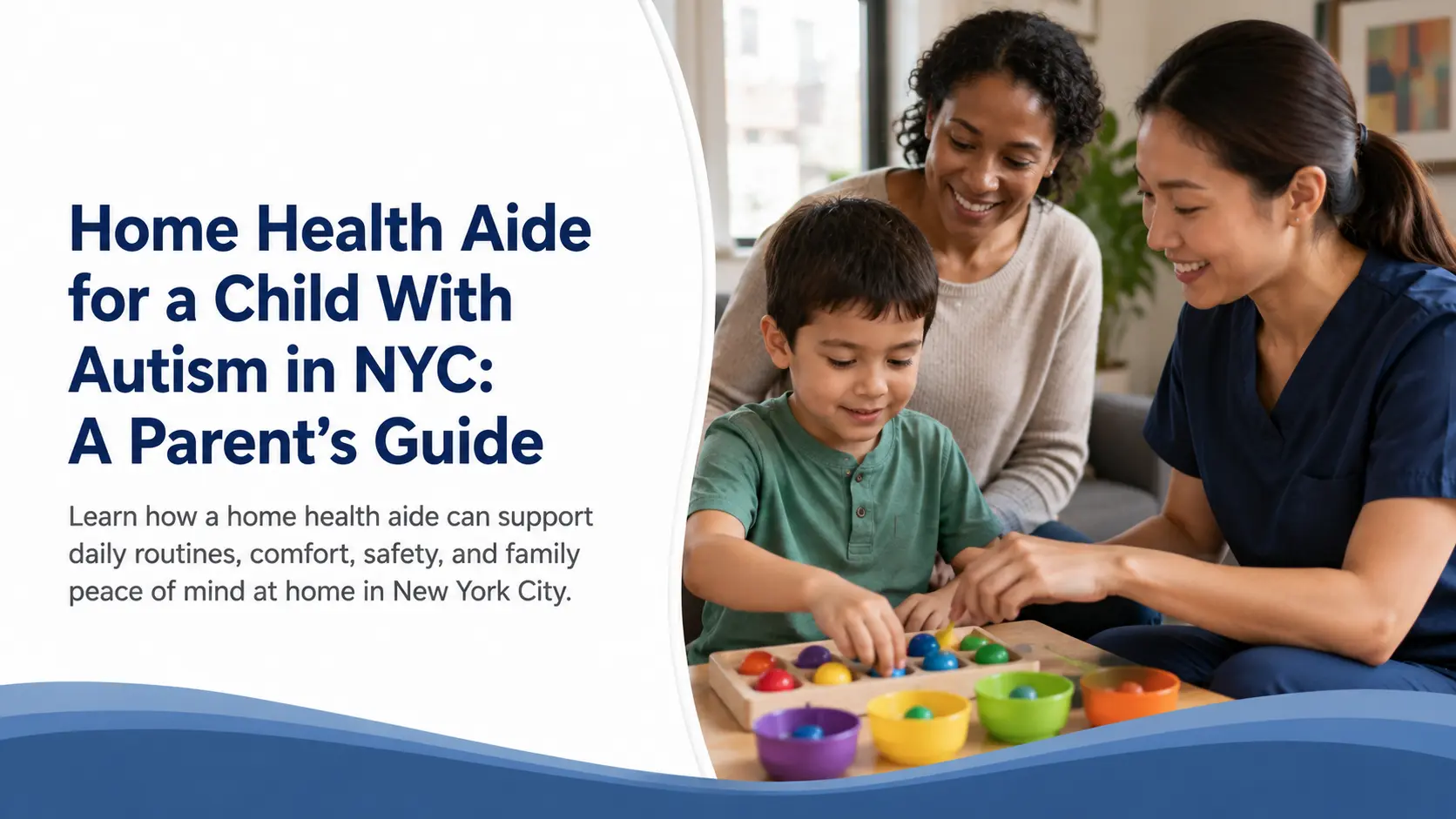
Home Care for Children and Adults With Autism in NYC: What Families Need to Know
Every person with autism is different — and so is the home care that works for them. Here’s how NYC families access specialized support for loved ones with autism, from OPWDD services to in-home caregiving.
- Autism Spectrum Disorder (ASD) qualifies for OPWDD services in New York — covering in-home support, day habilitation, respite, and more.
- The right caregiver for a person with autism requires specific training, patience, and genuine rapport — not just general home care experience.
- Starting the OPWDD eligibility process early — even before a child turns 18 — is one of the most important steps a family can take.
More than 1 in 36 children in the United States is diagnosed with autism spectrum disorder — and those children grow into adults who continue to need support throughout their lives. For families in New York City navigating this journey, the range of available services is broader than most realize. From specialized OPWDD services for individuals with developmental disabilities to in-home caregivers who understand the daily realities of autism, the right support can make an enormous difference — in independence, in safety, and in quality of life for the whole family.
Understanding Autism and What Home Support Addresses
Autism spectrum disorder affects communication, social interaction, sensory processing, and behavior — but the presentation varies enormously from one person to the next. Support needs that are minor for one individual may be significant for another. Effective home care starts with understanding the specific person, not a diagnosis category.
Some individuals with autism are nonspeaking or have limited verbal communication. Caregivers learn each person’s communication style — whether AAC devices, PECS, sign language, or behavioral cues.
Predictable daily schedules are often essential for people with autism. A caregiver who maintains consistent routines — mealtimes, activities, transitions — reduces anxiety and behavioral challenges significantly.
Sensory sensitivities — to sound, light, texture, or touch — can make daily tasks difficult or distressing. A skilled caregiver understands how to approach personal care, mealtimes, and activities in sensory-aware ways.
In-home support for autism isn’t just about assistance — it’s about building independence. Caregivers work on life skills like dressing, cooking, hygiene, and community navigation at the individual’s pace.
Elopement risk, self-injurious behavior, and meltdowns require caregivers with specific training in de-escalation and safety strategies — not just general home care skills.
Caring for a child or adult with autism is one of the most demanding caregiving roles there is. Respite care — a trained professional stepping in — gives families the break they need to sustain the care they provide.
OPWDD Services: The Primary Pathway for Autism Support in NY
For individuals with autism in New York, the Office for People With Developmental Disabilities (OPWDD) is the primary gateway to a wide range of funded services. Autism spectrum disorder qualifies as a developmental disability under OPWDD — making individuals with ASD eligible for services from childhood through the rest of their lives.
In-home and community-based support for building daily living skills, social skills, and independence. Often the most used OPWDD service for individuals with autism living at home.
Structured daytime programming focused on skill development, social interaction, and community participation — providing meaningful activity and giving family caregivers a break during the day.
Short-term in-home or out-of-home care that gives family caregivers planned relief. OPWDD-funded respite can be used for evenings, weekends, or extended breaks.
For individuals who need more intensive or consistent support, OPWDD funds a range of residential options — from supervised living to individualized residential alternatives.
What to Expect From the OPWDD Eligibility Process
Accessing OPWDD services starts with a determination of eligibility — confirming that autism (or another qualifying developmental disability) was present before age 22 and results in substantial functional limitations. The process involves submitting diagnostic documentation and completing an intake assessment. Families are assigned a Care Manager who coordinates services and helps navigate the system.
One of the most important things families should know: start early. The OPWDD eligibility process takes time, and waitlists for certain services can be long. Beginning the process well before a child turns 18 — ideally by age 14 or 15 — ensures continuity of support as they transition out of school-based services.
Advantage Home Care works with individuals and families at every stage of the OPWDD process. Our team can help you understand eligibility, navigate the application, and connect you with the OPWDD services and care coordination support that match your family’s needs across New York City’s five boroughs.