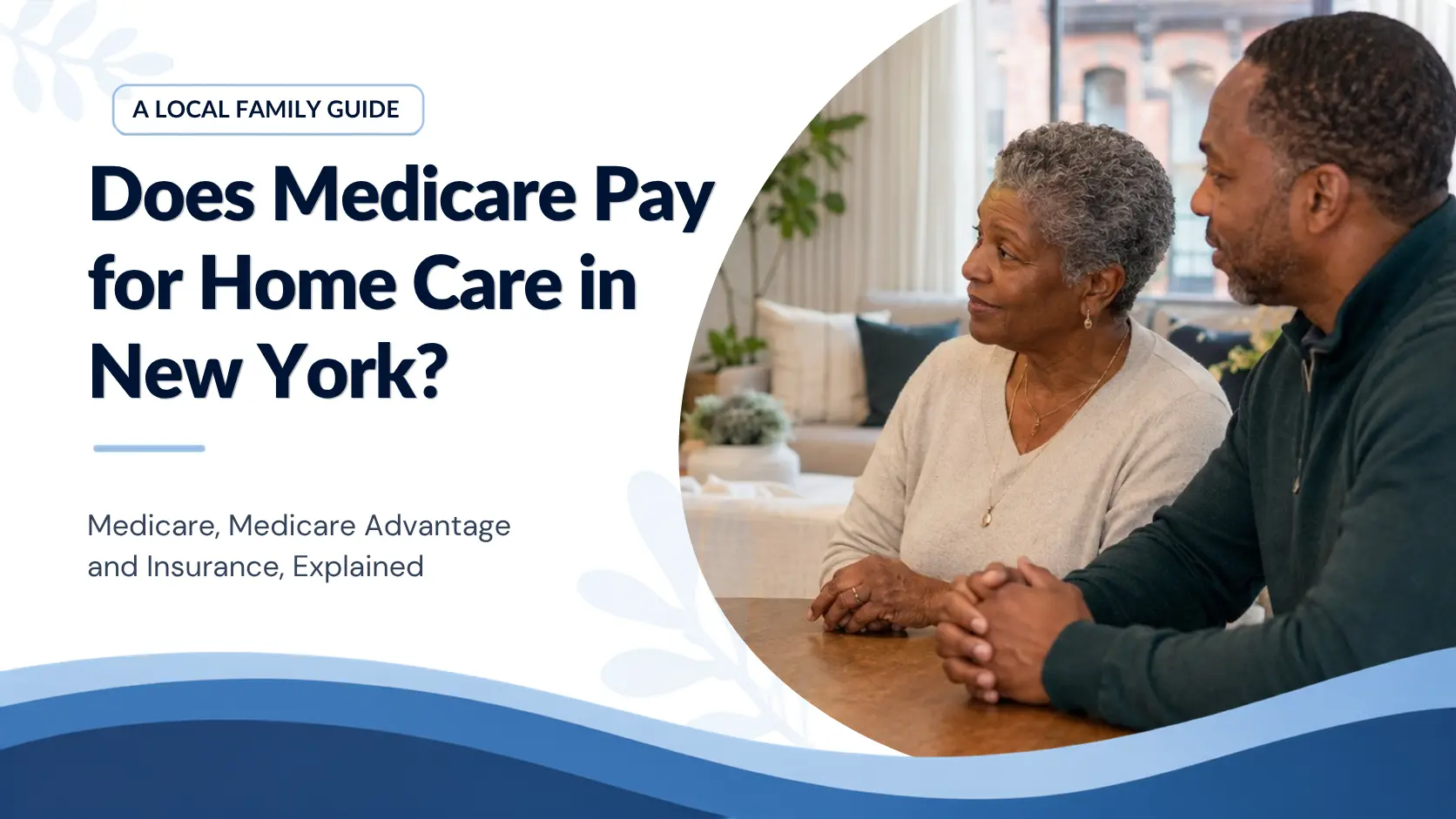
Does Medicare Pay for Home Care in New York? Medicare, Medicare Advantage and Insurance, Explained
The most expensive misunderstanding in home care: assuming Medicare will pay for the aide. Here is what each payer actually covers.
Medicare pays for short-term skilled home health — nurses and therapists after an illness, surgery or hospital stay — not for ongoing help with bathing, dressing and meals. Some Medicare Advantage plans add small in-home support benefits, but they are capped and vary by plan. Long-term home care in New York is paid by Medicaid or privately. Call 718-375-2707 and we’ll tell you which route fits your parent’s situation.
What Each Payer Actually Covers
Intermittent skilled care at home — nursing visits, physical/occupational/speech therapy, and a home health aide only alongside skilled care, for a limited episode. It is not priced per hour, and it ends when the skilled need ends.
Everything Original Medicare covers, sometimes plus a supplemental in-home support benefit — typically a modest number of aide hours per year, varying by plan and county. Helpful, never sufficient for daily care.
Ongoing personal care and HHA hours, authorized weekly through an MLTC plan — the program that actually funds daily help at home in New York. See what Medicaid covers at home.
Hourly, flexible, and fast — care can start in 24–48 hours while a Medicaid application or plan enrollment is in progress. See private pay home care.
The Aetna Question, Answered Honestly
Families regularly ask how much Aetna — or any Medicare Advantage plan — “pays for caregivers.” The honest answer: if your plan offers an in-home support benefit at all, it is a supplemental extra measured in hours per year, not a caregiver salary or a daily schedule. Check your plan’s Evidence of Coverage, use the hours if you have them, and plan the real coverage around Medicaid or private pay.
One naming note while you’re here: we are Advantage Home Care, a licensed NYC home care agency — not a Medicare Advantage plan. We work with families in every coverage situation, including helping eligible New Yorkers qualify for Medicaid home care.
No Insurance That Covers It? Your Real Options
- Check Medicaid before assuming “no.” Income over the limit is usually fixable with a pooled income trust, and assets are treated differently for community Medicaid than people expect. Start with the approval guide.
- Pay privately for the hours that matter most. Many families cover mornings and evenings only — see what home care costs in NYC.
- Veterans: VA programs are a separate, real funding stream — see home care for veterans.
One exception worth knowing: ALS. Medicare waives its usual 24-month disability waiting period for ALS, but it still pays only for intermittent skilled visits — long-hours daily aide care for ALS in New York runs through Medicaid. See ALS home care services in NYC.
Quick Answers
How much does Medicare pay for home health care per hour?
Medicare doesn’t pay hourly. It covers approved home health episodes — skilled visits after illness or hospitalization — at 100% for eligible patients, then coverage ends when the skilled need does.
Does Medicare pay for 24-hour home care?
No. Around-the-clock or daily custodial care is outside Medicare entirely — in New York that level of care is funded by Medicaid (when assessed) or paid privately.
How much does Aetna pay for home health care?
Aetna Medicare Advantage plans cover Medicare home health episodes; some plans add limited supplemental in-home support hours. The amount depends on your specific plan — check your Evidence of Coverage.
What is the difference between Medicare and Medicaid home care?
Medicare: short-term, medical, after an event. Medicaid: long-term, daily personal care, authorized weekly. Most older New Yorkers who need lasting help at home use Medicaid — often while keeping Medicare for doctors and hospitals.
Is Advantage Home Care a Medicare Advantage plan?
No — we are a licensed home care agency in NYC. We provide the aides; Medicaid, MLTC plans, VA benefits or private payment fund the hours.
What are the options for elder care without insurance?
Apply for community Medicaid (more achievable than most families assume), pay privately for targeted hours, and check VA eligibility for veterans and surviving spouses.
Medicare and Home Care in NY: Quick Answers
Does Medicare Advantage pay for home care in New York?
Medicare Advantage plans cover the same short-term skilled home health as Original Medicare, and some offer limited extra in-home support hours as a supplemental benefit; check the plan’s Evidence of Coverage. Long-term aide hours still come through Medicaid or private pay. Companion guide: does Medicare cover home care? Medicare vs Medicaid.
How many home health visits does Medicare cover?
There is no fixed number; Medicare covers intermittent skilled visits (nursing, therapy, and aide visits tied to them) for as long as the person is homebound and needs skilled care, recertified every 60 days. It does not cover daily custodial care.
Stop Guessing About Coverage
One call and a coordinator will map your parent’s actual coverage options — Medicare, Medicaid, VA or private — and what each would take to start.
Call 718-375-2707 Get Approved for Medicaid