Caring for a Spouse at Home: Medicaid, Spousal Refusal, and How to Get Help
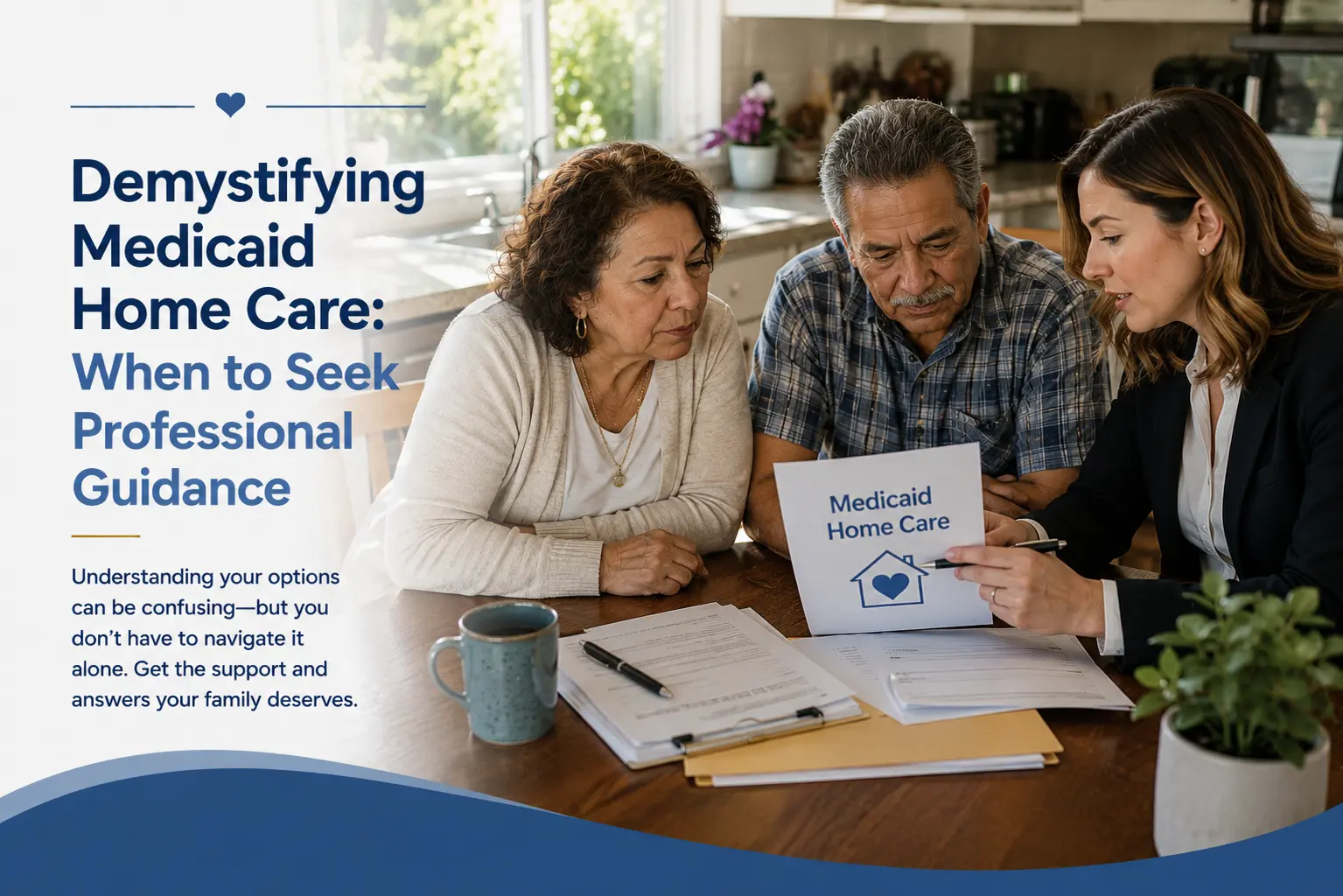
Two fears keep husbands and wives from asking for help: that applying for Medicaid will take everything they built, and that accepting an aide means giving up. Both deserve a straight answer.
- Medicaid does not require the healthy spouse to be left with nothing — spousal impoverishment rules exist to prevent that.
- The community spouse keeps a protected share of resources and income.
- New York also allows spousal refusal, a legal route where the healthy spouse declines to contribute.
- Spousal refusal has consequences, including possible state recovery — get an elder law attorney before using it.
- Spouses are the most at-risk caregivers there are. Help at home is not a failure; it is what makes staying together possible.
Caring for a husband or wife is different from caring for a parent. There is no shift change, no going home at the end of the day, and no obvious moment where it is acceptable to admit you are struggling. Spousal caregivers are typically older, often have their own health conditions, and are the least likely of any group to ask for help until something breaks.
Two beliefs keep people in that position longer than they should be. Let us take them one at a time.
“If We Apply for Medicaid, We Will Lose Everything”
This is the big one, and it is not how the rules work. Federal and New York law both include spousal impoverishment protections designed for exactly this situation: one spouse needs long-term care, the other still has a life to fund.
- Community Spouse Resource Allowance (CSRA). The spouse who is not applying — the “community spouse” — keeps a protected share of the couple’s countable resources rather than having to spend down to the applicant’s limit.
- Monthly maintenance needs allowance. A protected level of monthly income for the community spouse, which in some circumstances can be topped up from the applicant spouse’s income.
- The home. A primary residence is treated differently from other assets when a spouse still lives in it.
The figures change every year, which is why we do not print them here — ask about the current numbers when you apply, or check with an elder law attorney. The principle does not change: the healthy spouse is not meant to be impoverished.
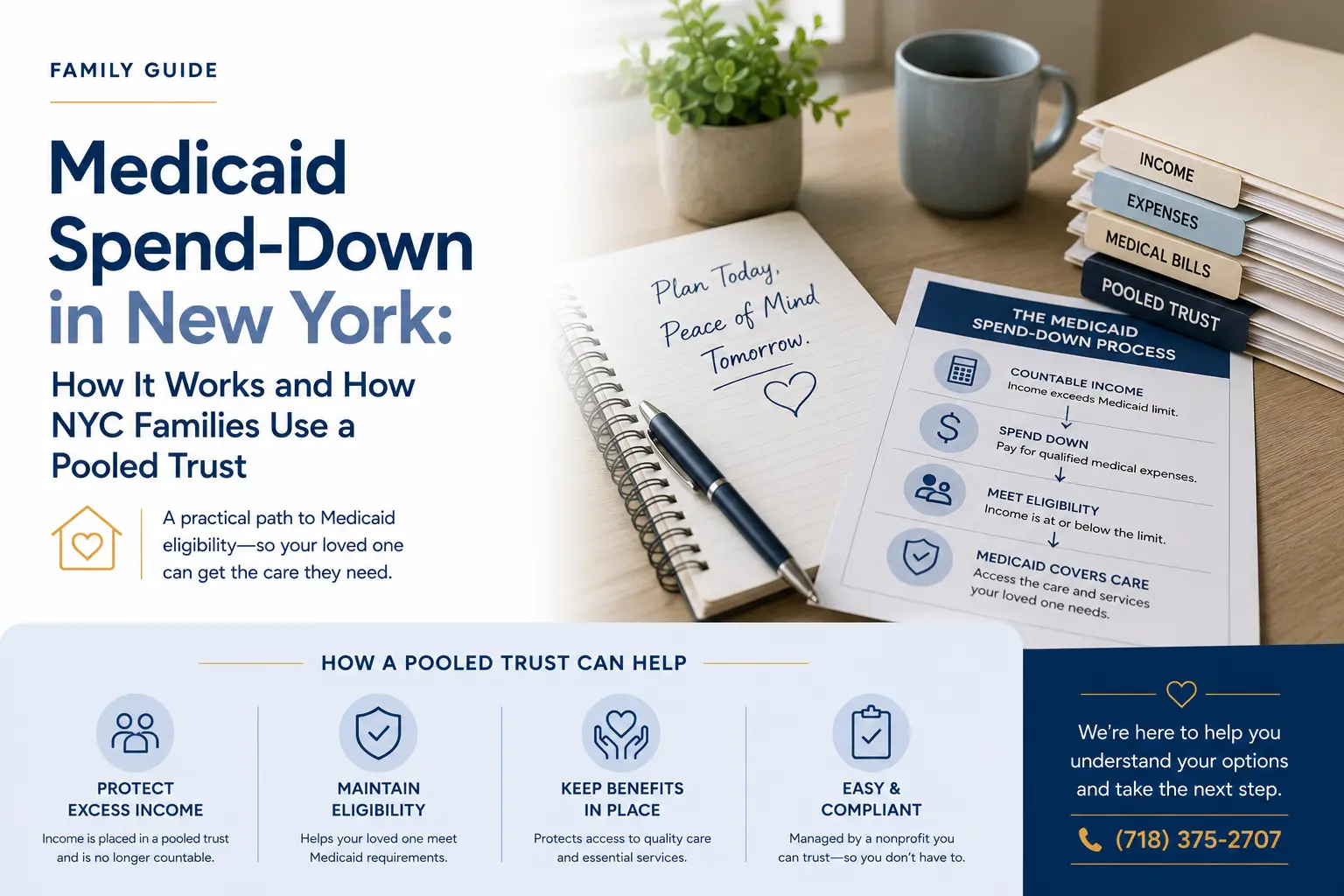
If income or resources are still over the line, there are established routes through it. See Medicaid spend-down and pooled trusts and excess income and pooled income trusts.
Spousal Refusal in New York
New York is one of a small number of states with a formal spousal refusal route. In short: the community spouse signs a statement declining to make their income and resources available for the applicant’s care. Medicaid must still evaluate the applicant’s own eligibility rather than denying them because a spouse will not pay.
It is a legitimate, long-standing planning tool. It is also not free of consequences:
Having paid for care, the state may pursue the refusing spouse for contribution. It does not always happen, but it can.
Refusal changes how income allowances work between the spouses. It is not automatically the better option.
The wording, timing and supporting documentation matter. This is not a form to improvise.
An elder law attorney will tell you within one meeting whether refusal, a trust, or straightforward eligibility is the right path for your numbers.
This is general information, not legal or financial advice. We are a home care agency, not a law firm. Spousal impoverishment figures change annually and individual circumstances vary enormously. Before making decisions about assets, speak with a New York elder law attorney — and do it before transferring anything, not after.
“Accepting Help Means I Have Given Up”
The second belief, and the more damaging of the two. It usually shows up as a version of in sickness and in health — I should be able to do this.
Here is the practical counter-argument. The most common reason a couple ends up separated into a facility is not the illness itself. It is that the caring spouse becomes unable to continue — a bad back from transfers, an untreated condition of their own, months of broken sleep, an injury from a fall while helping. Bringing in an aide is not the end of caring for your husband or wife at home. It is very often the thing that lets it continue.
It also changes the shape of the marriage in a way people rarely anticipate. When someone else handles the bathing and the toileting, you get to go back to being a spouse rather than a full-time care worker.
What Practical Help Looks Like
- A few hours at the hardest time of day. Mornings, or the early evening, or whenever the transfers happen. It does not have to be all day to change things.
- Personal care specifically. Bathing and toileting are the tasks most likely to injure a spouse and most likely to feel undignified for both of you. See what a personal care aide does.
- Overnight cover when nights are broken. Sleep is what keeps a caregiver functioning — see overnight and live-in care.
- Respite so you can go to your own medical appointments, see friends, or simply leave the apartment. See respite care in NYC.
- Equipment. A hospital bed or a properly fitted transfer aid prevents more injuries than willpower does.
If you already recognise the signs — exhaustion, resentment you feel guilty about, letting your own health slide — read our guide to caregiver burnout. It is the most common thing we see and the most preventable.
Where to Start
Begin with a phone call rather than a decision. A coordinator can tell you what your household is likely to qualify for and what a few hours a week would look like, with no commitment. If dementia is part of the picture, our dementia guide and Alzheimer’s guide apply equally to spouses. For the wider process, see how to get started with home care.
Frequently Asked Questions
Will my spouse applying for Medicaid take our savings?
Not to zero. Spousal impoverishment rules let the community spouse keep a protected share of resources and a protected level of monthly income. The specific amounts change annually — ask about the current figures when you apply.
What is spousal refusal in New York?
It is a legal route where the healthy spouse formally declines to make their income and resources available for the applicant’s care. Medicaid must then assess the applicant on their own circumstances rather than denying them outright.
Is spousal refusal risky?
There are trade-offs. The state may later seek recovery from the refusing spouse, and refusal changes how income allowances work between the couple. Speak to a New York elder law attorney before using it.
Do we have to lose the house?
A primary residence is treated differently when a spouse continues to live there. This is exactly the kind of question worth putting to an elder law attorney rather than guessing at.
Can I still be the main caregiver if we get an aide?
Yes, and most spouses are. An aide typically covers the physically demanding or clinically awkward parts — bathing, transfers, nights — while you stay in charge of everything else.
How few hours can we start with?
A few hours a week is a perfectly reasonable starting point, and it is how most spousal cases begin. Many families increase later once they see how much difference it makes.
You Do Not Have to Do This Alone
One call, no commitment. We will tell you what you are likely to qualify for and what a few hours of help a week would actually look like.
Call 718-375-2707 Request Care Online