Category: Home Care

  • OPWDD Services for Down Syndrome in NYC: Building Independence at Home

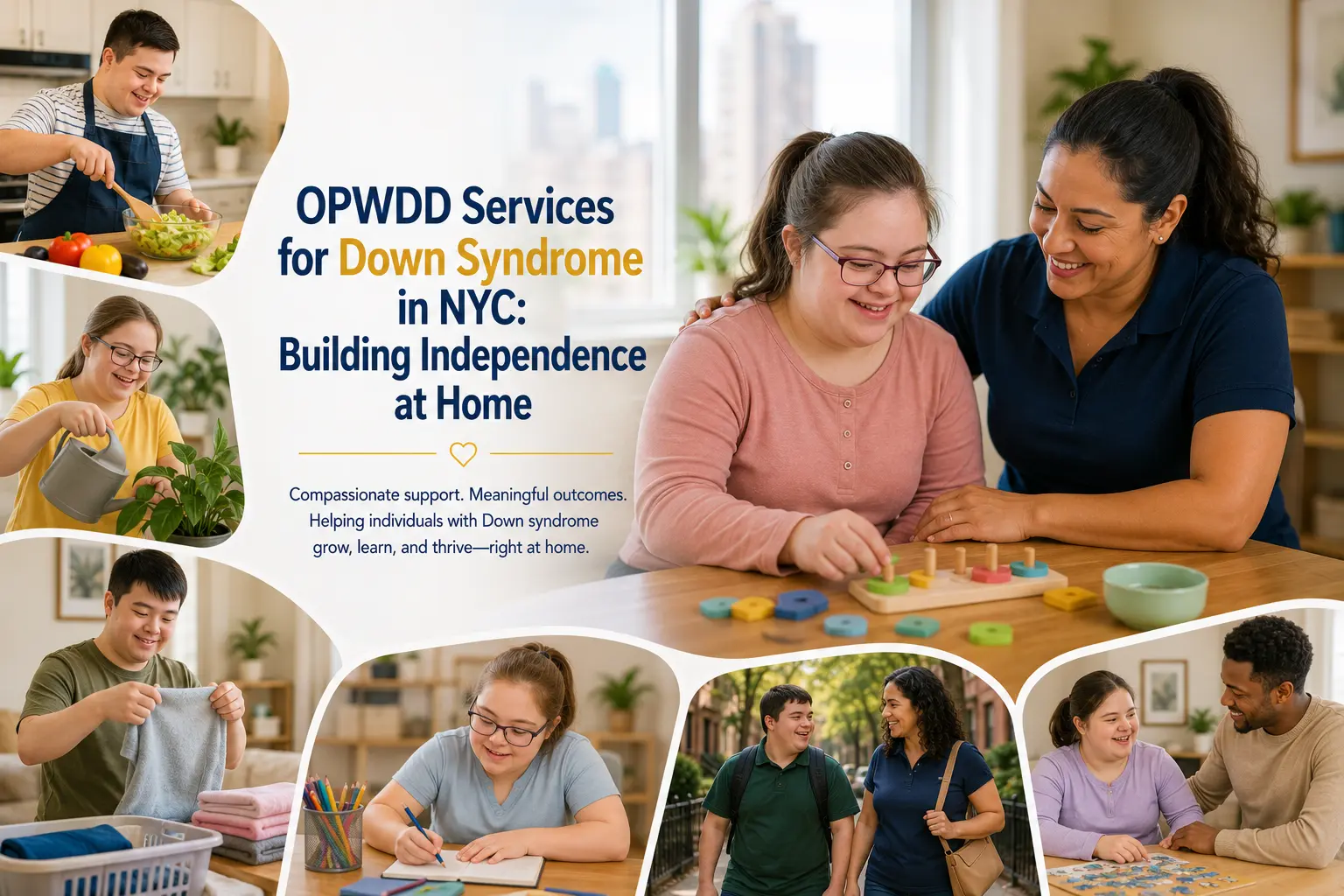
    OPWDD Services for Down Syndrome in NYC: Building Independence at Home

    OPWDD for Down Syndrome

    OPWDD Services for Down Syndrome in NYC: Building Independence at Home

    Down syndrome is a qualifying condition for OPWDD services in New York. Here’s what that support looks like in real life β€” and how Advantage Home Care helps families access it.

    πŸ’‘ Key Takeaways
    • Down syndrome is a qualifying developmental disability for OPWDD services in New York.
    • OPWDD funds community habilitation, day habilitation, respite, and in-home support that build independence and daily-living skills.
    • Advantage Home Care provides these OPWDD services and guides families through eligibility and the Front Door.

    People with Down syndrome are living fuller, more independent lives than ever β€” and the right support makes that possible. New York’s OPWDD system funds services that help individuals with Down syndrome build skills, take part in their communities, and thrive at home. Advantage Home Care helps NYC families access every bit of it.

    A real-world example

    Consider a young woman in Brooklyn, 18 and living with Down syndrome, who has just finished school. She’s capable and outgoing, but her family isn’t sure what comes next now that the structure of the school day is gone. Through OPWDD, she enrolls in day habilitation, giving her routine, friendships, and skill-building, and receives community habilitation to work on cooking, budgeting, and using the subway. A year later she’s more independent than her family imagined β€” and they have a partner in planning her future. That’s what these OPWDD services are built for.

    How OPWDD Services Help People With Down Syndrome

    OPWDD support is built around the individual’s goals. For someone with Down syndrome, the most relevant services usually include:

    🏫
    Day HabilitationStructured daytime programming with routine, socialization, and skill-building β€” especially valuable after school ends.
    🀝
    Community HabilitationOne-on-one work on cooking, budgeting, travel, and the skills of independent living.
    β˜•
    RespiteReliable relief so family caregivers can rest, work, and recharge.
    🏠
    In-Home SupportHands-on help with routines, safety, and daily living in the comfort of home.

    Explore our full range of OPWDD services and OPWDD support services, or read our guide to OPWDD day habilitation.

    Does Down Syndrome Qualify for OPWDD?

    Yes. Down syndrome is a recognized developmental disability under OPWDD β€” it is present from birth, lifelong, and results in substantial functional limitations. Eligibility is established through OPWDD’s “Front Door” process, which requires medical and diagnostic documentation. We help families gather what’s needed and navigate intake; for the full walkthrough, see our guide to OPWDD eligibility in New York.

    How Advantage Home Care Helps

    Support focused on independence. We match individuals with staff who encourage skill-building and community participation, meeting each person where they are.

    We guide the whole process. From the Front Door and eligibility to building a plan with your Care Coordination Organization, we help families move forward with confidence.

    A partner through every transition. The move from school to adult life is a big one; our care coordination and family support team helps families plan for it and adjust as goals evolve.

    Frequently Asked Questions

    Does Down syndrome qualify for OPWDD services in New York?

    Yes. Down syndrome is a qualifying developmental disability under OPWDD β€” present from birth, lifelong, and causing substantial functional limitations.

    What OPWDD services help most with Down syndrome?

    Day habilitation, community habilitation, respite, and in-home support are the most commonly used β€” all available through Advantage Home Care’s OPWDD services.

    What happens when my child ages out of school?

    This is one of the most important transitions OPWDD supports. Day habilitation and community habilitation provide routine, growth, and community connection after school ends. Planning early makes the transition smoother.

    How do we get started?

    It begins with the OPWDD Front Door process to establish eligibility. We help families gather documentation and move from approval to services in the home.

    Part of our complete guide to OPWDD Services in NYC

    Get OPWDD Support for Down Syndrome

    Whether you’re starting the Front Door process or planning your loved one’s next chapter, we’re here to help. Call 718-831-2755 or reach out online.

    Get Started β†’

  • Advantage Home Care Home Health Aides in NYC: Skilled Support at Home

    Advantage Home Care Home Health Aides in NYC: Skilled Support at Home

    Home Health Aide (HHA) Services

    Advantage Home Care Home Health Aides in NYC: Skilled Support at Home

    A home health aide gives your loved one everyday personal care plus basic health monitoring under nurse supervision. Here’s what an HHA does, how they differ from a PCA, and how Advantage Home Care matches you with the right one.

    πŸ’‘ Key Takeaways
    • A home health aide (HHA) does everything a personal care aide does β€” plus basic health monitoring under the supervision of a registered nurse.
    • HHAs are often the right fit after a hospital stay or for someone managing a chronic condition at home.
    • Most HHA hours in New York are covered by Medicaid through an MLTC plan; private pay is also available, and Advantage Home Care handles the paperwork.

    When a loved one is coming home from the hospital, managing a serious health condition, or simply needs a closer eye kept on their wellbeing, a home health aide provides a step up from basic personal care. HHAs deliver the same hands-on daily support as a PCA, but with added health monitoring and reporting to a supervising nurse. Advantage Home Care helps NYC families put that level of care in place.

    What Does a Home Health Aide Do?

    An HHA combines personal care with basic clinical oversight. A typical day includes:

    πŸ›
    Personal CareBathing, dressing, grooming, toileting, and all the daily support a PCA provides.
    🩺
    Health MonitoringChecking vital signs, watching for changes in condition, and observing overall wellbeing.
    πŸ’Š
    Medication SupportHelping with medication routines and flagging missed doses or side effects.
    🚢
    Mobility & SafetySafe transfers, walking support, positioning, and fall prevention.
    πŸ“‹
    Reporting to a NurseDocumenting and reporting changes to a supervising RN, so problems are caught early.
    πŸ₯
    Post-Hospital SupportFollowing the discharge plan to reduce the risk of readmission after a hospital stay.

    Looking for basic daily help without the health-monitoring component? A personal care aide (PCA) may be all you need. Our guide to HHA vs PCA compares them side by side. We also provide certified home health aides (CHHA) for families who need that credential.

    Who Needs a Home Health Aide?

    HHA-level care is often the right choice for someone recovering from surgery or a hospital stay, living with a chronic condition like heart failure, COPD, or diabetes, or whose needs have progressed beyond basic personal care. Because an HHA works under nurse supervision and can monitor health day to day, families gain an extra layer of safety β€” and often avoid the emergency-room visits that come from small problems going unnoticed.

    How Families Pay for HHA Care in New York

    Most families receive HHA hours through New York Medicaid, typically via a managed long-term care (MLTC) plan that authorizes weekly hours based on an assessment of need. Many families qualify who assume they won’t β€” New York’s community Medicaid rules are more flexible than expected, and we guide you through getting approved for Medicaid home care. For those who don’t qualify or need care immediately, private pay offers flexible scheduling that can start within days.

    Why Families Choose Advantage Home Care for HHA Services

    Trained, supervised aides. Our home health aides are screened and trained, and their care is overseen by nursing staff β€” so you get both compassion and clinical accountability.

    The right match, kept consistent. We pair each family with an aide suited to their loved one’s condition, language, and routine, and work to keep the same aide in place.

    We handle the paperwork and coordination. From Medicaid enrollment to ongoing plan adjustments, our care coordination team stays involved. See our full HHA services.

    Frequently Asked Questions

    What’s the difference between an HHA and a PCA?

    An HHA does everything a PCA does β€” bathing, dressing, meals, mobility β€” plus basic health monitoring under nurse supervision. A PCA provides non-medical daily support only.

    Does Medicaid cover a home health aide in NYC?

    Yes. Most HHA hours in New York are covered by Medicaid through an MLTC plan, with hours set by an assessment. We help families apply and enroll.

    Can an HHA help after a hospital discharge?

    Yes β€” this is one of the most common reasons families bring in an HHA. The aide follows the discharge plan and helps reduce the risk of readmission.

    How quickly can HHA care start?

    Private pay care can often begin within a few days; Medicaid-funded care depends on the approval timeline, which we work to move along quickly.

    Get a Home Health Aide in NYC

    Tell us about your loved one’s needs and we’ll match them with a trained HHA and explain your coverage options. Call 718-831-2755 or reach out online.

    Get Started β†’

  • Advantage Home Care Personal Care Aides in NYC: What a PCA Does and How to Get One

    Advantage Home Care Personal Care Aides in NYC: What a PCA Does and How to Get One

    Personal Care Aide (PCA) Services

    Advantage Home Care Personal Care Aides in NYC: What a PCA Does and How to Get One

    A personal care aide helps your loved one with the everyday tasks that keep them safe and independent at home. Here’s what a PCA does, who qualifies through Medicaid, and how Advantage Home Care matches you with the right one.

    πŸ’‘ Key Takeaways
    • A personal care aide (PCA) helps with bathing, dressing, meals, mobility, and daily routines β€” the hands-on support that lets people stay home.
    • Most PCA hours in New York are covered by Medicaid through an MLTC plan; private pay is also available.
    • Advantage Home Care matches families with trained, vetted PCAs and handles the Medicaid paperwork.

    When daily tasks start to become unsafe or overwhelming β€” a parent who can no longer bathe safely, a spouse who needs help getting dressed and to appointments β€” a personal care aide is usually the right first step. It’s the most common form of home care in New York, and for good reason: it keeps people in their own homes, on their own terms. Advantage Home Care helps NYC families put that support in place.

    What Does a Personal Care Aide Do?

    A PCA provides non-medical, hands-on help with the activities of daily living. Day to day, that usually includes:

    πŸ›
    Bathing & GroomingSafe help with bathing, dressing, grooming, and toileting while preserving dignity.
    🍽️
    Meals & NutritionPreparing meals, helping with eating, and keeping an eye on hydration and appetite.
    🚢
    Mobility & TransfersHelp moving safely around the home, transferring, and preventing falls.
    πŸ’Š
    Medication RemindersPrompting medications on schedule (PCAs remind and support, but don’t administer clinically).
    🧹
    Light HousekeepingLaundry, tidying, changing linens, and errands that keep the home safe and livable.
    πŸ’¬
    CompanionshipPresence, conversation, and routine β€” which matter as much as the physical tasks.

    If your loved one also needs health monitoring β€” vital signs, or oversight tied to a medical condition β€” a home health aide (HHA) may be the better fit. Not sure which you need? Our guide to HHA vs PCA breaks it down, or just ask us.

    Who Qualifies for a PCA in New York?

    Personal care services are available to New Yorkers who need help with daily activities due to age, illness, or disability. Most families access PCA hours through Medicaid, which authorizes a number of weekly hours based on an assessment of need. Eligibility depends on both medical need and financial criteria β€” but New York’s community Medicaid rules are more flexible than most people assume, and there are planning options (like a pooled income trust) for those slightly over the income limit. Our team walks you through getting approved for Medicaid home care step by step.

    Why Families Choose Advantage Home Care for PCA Services

    The right match, not just any aide. We pair each family with a PCA suited to their loved one’s needs, schedule, language, and personality β€” and we work to keep that same aide in place so trust and routine can build.

    We handle the Medicaid paperwork. From the application to MLTC enrollment and the assessment, our coordinators manage the process so you’re not navigating it alone.

    Ongoing support. A coordinator stays involved after care starts, adjusting hours and the care plan as needs change. Learn more about our PCA services.

    How to Get a Personal Care Aide

    It starts with one phone call. We’ll ask about your loved one’s needs, explain whether Medicaid or private pay fits best, and handle the next steps β€” whether that’s starting a Medicaid application or scheduling care right away.

    Frequently Asked Questions

    Does Medicaid pay for a personal care aide in NYC?

    Yes. Most PCA hours in New York are covered by Medicaid through a managed long-term care (MLTC) plan, with weekly hours set by an assessment of need.

    What’s the difference between a PCA and an HHA?

    A PCA provides non-medical help with daily activities; an HHA does everything a PCA does plus basic health monitoring under nurse supervision. The right choice depends on your loved one’s medical needs.

    Can I choose or request a specific aide?

    We match caregivers to your family’s needs and preferences, and prioritize keeping the same aide with you for continuity.

    How many PCA hours can we get?

    Hours are based on assessed need and can range from a few hours a week to daily or around-the-clock care. Reassessments can increase hours as needs grow.

    Get a Personal Care Aide in NYC

    Tell us about your loved one and we’ll match them with a trained PCA and explain your coverage options. Call 718-831-2755 or reach out online.

    Get Started β†’

  • OPWDD Services in NYC: Conditions We Support and Services We Provide

    OPWDD Services in NYC: Conditions We Support and Services We Provide

    Complete OPWDD Guide

    OPWDD Services in NYC: Conditions We Support and Services We Provide

    Everything New York families need to know about OPWDD in one place β€” who qualifies, what services are available, and how Advantage Home Care helps you access them.

    πŸ’‘ Key Takeaways
    • OPWDD funds home and community-based services for New Yorkers with developmental disabilities that began before age 22.
    • Core services include community habilitation, day habilitation, respite, and in-home support.
    • Advantage Home Care provides these OPWDD services and guides families from the Front Door to services in the home.

    The New York State Office for People With Developmental Disabilities (OPWDD) funds a wide range of services that help individuals with developmental disabilities live full, connected lives at home and in their communities. This guide brings it all together: the conditions that qualify, the services available, and how to access them. Wherever you are in the journey, Advantage Home Care’s OPWDD services can help.

    OPWDD Services We Provide

    OPWDD support is built around each person’s goals. These are the core services we deliver:

    Conditions We Support

    OPWDD serves people with a range of developmental disabilities. We’re publishing a dedicated guide for each β€” what support looks like, a real-world example, and how to get started:

    Autism Cerebral Palsy Down Syndrome Intellectual Disability Epilepsy Prader-Willi Syndrome Fragile X Syndrome Angelman SyndromeSpina Bifida Rett SyndromeWilliams SyndromeTuberous SclerosisFamilial DysautonomiaSmith-Magenis SyndromePhelan-McDermid SyndromeCornelia de Lange SyndromeRubinstein-Taybi SyndromeCri-du-chat SyndromeLesch-Nyhan SyndromeKabuki SyndromeCoffin-Lowry Syndrome

    More condition guides are being published regularly β€” check back soon, or contact us and we’ll help with any condition today.

    Who Qualifies for OPWDD?

    To be eligible for OPWDD services, a person generally must have a documented developmental disability that originated before age 22, is expected to continue indefinitely, and results in substantial functional limitations. Eligibility is established through OPWDD’s “Front Door” process, which involves documentation and an intake. It’s a step that overwhelms many families β€” and one we help with directly. For a full walkthrough, see our guide to OPWDD eligibility in New York.

    How to Get Started

    1Front Door & eligibility. We help you request services and establish OPWDD eligibility with the right documentation.
    2Care planning. With a Care Coordination Organization, a plan is built around your loved one’s goals.
    3Services begin. We match your loved one with the right staff and start community habilitation, day hab, respite, or in-home support.
    4Ongoing partnership. We adjust the plan as your loved one grows and their needs evolve.

    Explore our full OPWDD services and OPWDD support services.

    Get OPWDD Support for Your Family

    Whether you’re at the very start of the Front Door process or looking for a provider who truly partners with families, we’re here to help. Call 718-831-2755 or reach out online.

    Get Started →

  • Advantage Home Care in the Bronx: Trusted In-Home Care for Your Family

    Advantage Home Care in the Bronx: Trusted In-Home Care for Your Family

    Bronx Home Care

    Advantage Home Care in the Bronx: Trusted In-Home Care for Your Family

    From Riverdale to Co-op City, Advantage Home Care helps Bronx families keep their loved ones safe and independent at home β€” with trained local caregivers and a team that handles Medicaid and the paperwork.

    πŸ’‘ Key Takeaways
    • Advantage Home Care provides in-home care throughout the Bronx, the borough with the highest share of seniors relying on home care in NYC.
    • We offer personal care aides, home health aides, waiver support, and care coordination β€” through Medicaid or private pay.
    • Our Bronx caregivers come from the communities they serve, and our team manages the Medicaid enrollment for you.

    The Bronx has one of the largest populations of older adults relying on home care of any borough in New York City β€” and navigating that care takes local knowledge. Advantage Home Care brings both: trained caregivers who live in and understand Bronx communities, and a team that handles the Medicaid and enrollment details so families can focus on their loved one.

    Home Care Services We Provide in the Bronx

    We match each family with the right level of support:

    πŸ§‘β€πŸ¦³
    Personal Care AidesDaily help with bathing, dressing, meals, and mobility. PCA services β†’
    🩺
    Home Health AidesPersonal care plus health monitoring under nurse supervision. HHA services β†’
    🧠
    NHTD & TBI SupportCommunity-living support for disabilities and brain injuries. NHTD/TBI β†’
    πŸ—‚οΈ
    Care CoordinationOne coordinator connecting caregivers, family, and doctors. Coordination β†’

    Serving Bronx Neighborhoods

    Our caregivers support families across the borough, including Riverdale, Kingsbridge, Fordham, Belmont, Morris Park, Pelham Bay, Throggs Neck, Parkchester, Soundview, Co-op City, Wakefield, and beyond. Because our aides come from these neighborhoods, we can match caregivers who speak your family’s language β€” Spanish, Bengali, Albanian, and more β€” and who know the community your loved one calls home.

    Why Bronx Families Choose Us

    Caregivers who stay. We work to keep the same aide with your family, so your loved one builds trust with someone familiar rather than a rotating series of strangers.

    We handle Medicaid and MLTC. The enrollment process is one of the biggest hurdles to getting care started. Our team guides Bronx families through Medicaid approval and MLTC plan selection and handles the paperwork.

    Coordination that continues. A dedicated coordinator stays involved as needs change, so you always have someone to call.

    Want a broader look at options in the borough? See our full guide to home care in the Bronx.

    How Bronx Families Pay for Care

    Most families receive care through New York Medicaid, typically via an MLTC plan that authorizes weekly aide hours β€” and many qualify who assume they can’t. For those who don’t qualify or need care immediately, private pay home care offers flexible scheduling that can start within days. We’ll help you find the right path.

    Frequently Asked Questions

    Does Advantage Home Care serve all of the Bronx?

    Yes. We provide caregivers throughout the Bronx, from Riverdale and Kingsbridge to Parkchester, Co-op City, and beyond.

    Can I get a caregiver who speaks my family’s language?

    In most cases, yes. Language and cultural matching is one of the first things we consider when pairing a caregiver with your family.

    Is Bronx home care covered by Medicaid?

    Yes β€” most of our Bronx clients receive care through Medicaid, and we help families apply and enroll. Private pay is also available.

    How soon can care start in the Bronx?

    Private pay care can often begin within a few days; Medicaid-funded care depends on the approval timeline, which we work to move along quickly.

    Start Care in the Bronx

    Tell us about your loved one and we’ll match them with the right caregiver and explain your coverage options. Call 718-831-2755 or reach out online β€” we can usually have care in place quickly.

    Get Started β†’

  • Advantage Home Care: NYC’s Trusted Home Care Agency for Families

    Advantage Home Care: NYC’s Trusted Home Care Agency for Families

    About Advantage Home Care

    Advantage Home Care: NYC’s Trusted Home Care Agency for Families

    We help New York City families keep their loved ones safe, supported, and independent at home β€” with trained caregivers, real care coordination, and guidance through every step of Medicaid and private pay.

    πŸ’‘ Key Takeaways
    • Advantage Home Care is a New York City home care agency serving families across all five boroughs.
    • We provide personal care aides, home health aides, NHTD/TBI and OPWDD waiver support, care coordination, and private pay home care.
    • Our team handles the Medicaid and enrollment paperwork so families can focus on their loved one, not the bureaucracy.

    Choosing a home care agency is one of the most personal decisions a family makes. You are inviting someone into your home to care for the person you love most β€” so trust, consistency, and competence matter more than anything. Advantage Home Care was built around exactly that: dependable, respectful in-home care for New Yorkers, backed by a team that treats your family like its own.

    Who We Are

    Advantage Home Care is a home care agency serving families throughout New York City. We match seniors and individuals with disabilities to trained, carefully vetted caregivers, and we support both the client and their family through the entire process β€” from the first phone call and the Medicaid application to the day care begins and every adjustment after that. Because New York City is one of the most diverse places on earth, we prioritize caregivers who reflect the languages and cultures of the neighborhoods we serve, so care feels familiar, not foreign.

    Services We Provide

    Families come to us with very different needs β€” a parent recovering from surgery, an adult child with a developmental disability, a spouse living with a progressive illness. Our services are built to cover the full range:

    πŸ§‘β€πŸ¦³
    Personal Care Aides (PCA)Help with bathing, dressing, grooming, meals, mobility, and daily routines. Learn about PCA services β†’
    🩺
    Home Health & Certified AidesHands-on care plus basic health monitoring under nurse supervision. HHA services β†’
    🧠
    NHTD & TBI Waiver SupportCommunity-living support for people with disabilities and brain injuries. NHTD/TBI support β†’
    🧩
    OPWDD ServicesSpecialized support for individuals with developmental disabilities. OPWDD services β†’
    πŸ—‚οΈ
    Care CoordinationOne point of contact connecting caregivers, family, doctors, and Medicaid. Care coordination β†’
    πŸ’³
    Private Pay Home CareFlexible hourly care that can start within days, no Medicaid required. Private pay β†’

    Serving Families in Every Borough

    We provide home care across New York City, with caregivers and coordinators who know their communities. Wherever you are, we can help β€” and we have local guides for each borough: Brooklyn, the Bronx, Queens, Manhattan, and Staten Island. Same standards of care, staffed by people who understand your neighborhood.

    What Sets Advantage Home Care Apart

    Caregiver consistency. We work hard to keep the same aide with your family rather than rotating strangers through your home, because trust and routine are what make home care actually work β€” especially for someone with dementia, a brain injury, or a progressive illness.

    We handle the paperwork. Medicaid, MLTC enrollment, waiver applications, assessments β€” the system is genuinely confusing. Our team walks families through getting approved for Medicaid home care and manages the details so you are not doing it alone.

    Real coordination, not just staffing. A dedicated coordinator stays involved after care begins, adjusting the plan as needs change and keeping families informed. You always have someone to call.

    Trained, vetted caregivers. Every aide is screened and trained, and we match caregivers to each family’s specific needs β€” language, condition, schedule, and personality.

    How Families Pay for Care

    Most of our clients receive care through New York Medicaid, typically via a managed long-term care (MLTC) plan that authorizes weekly aide hours. Many families are surprised to learn they qualify β€” New York’s community Medicaid rules are more flexible than people expect, and we help you navigate them. For families who don’t qualify, or who need care to begin immediately, private pay offers flexible hourly scheduling that can start within days. Veterans and individuals with disability waivers have additional options we can walk you through.

    How to Get Started

    Getting started is simple: one phone call. We’ll ask about your loved one’s needs, explain which coverage options fit, and lay out the next steps β€” whether that’s beginning a Medicaid application or scheduling private care right away. There’s no obligation, and no pressure.

    Frequently Asked Questions

    What areas does Advantage Home Care serve?

    We serve families across New York City, including Brooklyn, the Bronx, Queens, Manhattan, and Staten Island.

    Does Advantage Home Care accept Medicaid?

    Yes. Most of our clients receive care through Medicaid, and our team helps families apply and enroll in an MLTC plan. We also offer private pay for families who prefer it or need care immediately.

    What kinds of caregivers does the agency provide?

    We provide personal care aides (PCAs), home health aides (HHAs), and specialized caregivers for NHTD/TBI waiver and OPWDD services, along with care coordination to tie it all together.

    How quickly can care start?

    Private pay care can often begin within a few days. Medicaid-funded care depends on the approval timeline, which we work to move along as quickly as possible.

    Talk to Advantage Home Care

    Whether you’re just starting to explore options or you need care to begin this week, we’re here to help you figure out the right path. Call 718-831-2755 or reach out online β€” we’ll take it from there.

    Get Started β†’

  • Advantage Home Care in Brooklyn: Trusted In-Home Care Across the Borough

    Advantage Home Care in Brooklyn: Trusted In-Home Care Across the Borough

    Brooklyn Home Care

    Advantage Home Care in Brooklyn: Trusted In-Home Care Across the Borough

    From Bay Ridge to Brighton Beach, Advantage Home Care helps Brooklyn families keep their loved ones safe and independent at home β€” with caregivers who know the borough and a team that handles the paperwork.

    πŸ’‘ Key Takeaways
    • Advantage Home Care provides in-home care throughout Brooklyn, NYC’s largest and most diverse borough.
    • We offer personal care aides, home health aides, waiver support, and care coordination β€” through Medicaid or private pay.
    • Our Brooklyn caregivers reflect the borough’s languages and communities, so care feels familiar from day one.

    Brooklyn is home to more than 2.5 million people and dozens of distinct communities, each with its own language, culture, and rhythm. Home care here can’t be one-size-fits-all β€” and it isn’t with us. Advantage Home Care matches Brooklyn families with trained caregivers who fit their loved one’s needs, routines, and background, so support at home feels natural rather than clinical.

    Home Care Services We Provide in Brooklyn

    Whatever stage your family is at, we can help with the right level of care:

    πŸ§‘β€πŸ¦³
    Personal Care AidesDaily help with bathing, dressing, meals, and mobility. PCA services β†’
    🩺
    Home Health AidesPersonal care plus health monitoring under nurse supervision. HHA services β†’
    🧠
    NHTD & TBI SupportCommunity-living support for disabilities and brain injuries. NHTD/TBI β†’
    πŸ—‚οΈ
    Care CoordinationOne coordinator connecting caregivers, family, and doctors. Coordination β†’

    Serving Brooklyn Neighborhoods

    Our caregivers support families across the borough, including Bay Ridge, Bensonhurst, Borough Park, Brighton Beach, Sheepshead Bay, Flatbush, Midwood, Canarsie, Crown Heights, Williamsburg, Sunset Park, and beyond. Because our aides come from these same communities, we can match caregivers who speak your family’s language β€” Russian, Spanish, Mandarin, Cantonese, Yiddish, Haitian Creole, and more β€” which makes a real difference in daily comfort and communication.

    Why Brooklyn Families Choose Us

    Local caregivers who stay. We prioritize keeping the same aide with your family, so your loved one builds a real relationship with someone they trust β€” not a rotating cast of strangers.

    We handle Medicaid and MLTC. The enrollment maze is one of the hardest parts of getting care started. Our team guides Brooklyn families through Medicaid approval and MLTC plan selection, and manages the paperwork.

    Coordination that continues. A dedicated coordinator stays involved as needs change, so you always have someone local to call.

    Looking for a broader overview of options in the borough? See our full guide to home care in Brooklyn.

    How Brooklyn Families Pay for Care

    Most families receive care through New York Medicaid, usually via an MLTC plan that authorizes weekly aide hours β€” and many qualify who assume they won’t. For those who don’t qualify or need care right away, private pay home care offers flexible scheduling that can begin within days. We’ll help you figure out which path fits.

    Frequently Asked Questions

    Does Advantage Home Care serve all of Brooklyn?

    Yes. We provide caregivers throughout Brooklyn, from Bay Ridge and Bensonhurst to Flatbush, Crown Heights, and beyond.

    Can I get a caregiver who speaks my family’s language?

    In most cases, yes. Brooklyn’s diversity is reflected in our caregiver team, and language and cultural matching is one of the first things we consider.

    Does Brooklyn home care get covered by Medicaid?

    Yes β€” most of our Brooklyn clients receive care through Medicaid, and we help families apply and enroll. Private pay is also available.

    How soon can care start in Brooklyn?

    Private pay care can often begin within a few days; Medicaid-funded care depends on the approval timeline, which we work to speed up.

    Start Care in Brooklyn

    Tell us about your loved one and we’ll match them with the right caregiver and explain your coverage options. Call 718-831-2755 or reach out online β€” we can usually have care in place quickly.

    Get Started β†’

  • Respite Care in New York: Options, Costs, and How Family Caregivers Can Get a Break

    Respite Care in New York: Options, Costs, and How Family Caregivers Can Get a Break

    Caregiver Support Guide

    Respite Care in New York: Options, Costs, and How Family Caregivers Can Get a Break

    Every family caregiver needs a break. Here are the respite care options available in New York β€” in-home respite, adult day programs, and short stays β€” plus the programs that help pay for them.

    πŸ’‘ Key Takeaways
    • Respite care is short-term substitute care that lets a family caregiver step away while their loved one stays safe and supported.
    • New York offers three main models: in-home respite, adult day programs, and short-term residential stays.
    • Funding paths include Medicaid personal care, waiver respite, New York State aging programs, and private pay.

    If you’re caring for an aging parent, a spouse with dementia, or a family member with a disability, you’ve probably heard “make sure you take care of yourself, too.” The advice is right β€” caregiver burnout is the number one reason home care arrangements collapse β€” but it’s useless without a practical answer to the obvious question: who takes over while I’m gone? That answer is respite care.

    What Is Respite Care?

    Respite care is short-term, substitute care that steps in so a family caregiver can step away β€” for an afternoon, a weekend, or a planned vacation. The person you care for gets safe, attentive support; you get time to work, rest, handle your own health, or simply breathe. It is not a luxury. Studies consistently show family caregivers have higher rates of depression, illness, and injury than non-caregivers, and regular breaks are the most effective prevention there is.

    Types of Respite Care in New York: The Three Main Options

    🏠
    In-Home Respite CareA trained aide comes to your home and takes over your usual caregiving. Nothing changes for your loved one β€” same home, same routine β€” and it’s the most flexible option, from a recurring afternoon to full overnight coverage.
    🌀️
    Adult Day ProgramsYour loved one spends the day at a social or medical adult day center β€” activities, meals, supervision, nursing β€” while you get the day to yourself. Often covered by Medicaid managed long-term care plans.
    πŸ›οΈ
    Short-Term ResidentialSome assisted living communities offer short stays (a few days to a few weeks), typically used when a caregiver travels or has a medical procedure. Usually private pay.

    In-home respite care is the most popular of the three because it keeps everything familiar for your loved one β€” a trained respite caregiver comes to you, so nothing about their day has to change. This is the type Advantage Home Care provides, through experienced personal care aides and home health aides.

    How to Pay for Respite Care in New York

    This is where New York genuinely stands out β€” there are more funding paths here than in almost any other state.

    Medicaid home care

    If your loved one has Medicaid and receives (or qualifies for) personal care hours, those aide hours are your respite: a scheduled caregiver relieves you on a regular weekly rhythm. Many families don’t realize their loved one qualifies β€” New York’s community Medicaid rules are more generous than most people assume. Start with our plain-English guide to getting approved for Medicaid home care.

    Medicaid waiver respite

    New York’s home and community-based waiver programs β€” including the NHTD and TBI waivers and OPWDD services for developmental disabilities β€” include respite as a covered service, specifically to sustain family caregivers.

    New York State aging programs

    Even without Medicaid, help exists. The New York State Office for the Aging funds respite through county Area Agencies on Aging, the State Respite Program, and the federal National Family Caregiver Support Program β€” which can provide free or low-cost respite hours for caregivers of older adults, people with dementia, and grandparents raising grandchildren. The Expanded In-home Services for the Elderly Program (EISEP) also provides subsidized non-Medicaid home care on a sliding scale. One call to NY Connects (1-800-342-9871) will tell you what’s available in your county.

    Private pay

    For occasional or as-needed breaks, private pay respite care is often simpler than any program: you choose the hours, and care can usually start within days. In New York City, private-pay home care typically runs roughly $28–$35 per hour depending on the level of care β€” far less costly than the health crisis burnout can cause.

    Signs You Need Respite Sooner Rather Than Later

    Caregivers are famously bad at judging this for themselves, so be honest: Are you sleeping poorly most nights? Skipping your own medical appointments? Feeling irritable with the person you care for, then guilty about it? Unable to remember your last full day off? Any one of these is a signal. All of them together is an emergency β€” and the fix is not trying harder. It’s building relief into the schedule before you break, not after.

    Frequently Asked Questions

    Does Medicaid cover respite care in New York?

    Yes, in several ways: regular personal care aide hours function as ongoing respite, and waiver programs like NHTD, TBI, and OPWDD include respite as a distinct covered service.

    What does a respite caregiver do?

    A respite caregiver temporarily takes over the day-to-day tasks a family caregiver normally handles β€” personal care, meals, medication reminders, mobility help, and companionship β€” so you can step away knowing your loved one is safe and supported. At Advantage Home Care, respite caregivers are experienced personal care aides and home health aides who can match the routine your loved one is used to.

    Is there free respite care for family caregivers in NY?

    Often, yes. County Area Agencies on Aging administer state and federal caregiver programs that can provide free or low-cost respite hours, particularly for caregivers of adults 60+ or people with dementia. Call NY Connects at 1-800-342-9871 to find your local program.

    How much does in-home respite care cost without insurance?

    In the New York City area, private-pay rates typically fall around $28–$35 per hour, with discounts sometimes available for longer shifts or overnight blocks.

    Can respite care be overnight or for a full week?

    Yes. In-home respite scales from a few hours to 24-hour coverage for a vacation or hospital stay. The key is arranging it a little in advance so the same caregiver can be scheduled β€” familiarity makes the handoff easier for everyone.

    Take a Real Break β€” We’ll Take It From Here

    Advantage Home Care provides in-home respite across New York City, from a single afternoon a week to full around-the-clock relief, with caregivers experienced in dementia, disability, and post-hospital care. Call 718-831-2755 β€” we can usually have a caregiver in your home within days.

    Contact Us →

  • TBI Home Care in New York: Services, the Medicaid TBI Waiver, and How to Qualify

    TBI Home Care in New York: Services, the Medicaid TBI Waiver, and How to Qualify

    Brain Injury Care Guide

    TBI Home Care in New York: Services, the Medicaid TBI Waiver, and How to Qualify

    Recovering from a traumatic brain injury doesn’t end at the hospital. Here is what TBI home care involves, how New York’s Medicaid TBI waiver works, and how families get trained in-home support.

    πŸ’‘ Key Takeaways
    • TBI home care combines hands-on personal care with the supervision and cueing that brain injury survivors uniquely need.
    • New York’s Medicaid TBI waiver funds a full package of in-home and community services and remains open to new applicants.
    • Families who don’t meet waiver criteria can still get aide hours through standard Medicaid personal care or accident settlements.

    Recovering from a traumatic brain injury doesn’t end when someone leaves the hospital or rehab facility β€” in many ways, that’s when the hardest part begins. Memory lapses, impulsivity, fatigue, balance problems, and difficulty organizing the day can make living independently unsafe, even for someone who looks physically recovered. TBI home care exists to close that gap.

    What Is TBI Home Care?

    Brain injury care is different from typical home care for seniors. The person may be young, physically strong, and determined to regain independence β€” but struggle with the cognitive and behavioral effects of the injury. Effective TBI home care usually includes:

    🧭
    Supervision & CueingReminders and step-by-step prompting for routines the person can partly do themselves β€” medications, hygiene, appointments.
    πŸ›‘οΈ
    Safety OversightSupport for impulsivity, poor judgment, wandering, or fall risk from balance and vision changes.
    πŸ›
    Personal CareHands-on help with bathing, dressing, and mobility where physical impairments remain.
    πŸ“…
    Structure & RoutineA consistent daily rhythm β€” one of the most powerful tools in brain injury recovery.
    πŸš•
    Community ReintegrationAccompaniment to appointments, shopping, and activities to rebuild real-world independence.
    β˜•
    Family ReliefScheduled respite so spouses and parents β€” often full-time caregivers overnight β€” can work and rest.

    New York’s Medicaid TBI Waiver: The Key Program to Know

    The Traumatic Brain Injury (TBI) waiver is a New York State Medicaid program that pays for home and community-based services so that people with brain injuries can live at home instead of in a nursing facility. It remains open to new applicants, with no enrollment cap.

    Who qualifies

    • A documented traumatic brain injury caused by external force (injuries from strokes or tumors are generally directed to other programs), with related cognitive, behavioral, or physical deficits.
    • Injury onset generally between ages 18 and 64, with services continuing beyond 65 for enrolled participants.
    • Eligible for community Medicaid.
    • Assessed as needing a nursing-facility level of care β€” but able to live safely in the community with waiver services in place.

    What the waiver covers

    • Service coordination β€” a dedicated coordinator who builds and manages the whole service plan.
    • Home and Community Support Services (HCSS) β€” aides who provide both hands-on personal care and the supervision and cueing brain injury survivors need.
    • Independent living skills training β€” rebuilding abilities like cooking, budgeting, and using transportation.
    • Structured day programs, behavioral supports, and respite for family caregivers.
    • Home modifications and assistive technology to make the home safe.

    Applications go through your region’s Regional Resource Development Center (RRDC), which assesses eligibility and approves the service plan. The process moves much faster when someone experienced is guiding it. Our NHTD/TBI support services team helps families navigate this from first phone call to services starting in the home.

    A note on the related NHTD waiver: New York also runs the Nursing Home Transition and Diversion (NHTD) waiver, a sister program serving people with physical disabilities. It offers a similar service package, though its enrollment capacity has been limited recently β€” one more reason TBI survivors should apply under the TBI waiver specifically.

    Other Ways to Fund TBI Home Care in New York

    The waiver isn’t the only path. Depending on the situation, families also use:

    • Medicaid personal care services: standard aide hours through Medicaid for help with daily activities β€” see our guide to getting approved for Medicaid home care.
    • No-fault and liability settlements: when the injury came from a car accident or a third party, insurance or settlement funds frequently pay for home care.
    • Private pay: flexible hourly care while applications are pending or for extra coverage.

    What to Look for in a TBI Home Care Provider

    Not every agency is equipped for brain injury care. Ask any provider you’re considering: Do your aides have experience with cognitive and behavioral symptoms β€” not just physical care? Can you keep the same caregivers consistently? (Routine and familiarity matter enormously after a TBI.) Do you work with the RRDC and waiver service coordinators? Can you adjust support as recovery progresses?

    At Advantage Home Care, TBI and NHTD support is a core service, not a side offering. Our aides are trained for supervision-and-cueing care, we coordinate directly with waiver teams, and our family support staff stays involved so the care plan keeps pace with recovery. We provide TBI home care services across Brooklyn, Queens, the Bronx, Manhattan, and Staten Island, with coverage reaching into Long Island.

    Frequently Asked Questions

    Does Medicaid pay for home care after a brain injury in New York?

    Yes. The TBI waiver funds a full package of in-home and community services for eligible survivors, and standard Medicaid personal care can provide aide hours for those who don’t meet waiver criteria.

    Where do you provide TBI home care?

    We provide TBI home care throughout New York City β€” Brooklyn, Queens, the Bronx, Manhattan, and Staten Island β€” and into Long Island. Care is delivered in the person’s own home and coordinated with their TBI waiver team wherever they live in the region.

    What if the injury happened years ago?

    That’s fine. There is no time limit after the injury β€” what matters is documentation of the TBI and current need for support. Many people apply years later, when an aging parent can no longer provide the care themselves.

    Can someone use the TBI waiver and still see their own doctors?

    Yes. The waiver adds home and community-based support on top of a person’s regular Medicaid medical coverage β€” it does not replace their doctors, therapists, or specialists.

    How long does it take to get TBI waiver services?

    It varies by region and how complete the paperwork is β€” typically a few months from first contact to services in the home. Starting the Medicaid application early, and working with people who know the RRDC process, shortens the timeline considerably.

    Get Help Navigating TBI Home Care

    If someone in your family is living with a brain injury in New York City or the surrounding boroughs, we’ll help you understand which program fits, handle the paperwork, and match your family with caregivers who understand brain injury. Call 718-831-2755 or reach out online.

    Contact Us →

  • ALS Home Care: How In-Home Support Works and How to Pay for It

    ALS Home Care: How In-Home Support Works and How to Pay for It

    ALS Care Guide

    ALS Home Care: How In-Home Support Works and How to Pay for It

    An ALS diagnosis changes life for the whole family. Here is what in-home care actually involves, how needs change as the disease progresses, and how families in New York pay for it.

    πŸ’‘ Key Takeaways
    • ALS progressively weakens the muscles that control movement, speech, swallowing, and breathing β€” but with the right support, most people can remain safely at home.
    • Care grows over time, from a few hours a day early on to around-the-clock support in later stages.
    • Medicare covers only limited skilled visits; long-hours daily care in New York is usually funded through Medicaid or, for those who served, VA benefits.

    An ALS diagnosis changes life for the whole family. Amyotrophic lateral sclerosis progressively weakens the muscles that control movement, speech, swallowing, and eventually breathing β€” but it does not have to mean leaving home. With the right in-home support, most people with ALS can remain safely and comfortably in the place they know best.

    What Does ALS Home Care Include?

    ALS affects everyone differently, so good home care is built around the person, not a checklist. Most families rely on caregivers for some combination of the following:

    πŸ›
    Personal CareBathing, dressing, grooming, and toileting as hand and arm strength decline.
    πŸ”„
    Safe Transfers & MobilityHelp moving between bed, wheelchair, shower chair, and car β€” one of the biggest fall-risk moments of the day.
    🍽️
    Meals & FeedingMeal prep and feeding assistance, including modified-texture meals when swallowing becomes difficult.
    πŸ›οΈ
    Positioning & Skin CareRegular repositioning to prevent pressure injuries once mobility is limited.
    πŸ’¬
    Communication SupportPatience and familiarity with speech changes, letter boards, and speech-generating devices.
    🏠
    Household Help & CompanionshipLight housekeeping, errands, and presence β€” which also gives family caregivers a chance to rest.

    At Advantage Home Care, this support is provided by trained personal care aides and home health aides, with schedules that can grow from a few hours a day to around-the-clock care.

    ALS Home Health Care vs. Personal Home Care

    Families searching for “ALS home health care” often mean two different things, and the distinction matters for coverage. Home health care is skilled, medically oriented care β€” visits from nurses and physical, occupational, or speech therapists, usually ordered by a doctor for a limited number of hours per week, and typically covered by Medicare on an intermittent basis. Personal home care is the long-hours, day-in-day-out support described above β€” what most ALS families actually need as the disease progresses, and which is generally not covered by Medicare beyond limited visits. In New York it is most often covered through Medicaid. Most families end up combining both.

    How Care Needs Change by Stage

    Early stage

    Support usually starts small: help with fine-motor tasks like buttons and meal prep, driving to appointments, and safety supervision as walking becomes less steady. A few hours of care a day is often enough, and it establishes a relationship with a caregiver before needs grow.

    Middle stage

    As weakness spreads, most people need hands-on help with transfers, bathing, dressing, and eating. Fall prevention becomes critical. Care hours typically expand, and family caregivers β€” often a spouse β€” begin to need regular relief to avoid burnout.

    Late stage

    With very limited mobility and, in many cases, feeding tubes and breathing support, care becomes continuous. Around-the-clock or split-shift aide coverage keeps the person safe and comfortable at home, working alongside the hospice or palliative team when the family chooses that path.

    How Families in New York Pay for ALS Home Care

    Medicare

    ALS is one of the few conditions with fast-tracked federal benefits: the usual 24-month waiting period for Medicare is waived, so coverage can begin as soon as Social Security Disability benefits do. Medicare covers doctors, equipment, and intermittent skilled home health visits β€” but not long-hours daily aide care.

    Medicaid β€” the main source of long-hours care

    New York Medicaid covers ongoing personal care at home for eligible members, typically through a managed long-term care (MLTC) plan that authorizes weekly aide hours. Many families are surprised to learn they can qualify: New York’s rules for community-based long-term care are more flexible than most people expect. Our team walks families through the whole process β€” see our guide to getting approved for Medicaid home care.

    Veterans benefits

    The VA presumes ALS to be a service-connected condition for eligible veterans, which can unlock significant home care and aid-and-attendance benefits. If your loved one served, it is always worth applying.

    Private pay

    Families who don’t qualify for Medicaid, or who need care while an application is pending, can arrange private pay home care with flexible hourly scheduling.

    Why Families Choose Advantage Home Care for ALS

    ALS care is not ordinary home care. It requires aides who understand safe transfers with a mechanical lift, feeding precautions, repositioning schedules, and how to communicate with someone whose speech is changing β€” and it requires consistency, because a rotating cast of unfamiliar caregivers is exhausting for someone with ALS. We prioritize caregiver continuity, train aides for neurological conditions, and our care coordination team helps families manage authorizations, equipment, and changing care plans as the disease progresses. We provide ALS home care services throughout New York City β€” Brooklyn, Queens, the Bronx, Manhattan, and Staten Island.

    Frequently Asked Questions

    Does Medicare pay for full-time ALS home care?

    No. Medicare covers intermittent skilled home health visits β€” nursing and therapy β€” but not ongoing daily personal care. In New York, long-hours aide care is usually funded through Medicaid.

    Can home care help someone with ALS stay out of a nursing home?

    Yes β€” that is exactly what it is designed to do. With enough aide hours, safe transfer equipment, and coordination with the medical team, most people with ALS can remain at home through every stage of the disease, including with around-the-clock support later on.

    How many hours of home care can someone with ALS receive?

    Hours are based on assessed need. Because ALS is progressive and heavily impacts activities of daily living, people with ALS often qualify for substantial hours β€” including, in later stages, around-the-clock care. Reassessments can increase hours as needs grow.

    When should we start home care after an ALS diagnosis?

    Earlier than most families think. Starting with a few hours a week builds trust with a caregiver, keeps the home safe, and starts the Medicaid process before care needs become urgent, since approvals take time.

    Talk to an ALS Home Care Specialist

    If someone you love is living with ALS in New York City or the surrounding area, we can help you figure out coverage, hours, and the right caregiver β€” usually in one phone call. Call 718-831-2755 or request a consultation online.

    Request a Consultation →

  • Home Care After a Hospital Stay in NYC: Planning a Safe Discharge

    Home Care After a Hospital Stay in NYC: Planning a Safe Discharge

    Hospital Discharge Guide

    Home Care After a Hospital Stay in NYC: Planning a Safe Discharge

    Coming home from a hospital without the right support is one of the most dangerous moments for older adults. Therefore, here is exactly how NYC families plan a safe discharge, what home care to arrange, and how to avoid a preventable readmission.

    πŸ’‘ Key Takeaways
    • First, nearly one in five Medicare patients is readmitted within 30 days of discharge β€” and most of those readmissions are preventable with proper home support.
    • Second, discharge planning should start during the hospital stay, not after. Specifically, families should engage the hospital’s discharge planner early and arrange home care before the patient leaves.
    • Ultimately, Medicaid and Medicare both cover post-hospital home care in New York β€” but the type, duration, and authorization process differ significantly between them.

    Indeed, the transition from hospital to home is one of the most vulnerable periods in a patient’s recovery. Specifically, medications change, mobility is reduced, wound care may be needed, and the routines that kept the patient stable in the hospital vanish the moment they walk through their front door. Consequently, home care after a hospital stay is not a luxury β€” it is often what determines whether recovery continues or a crisis sends the patient right back. Therefore, this guide covers how NYC families should prepare, what types of home care apply, and how to coordinate everything through Advantage Home Care’s care coordination team.

    Why the First 30 Days at Home Are So Critical

    Specifically, the immediate post-discharge period carries the highest risk for complications β€” medication errors, falls, infections, dehydration, and missed follow-up appointments. Furthermore, older adults who live alone or whose family caregivers work during the day face compounded risk. Consequently, having a trained caregiver present during the first weeks at home addresses these dangers directly: someone is there to monitor symptoms, manage medications, assist with mobility, and communicate with physicians if something changes.

    What Post-Hospital Home Care Looks Like

    πŸ’Š
    Medication Management

    First, hospital discharges frequently involve new medications, changed dosages, or discontinued prescriptions. Consequently, a caregiver ensures the correct medications are taken at the right times and watches for adverse reactions or side effects.

    🩹
    Wound Care & Surgical Site Monitoring

    Furthermore, post-surgical patients often require dressing changes and careful monitoring for signs of infection. Specifically, a Home Health Aide can perform basic wound observation under nursing supervision.

    🚢
    Mobility & Fall Prevention

    Additionally, patients returning home after surgery, a stroke, or a fracture have significantly elevated fall risk. Consequently, a caregiver provides transfer assistance, walking support, and ensures the home environment is safe. Learn more about fall prevention for seniors.

    🍽️
    Meal Preparation & Nutrition

    Moreover, proper nutrition directly accelerates recovery. Specifically, a caregiver prepares meals that align with post-hospital dietary restrictions β€” low sodium for heart failure patients, diabetic-appropriate meals, and adequate protein for wound healing.

    πŸ“‹
    Follow-Up Appointment Coordination

    Importantly, missed follow-up appointments are a leading contributor to readmissions. Therefore, a caregiver helps schedule, remind, and accompany the patient to post-discharge medical visits.

    πŸ“ž
    Symptom Monitoring & Communication

    Finally, a trained caregiver knows what warning signs to watch for β€” sudden changes in breathing, pain, confusion, or swelling β€” and contacts the physician or care coordinator promptly when something is wrong.

    When to Start Planning

    Critically, discharge planning should begin during the hospital stay itself β€” not the day of discharge. Therefore, here is the timeline families should follow:

    Day 1–2
    Ask to Speak With the Discharge Planner

    First, every NYC hospital has a discharge planning team. Specifically, request a meeting early and communicate clearly what home environment the patient is returning to β€” who lives there, whether they live alone, what floor they are on, and whether the building has an elevator.

    Day 2–3
    Contact a Home Care Agency

    Next, reach out to a licensed home care agency to begin arranging services. Specifically, agencies need lead time to coordinate caregiver availability, process Medicaid authorizations, and align care plans with hospital discharge orders. Contact Advantage Home Care to begin this process.

    Before Discharge
    Prepare the Home

    Finally, make practical changes before the patient arrives: clear walkways, install grab bars if needed, stock medications, arrange furniture for safe mobility, and prepare the first few days of meals. Consequently, a safe home environment is half the battle.

    How to Pay for Post-Hospital Home Care in NYC

    πŸ₯
    Medicare (Short-Term Skilled Care)

    First, Medicare covers short-term home health care after a qualifying hospital stay β€” typically skilled nursing, physical therapy, and occupational therapy. However, Medicare’s home health benefit is limited in duration and requires a physician’s order and homebound status. Importantly, Medicare does not cover long-term personal care aides or ongoing daily assistance.

    πŸ›οΈ
    Medicaid (Long-Term Home Care)

    Second, Medicaid covers ongoing home care for eligible New Yorkers β€” including personal care aides and home health aides for as many hours as the assessment supports. Specifically, this is the pathway for patients who need daily support beyond Medicare’s short-term coverage. Consequently, enrolling in Medicaid and an MLTC plan is often the critical next step for sustained post-hospital care.

    πŸ’³
    Private Pay (Immediate Coverage)

    Alternatively, families who need care to begin immediately β€” before Medicaid authorization is complete β€” can arrange private pay home care. Consequently, there is no waiting period. Furthermore, many families use private pay to bridge the gap while Medicaid enrollment processes.

    Common Mistakes Families Make After a Hospital Discharge

    • Waiting until discharge day to think about home care β€” by then, agencies may need 24–48 hours to arrange coverage, leaving a dangerous gap
    • Assuming Medicare covers everything β€” Medicare covers short-term skilled care only; daily personal assistance requires Medicaid or private pay
    • Not reconciling medications β€” hospital medication lists often differ from what the patient was taking before admission; a caregiver ensures accuracy
    • Underestimating fall risk β€” patients who were mobile before hospitalization may have significantly reduced strength and balance afterward
    • Skipping follow-up appointments β€” the first follow-up visit is the physician’s chance to catch complications early; never miss it

    How Advantage Home Care Helps With Discharge Transitions

    Ultimately, we understand that hospital discharges happen fast and families feel overwhelmed. Therefore, our care coordination team works directly with hospital discharge planners, MLTC plans, and families to ensure that home care services are arranged and in place before the patient walks through the door. Specifically, we handle Medicaid authorization, caregiver matching, care plan development, and ongoing supervision so that the transition home is safe. Reach out to start planning.

  • Home Care for COPD: Managing Chronic Lung Disease at Home in NYC

    Home Care for COPD: Managing Chronic Lung Disease at Home in NYC

    Senior Care Guide

    Home Care for COPD: Managing Chronic Lung Disease at Home in NYC

    COPD is one of the leading reasons NYC seniors need ongoing home care support. Therefore, here is exactly what COPD home care looks like, how a caregiver helps day to day, and how NYC families pay for it through Medicaid or private pay.


    πŸ’‘ Key Takeaways
    • First, COPD is a progressive condition that gradually limits a person’s ability to manage daily activities independently β€” making home care one of the most important tools for staying safely at home.
    • Second, the right caregiver helps with medication adherence, breathing treatments, meal preparation, mobility support, and β€” critically β€” early recognition of flare-ups before they require hospitalization.
    • Ultimately, Medicaid covers home care for eligible NYC residents with COPD, including personal care aides and home health aides through MLTC plans.

    Indeed, Chronic Obstructive Pulmonary Disease affects more than 16 million Americans, and NYC’s senior population carries a disproportionate share of that burden. Specifically, COPD does not arrive suddenly and leave β€” it progresses, gradually limiting energy, mobility, and the ability to perform the activities that once felt effortless. Consequently, families often reach a point where their loved one can no longer safely manage medications, meals, and daily movement without help. Therefore, home care becomes the bridge between clinical treatment and safe daily living β€” and Advantage Home Care’s care coordination team helps families build that bridge.

    What COPD Care at Home Actually Looks Like

    Specifically, COPD home care is not just about breathing. Instead, it is about supporting the full range of daily needs that become progressively harder as the disease advances:

    πŸ’Š
    Medication & Inhaler SupportFirst, COPD patients often manage multiple inhalers, nebulizer treatments, and oral medications on staggered schedules. Consequently, a caregiver ensures every dose is taken correctly and on time β€” reducing the risk of exacerbations caused by missed or doubled treatments.

    🫁
    Breathing Treatment AssistanceFurthermore, many COPD patients use supplemental oxygen or nebulizers at home. Specifically, a caregiver helps with setup, cleaning, and ensuring the equipment is used safely β€” and monitors for signs that breathing has worsened.

    🍽️
    Nutrition & Meal PreparationAdditionally, COPD patients often lose weight and muscle mass because the effort of eating while short of breath is exhausting. Therefore, a caregiver prepares nutrient-dense, easy-to-eat meals and monitors fluid intake to prevent dehydration.

    🚢
    Mobility & Energy ConservationMoreover, even short distances can be exhausting for someone with advanced COPD. Consequently, a caregiver assists with transfers, walking, and pacing activities throughout the day so the patient conserves energy for the things that matter most.

    πŸ›
    Personal Care AssistanceSpecifically, bathing, dressing, and grooming become progressively harder as COPD limits stamina. Therefore, a Personal Care Aide provides hands-on daily assistance while preserving dignity and independence wherever possible.

    ⚠️
    Flare-Up RecognitionCritically, COPD exacerbations β€” sudden worsening of symptoms β€” are a leading cause of emergency hospitalizations. Therefore, a trained caregiver recognizes early warning signs (increased coughing, color changes in sputum, worsening shortness of breath) and alerts the care team before a crisis develops.

    The Role of a Home Health Aide vs. Personal Care Aide for COPD

    Importantly, both HHAs and PCAs play valuable roles in COPD home care, but they serve different functions:

    PCA
    Personal Care AideSpecifically, a PCA handles bathing, dressing, meals, housekeeping, medication reminders, and companionship. Therefore, for COPD patients whose condition is stable and whose primary needs are daily living assistance, a PCA is often the appropriate level of care.

    HHA
    Home Health AideConversely, an HHA performs all PCA tasks plus basic health monitoring β€” vital signs, oxygen saturation observation, and systematic reporting to a supervising nurse. Consequently, for COPD patients with frequent exacerbations or who use supplemental oxygen, HHA-level care provides an additional safety layer.

    Reducing Hospitalizations With Daily Support

    Indeed, COPD is one of the leading causes of preventable hospital readmissions among seniors. Specifically, the pattern is well-established: a patient is discharged, struggles to manage medications and breathing treatments alone, misses early warning signs, and ends up back in the emergency room within weeks. Consequently, consistent daily home care directly interrupts this cycle. Furthermore, studies consistently show that patients with chronic respiratory conditions who receive structured home support experience fewer emergency visits and longer periods of stability.

    Home Modifications for COPD Patients

    Specifically, small environmental changes make a significant difference in both safety and comfort for someone living with COPD:

    • Eliminate airborne irritants β€” no smoking indoors, minimize dust, avoid strong cleaning chemicals, and use fragrance-free products
    • Reduce physical strain β€” move frequently used items to counter height, install a shower bench, and place a chair near the entrance for rest after walking
    • Ensure ventilation β€” air purifiers can help, especially during high-pollen seasons or poor air quality days in NYC
    • Organize medications visually β€” a clearly labeled weekly pill organizer placed in a visible location reduces missed doses
    • Keep emergency contacts accessible β€” a posted list near the phone with the doctor, care coordinator, and 911 instructions

    How to Pay for COPD Home Care in NYC

    Importantly, COPD is a qualifying condition for Medicaid home care in New York. Specifically, eligible individuals can receive PCA or HHA services through a Managed Long-Term Care (MLTC) plan β€” with the number of daily hours determined by a needs assessment. Furthermore, individuals whose income is above the Medicaid threshold may still qualify through the Medicaid spend-down or pooled trust pathway.

    Alternatively, families who need care to start immediately or who want more flexibility can arrange private pay home care β€” typically within 24–48 hours and with no enrollment requirements.

    Getting Started

    Ultimately, COPD care at home is about maintaining stability, preventing crises, and preserving the quality of life that your loved one deserves. Therefore, if your family is navigating COPD care in New York City, our care coordination team can help you understand your options, navigate Medicaid enrollment, and match your loved one with a caregiver who understands respiratory care. Reach out to get started.