Home Care Agencies in NYC: How to Choose the Right One for Your Family
Not all home care agencies in New York City are equal — in licensing, caregiver quality, Medicaid programs, or responsiveness. Here’s what to look for, what questions to ask, and how to choose an agency you can actually trust.
- Home care agencies in NYC must be licensed by New York State — always verify licensure before engaging any agency.
- The right agency depends on your loved one’s specific needs, insurance situation, location, and language preferences.
- Price alone is a poor guide — caregiver quality, consistency, and coordination responsiveness matter far more in practice.
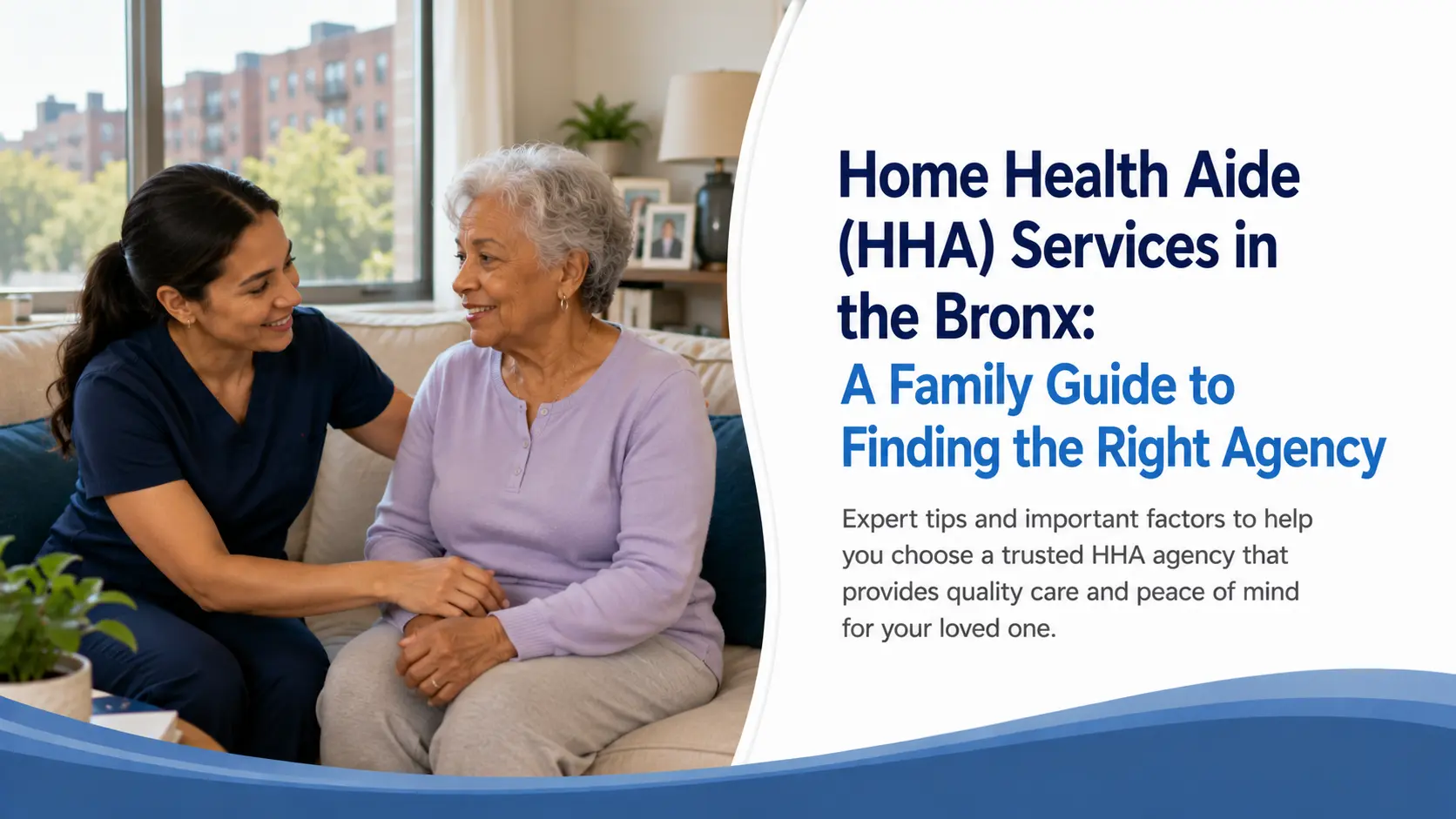
New York City has hundreds of licensed home care agencies — from large national chains to small neighborhood operations. That’s good news (competition and choice) and challenging news (how do you distinguish a trustworthy agency from one that looks good on a website but fails to deliver?). This guide walks through what actually separates good home care agencies from mediocre ones, and how NYC families can make a confident choice. If you’re ready to speak with someone directly, our care coordinators are available to answer your questions about Advantage Home Care.
Types of Home Care Agencies in NYC
Before comparing agencies, it helps to understand what type of agency you’re looking for. In New York, home care agencies fall into distinct license categories that determine what they can and can’t do:
Provides skilled nursing and therapy services alongside personal care — typically for short-term, post-acute care after a hospitalization. Usually covered by Medicare or short-term Medicaid.
If your loved one is enrolled in a Medicaid MLTC plan, the agency must be in-network with that plan. Not every LHCSA works with every MLTC plan — confirming in-network status is essential.
Any licensed LHCSA can provide private pay services — no Medicaid enrollment needed, faster start times, more scheduling flexibility. Some agencies specialize in private pay only.
8 Questions to Ask Any NYC Home Care Agency
Use these questions when evaluating any agency. A reputable agency should answer all of them directly and without hesitation:
This is non-negotiable. You can verify any agency’s license status through the New York State Department of Health. Unlicensed agencies may be cheaper but operate outside state oversight and worker protections.
If your loved one has an MLTC plan, the agency must be a contracted provider. Ask specifically — don’t assume. If you haven’t enrolled in an MLTC plan yet, ask which plans the agency works with.
Background checks are required by New York State, but training quality and vetting rigor vary significantly. Ask about the specific training aides receive beyond state minimums.
Frequent caregiver changes are disruptive and stressful. Ask specifically what the agency does to maintain continuity — and what happens when a regular caregiver is sick or unavailable.
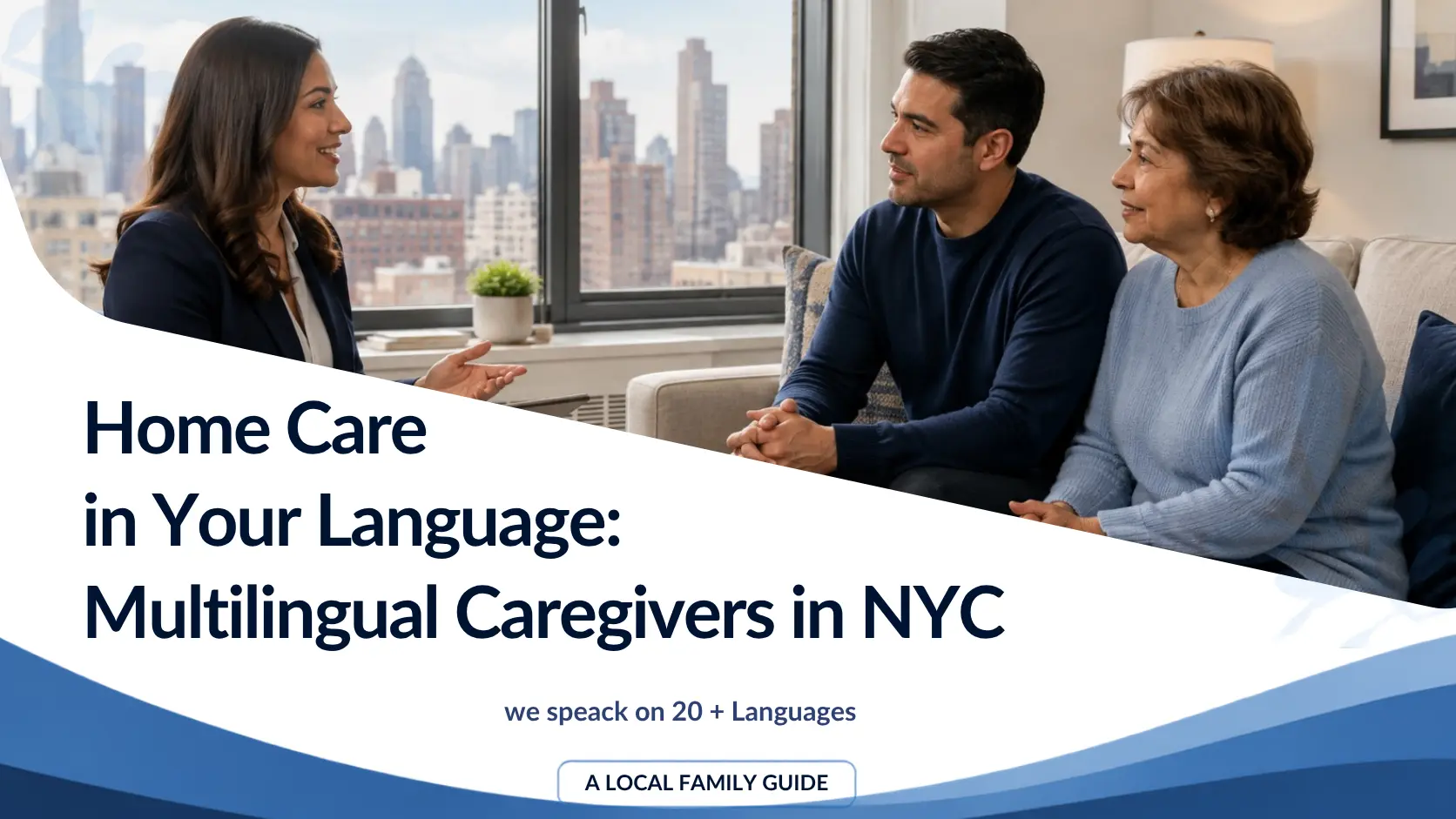
NYC’s diversity means language compatibility is often essential. Ask which languages your potential caregivers speak and whether the agency can match your loved one’s language and cultural preferences.
For Medicaid, this depends on authorization status. For private pay, most agencies can begin in 24–48 hours. If you need care urgently, ask directly what’s realistic.
Responsiveness during a care crisis is where agencies differentiate themselves most clearly. Ask about after-hours support, who handles emergencies, and typical response times.
Some agencies simply place aides. Others offer care coordination — helping families navigate Medicaid, communicate with doctors, and adjust the care plan over time. For complex care situations, this matters enormously.
Red Flags to Watch For
These are signs that an agency may not be trustworthy — or may not be the right fit for your situation:
- Can’t or won’t verify licensure. Every legitimate agency can provide their New York State license number immediately.
- Pressure to sign quickly. Reputable agencies give families time to make decisions. Pressure tactics are a warning sign.
- Vague answers about caregiver training. If they can’t tell you specifically what training their aides receive, the training may be minimal.
- No after-hours contact. Care needs don’t stop at 5pm. An agency without accessible after-hours support is a problem waiting to happen.
- No dedicated point of contact. If there’s no specific person responsible for your loved one’s case, coordination problems are likely.
- Very low rates that seem too good to be true. Extremely low pricing often signals underqualified aides, poor training, or labor law violations — all of which affect the care your loved one receives.
Why Borough Coverage and Language Matter in NYC
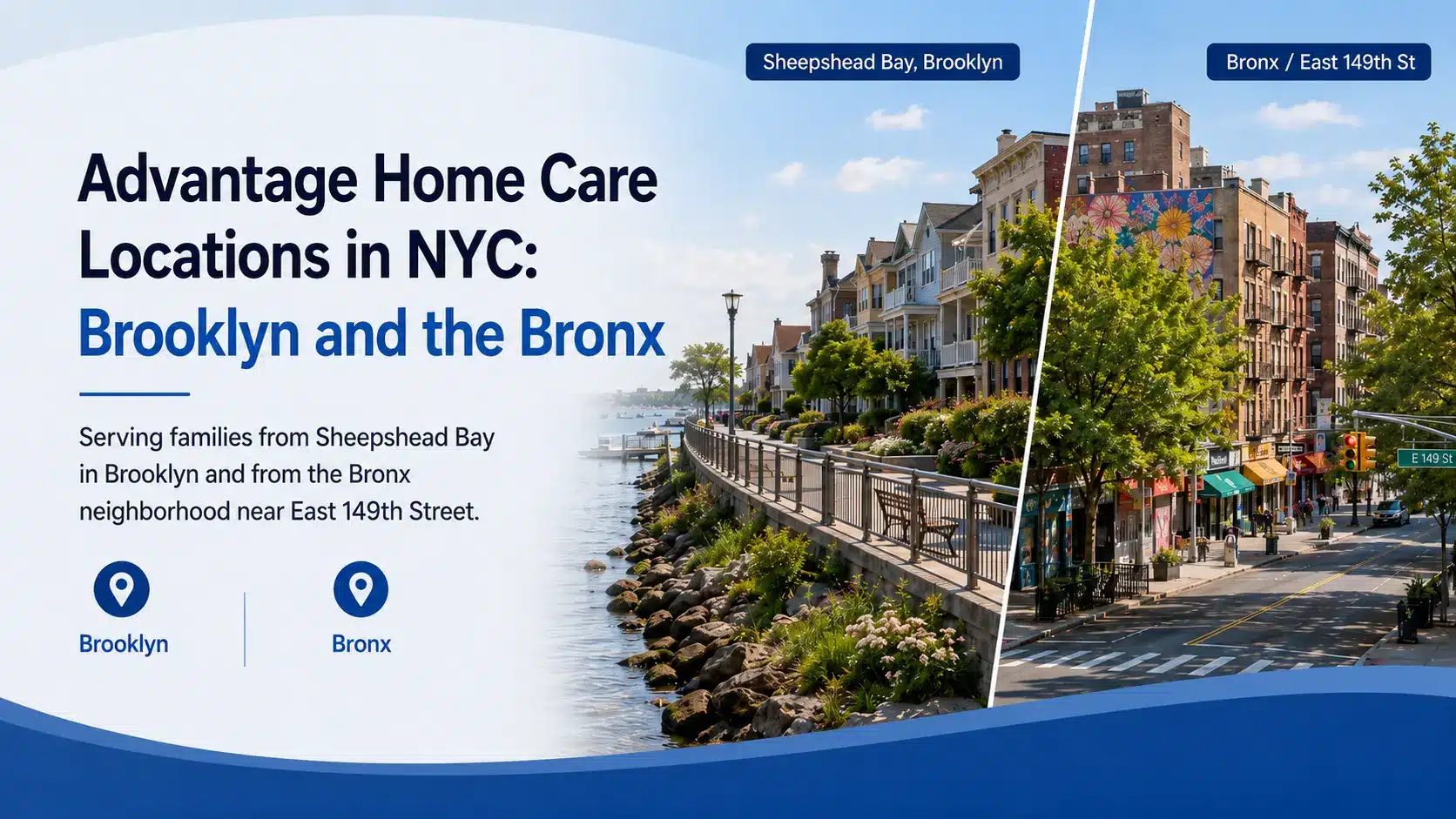
New York City’s five boroughs have meaningfully different home care landscapes. Brooklyn and the Bronx have the highest concentrations of Medicaid home care recipients. Queens has significant multilingual demand — Spanish, Chinese, Korean, and South Asian languages are all common. Manhattan’s density creates different logistics than Staten Island’s suburban character.
Advantage Home Care serves all five boroughs — Brooklyn, Queens, Manhattan, the Bronx, and Staten Island — with caregivers who speak over 20 languages including Spanish, Russian, Georgian, and Chinese. We’re in-network with multiple MLTC plans and offer both Medicaid-funded and private pay home care.
How to Get Started
The right first step depends on your situation. If your loved one may be eligible for Medicaid, check Medicaid eligibility first — it changes what you can access and how quickly. If the situation is urgent or Medicaid isn’t a fit right now, private pay care can start faster. Either way, a conversation with one of our care coordinators costs nothing and helps clarify your options. Reach out here to get started.