Blog

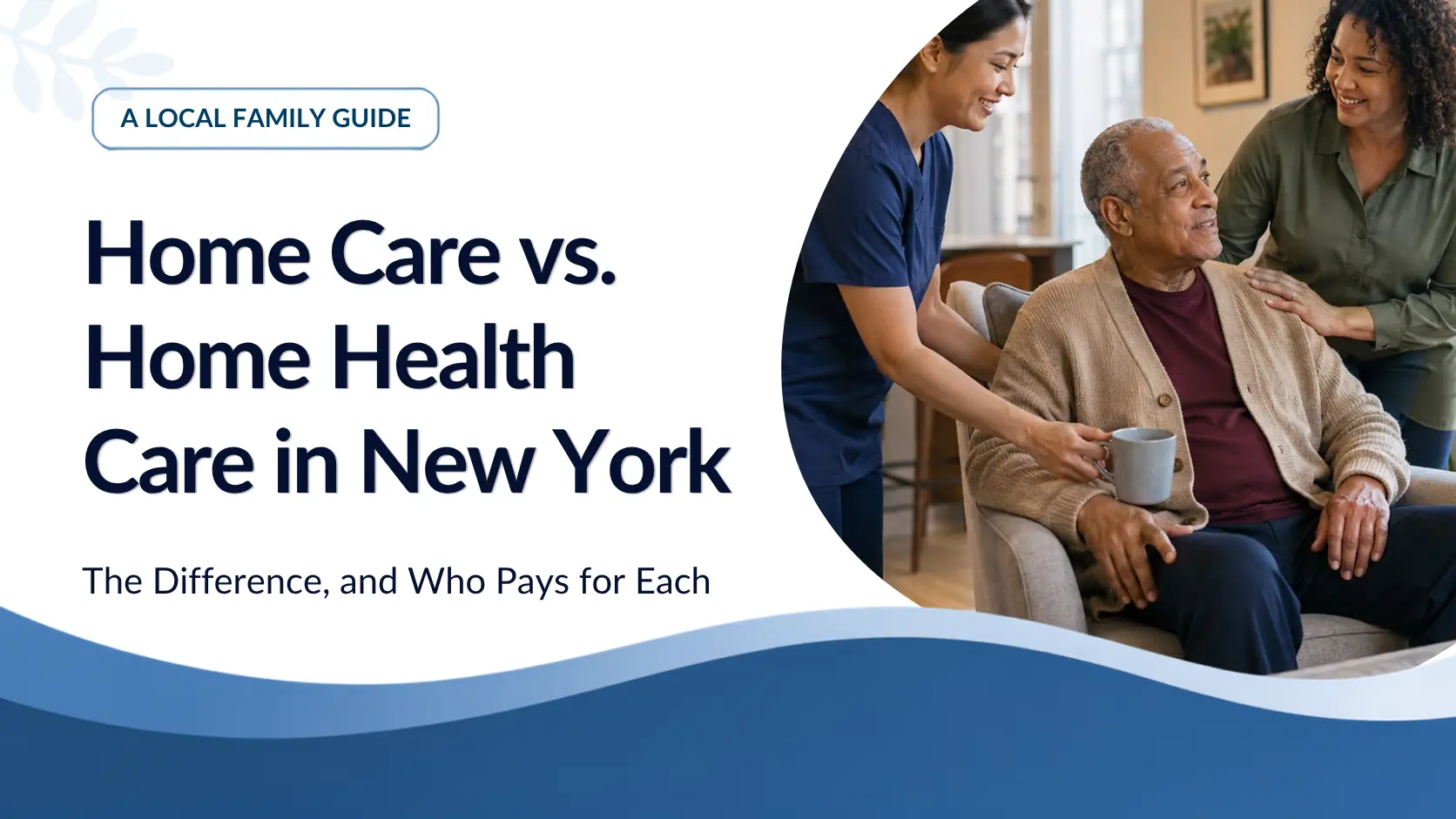
  • Home Care vs. Home Health Care in New York: The Difference, and Who Pays for Each

    Home Care vs. Home Health Care in New York: The Difference, and Who Pays for Each

    Plain-English Guide

    Home Care vs. Home Health Care in New York: The Difference, and Who Pays for Each

    Two nearly identical names, two different services, two different payers. Getting this straight saves families months of confusion.

    The short answer

    Home care is ongoing, non-medical daily help β€” an aide for bathing, dressing, meals and supervision β€” paid long-term by Medicaid or privately. Home health care is short-term medical care at home β€” nurses and therapists after an illness or hospital stay β€” paid by Medicare or insurance for a limited episode. Most families eventually use both, in sequence. Call 718-375-2707 if you’re not sure which you need.

    Side by Side

    🏠
    Home care (custodial)

    Who comes: PCAs and HHAs.
    What they do: personal care, meals, housekeeping, errands, supervision.
    How long: indefinitely β€” months and years.
    Who pays: Medicaid (via MLTC) or private pay.

    🩺
    Home health care (skilled)

    Who comes: nurses, physical/occupational/speech therapists.
    What they do: wound care, injections, rehab exercises, monitoring.
    How long: a limited episode while there’s a skilled need.
    Who pays: Medicare or health insurance, with a doctor’s order.

    The Confusion, Untangled

    • The aide titles overlap β€” the services don’t. An HHA working under a Medicare home health episode is doing short-term skilled-adjacent visits; an HHA on Medicaid home care hours is your loved one’s daily support. Same certification, different program. See HHA vs PCA and what a CHHA is.
    • “Medicare covers home care” is the classic trap. It covers home health episodes; it does not fund the ongoing aide most families are actually looking for. Long-term hours run through Medicaid.
    • The agencies are licensed differently too β€” LHCSAs provide home care; CHHAs (certified agencies) provide Medicare home health. Advantage Home Care is a licensed home care agency: the daily-support side.
    • The handoff moment: when the Medicare episode ends and the therapist stops coming, the need for daily help usually hasn’t ended. That is the week to have home care arranged β€” see after a hospital stay.

    Quick Answers

    What is the difference between home care and home health care?

    Home care is ongoing non-medical daily help from aides; home health care is short-term medical treatment at home from nurses and therapists after an illness or hospitalization.

    Who pays for home health care in New York?

    Medicare or health insurance, for a limited episode with a doctor’s order. When the skilled need ends, so does the coverage.

    Who pays for home care in New York?

    Medicaid pays for ongoing aide hours for eligible New Yorkers through MLTC plans; families who don’t qualify (or can’t wait) pay privately.

    Can you have home care and home health care at the same time?

    Yes β€” commonly right after a hospital stay: Medicare’s nurses and therapists visit while a home care aide covers the daily hours in between.

    How do I apply for home health care?

    Through the doctor or hospital discharge planner β€” it requires a physician’s order. For home care, you apply through Medicaid/an MLTC plan, or simply call an agency for private-pay care.

    What does each cost?

    Home health episodes are typically covered in full by Medicare. Home care is billed hourly if private β€” see home care costs in NYC β€” and free to eligible Medicaid recipients.

    Home Care vs Home Health Care: Quick Answers

    Is home health care covered by Medicare and home care by Medicaid?

    Broadly yes: “home health care” (skilled nursing and therapy from a Certified Home Health Agency) is a Medicare benefit after illness or hospitalization; “home care” (daily help from aides through a licensed agency) is paid by Medicaid MLTC or privately. Many families use both in sequence.

    Which do I need after a hospital stay?

    Usually both: the CHHA nurse and therapists for the first weeks, and an aide for daily help that continues afterwards. Arrange the aide before discharge; see coming home from rehab: what to set up before discharge day.

    Which One Does Your Family Need?

    Describe the situation in one phone call and a coordinator will tell you: home care, home health, or both β€” and how to get each started.
    Call 718-375-2707
    Request Care Online

  • Home Care in Great Kills, New Dorp and the South Shore: A Staten Island Guide

    Home Care in Great Kills, New Dorp and the South Shore: A Staten Island Guide

    Local Guide Β· Staten Island

    Home Care in Great Kills, New Dorp and the South Shore: A Staten Island Guide

    The South Shore has the most homeowners aging in place in the borough β€” and the fewest nearby options. Home care fills that gap.

    The short answer

    Yes β€” home care aides serve Great Kills, New Dorp and every South Shore neighborhood, through Medicaid-covered hours for eligible residents or private-pay care that starts within 24–48 hours. You don’t need an agency with a storefront on Hylan Boulevard; you need one licensed for Staten Island with caregivers who travel to it. Call 718-375-2707 to arrange care anywhere on the island.

    What Makes the South Shore Different

    • Houses, not apartment buildings. Single-family homes mean stairs, laundry in the basement, and no building super or neighbors across the hall β€” an aide is often the difference that keeps a widowed parent in the house.
    • Car-dependent errands. Shopping and medical trips cluster around Hylan Boulevard and the SIUH campuses; caregivers help with escorted appointments and errands so families stop burning vacation days.
    • Family nearby, but working. Many South Shore seniors have children on the island who cover evenings and weekends β€” Medicaid or private hours cover the weekday gap. That split schedule is the most common arrangement we build here.

    Neighborhoods We Cover

    Great Kills, New Dorp, Eltingville, Annadale, Arden Heights, Huguenot, Prince’s Bay, Pleasant Plains, Tottenville, Richmondtown, Bay Terrace and Oakwood β€” plus the rest of the borough. For the island-wide picture, including the North Shore, see our main guide: Home care on Staten Island. This page is the South Shore deep-dive.

    Paying for Care on Staten Island

    The rules are the same as the rest of the city: Medicaid covers personal care and HHA hours for eligible residents through an MLTC plan, and private-pay care fills the gaps or starts immediately while an application moves β€” see how to get started and what home care costs.

    Quick Answers

    Is there a home care agency serving Great Kills?

    Yes β€” licensed NYC agencies, including ours, staff aides across Great Kills and the South Shore. What matters is Staten Island coverage and caregiver reliability, not a local storefront.

    Does Medicaid cover home care on Staten Island?

    Yes β€” the same Medicaid home care program as the rest of NYC: eligibility, an assessment, then weekly aide hours authorized through an MLTC plan.

    How fast can home care start in New Dorp or Eltingville?

    Private-pay care typically starts within 24–48 hours anywhere on the island. Medicaid hours start after approval and assessment.

    Do aides travel to Tottenville and Prince’s Bay?

    Yes. We match caregivers by location and schedule so the commute is sustainable β€” that’s what keeps the same aide showing up month after month.

    Can an aide drive my parent to appointments?

    Aides accompany clients to appointments and errands; transportation itself is arranged per the care plan, and Medicaid MLTC plans include medical transportation benefits.

    What if my parent lives with us but needs daytime help?

    Weekday daytime coverage while the family works is the classic South Shore schedule β€” Medicaid hours can be arranged around your work day, not instead of your involvement.

    Home Care Agency in Great Kills and New Dorp: Quick Answers

    Is there a home care agency in Great Kills?

    Yes. Advantage Home Care serves Great Kills, Eltingville, Annadale, New Dorp, Oakwood and the whole South Shore of Staten Island, with caregivers who live on the island so shifts are dependable. Call 718-375-2707.

    How do I start home care in Great Kills or New Dorp?

    Call 718-375-2707. If Medicaid will pay, we begin the application and NYIA assessment with you at no charge and staff the hours once your MLTC plan authorizes them; private-pay care can usually start within 24–48 hours. Borough-wide details: home care on Staten Island.

    Is Medicaid home care available on the South Shore?

    Yes. The same New York process applies (community Medicaid, NYIA assessment, MLTC plan), and we handle each step with Staten Island families at no charge.

    Care on the South Shore, Arranged This Week

    Tell us the neighborhood and the schedule you need. A coordinator will match a caregiver who actually fits both.

    Call 718-375-2707
    Request Care Online

  • Home Care for Brain Tumor Patients in NYC: What’s Available and Who Pays

    Home Care for Brain Tumor Patients in NYC: What’s Available and Who Pays

    Condition Guide

    Home Care for Brain Tumor Patients in NYC: What’s Available and Who Pays

    Between hospital stays and scans, most of the journey happens at home. Here is the support that makes it manageable.

    The short answer

    Home care for brain tumor patients covers personal care (bathing, dressing, meals), safety supervision for balance problems, seizures and cognitive changes, recovery support after surgery or radiation, and relief for family caregivers. Medicaid can fund ongoing hours, Medicare covers short skilled episodes after treatment, and private-pay care can start within 24–48 hours. Call 718-375-2707.

    What a Home Care Aide Actually Does for a Brain Tumor Patient

    πŸ›‘οΈ
    Safety and supervision

    Brain tumors and their treatment affect balance, vision, judgment and memory. An aide prevents the falls and kitchen accidents that cognitive and mobility changes cause β€” the risk families worry about most between appointments.

    🩹
    Post-surgery and treatment recovery

    After a craniotomy or during radiation and chemo: help with washing and dressing, meals when fatigue is crushing, medication reminders on a strict schedule, and an escort to treatment. See also planning a safe discharge.

    🧠
    Routine for cognitive changes

    Consistent daily structure, gentle orientation, and a calm second presence when personality or memory changes make the day unpredictable for a spouse managing it alone.

    🌿
    Relief for the family

    Scheduled hours so the primary caregiver can work, sleep and keep their own medical appointments. Respite matters through a long treatment arc β€” see respite options in New York.

    Who Pays

    • Medicaid funds ongoing personal care hours for eligible New Yorkers β€” the payer for month-after-month daily support. Hours follow the assessment, and a changing condition is grounds for reassessment. See what Medicaid covers at home.
    • Medicare covers medically necessary treatment β€” including brain surgery β€” and short skilled home health episodes afterward: nursing visits and therapy, not ongoing daily help.
    • Private pay bridges the gap: it starts in 24–48 hours, covers the intense treatment weeks, and can hand off to Medicaid once approved. See getting approved for Medicaid home care.

    For cancer care at home more broadly β€” treatment-stage support that isn’t specific to brain tumors β€” see our guide to home care for cancer patients in NYC. This page focuses on what brain tumors add: the neurological and cognitive side.

    Families facing other progressive neurological conditions can use the same coverage path — see our guide to ALS home care services in NYC.

    Quick Answers

    What kind of home care is available for brain tumor patients?

    Personal care, safety supervision for seizures and balance problems, post-surgery recovery help, medication reminders, escorts to radiation and chemo, and respite hours for family caregivers.

    Does Medicaid cover brain surgery?

    Yes β€” medically necessary brain surgery is covered by Medicaid (and Medicare) as hospital care. Just as important for families: Medicaid can also fund the daily home care hours needed after discharge.

    Can an aide handle seizures?

    Aides don’t provide medical treatment, but they are a trained, calm presence: keeping the person safe during a seizure, timing it, and calling for help per the care plan β€” far safer than being home alone.

    How fast can home care start after a hospital discharge?

    Private-pay care can be in place within 24–48 hours β€” often arranged before discharge day so the first shift starts when your loved one walks in the door.

    Does home care replace hospice for brain tumor patients?

    No β€” they can work together. Hospice covers the medical and comfort side; home care aides add the daily hands-on hours that hospice visits don’t include.

    Can hours increase as the condition changes?

    Yes. With Medicaid, a documented change in condition justifies a reassessment; with private pay, you simply adjust the schedule week to week.

    Brain Tumor Home Care: Quick Answers

    Does Medicaid cover home care for a brain tumor patient in New York?

    Yes, when the person is Medicaid-eligible and needs help with daily activities; weakness, seizures, confusion and fall risk from a brain tumor or its treatment commonly meet the functional threshold. Hours are set by the assessment, not the diagnosis.

    What is the difference between home care and hospice for a brain tumor?

    Hospice (Medicare or Medicaid) provides a nursing-led comfort-care team for a life expectancy of six months or less; home care aides provide daily hands-on help at any stage and can work alongside hospice. Families often combine them so the aide covers the hours the hospice team is not there.

    Support for the Road Ahead

    Tell us where things stand β€” just diagnosed, mid-treatment, or heading home from surgery β€” and a coordinator will build the right level of support around it.

    Call 718-375-2707
    Request Care Online

  • Same-Week Home Care in NYC: How Families Arrange Care Fast in a Crisis

    Same-Week Home Care in NYC: How Families Arrange Care Fast in a Crisis

    Crisis Playbook

    Same-Week Home Care in NYC: How Families Arrange Care Fast in a Crisis

    When something just happened and care can’t wait for an application cycle β€” here is what actually starts in days.

    The short answer

    The fastest route is private-pay home care, which starts within 24–48 hours β€” no assessment cycle, no insurance approval. If the person likely qualifies for Medicaid, New York also has an immediate-need pathway that fast-tracks personal care for urgent, unmet needs. Most families in crisis do both: start private care this week, file for Medicaid in parallel, and switch over when it’s approved. Call 718-375-2707 β€” coordinators handle exactly this, daily.

    The Four Crises That Bring Families to Us

    🩼 A fall or sudden decline

    Mom fell, nothing’s broken, but she can’t be alone anymore β€” as of today. Private-pay hours cover the danger window while the longer-term plan is built.

    πŸ₯ A discharge with no plan

    The hospital is sending Dad home Thursday. Care can usually be arranged before discharge day β€” see the discharge checklist and after-hospital care guide.

    πŸšͺ The caregiver just left

    A private aide quit, a family member burned out or got sick. Replacement coverage is a schedule-matching problem, not a months-long process β€” days, not weeks.

    πŸ“ž The long-distance wake-up call

    You visited and realized how bad things have gotten. If you’re managing from another city, see arranging care from out of state.

    Have These Ready for the First Call

    • The care picture: what the person can and can’t do since the event β€” walking, bathroom, meals, medications, nights.
    • The address and access: borough and neighborhood, elevator or walk-up, who has keys.
    • The coverage facts: does the person have Medicaid already, Medicare only, or neither? This decides the bridge strategy, not whether care can start.
    • The schedule you need this week β€” even a rough one. Mornings and evenings? Overnights? Someone there all day?

    The Bridge Strategy: Private Now, Medicaid After

    Crisis care and long-term funding are two different problems. Solve the first with private-pay hours this week. For the second: if your parent plausibly qualifies, file for Medicaid immediately β€” and ask about the immediate-need route if the situation is urgent and there’s no one to help. When approval comes through, the same agency can often continue the care on Medicaid hours, so nothing about the routine changes. Start with the step-by-step guide and the Medicaid approval walkthrough.

    Quick Answers

    Can I get post-hospital care set up today in Manhattan?

    Same-day is sometimes possible; next-day is realistic for most schedules in Manhattan and the other boroughs. Call before discharge and the first shift can meet your loved one at home.

    What is New York’s immediate-need Medicaid pathway?

    An expedited process for people who urgently need personal care and have no one available to help β€” applications and assessments are fast-tracked compared with the standard timeline.

    What if we can’t afford private pay for long?

    Use it as a bridge, not a plan: targeted hours for the riskiest parts of the day while the Medicaid application moves. Many families cover two to six weeks this way.

    What is custodial care, and who provides it in a crisis?

    Custodial care is the non-medical daily help β€” bathing, dressing, meals, supervision. It’s exactly what a home care aide provides, and it’s the piece hospitals don’t send home with you.

    Is temporary home care for the elderly a real option?

    Yes β€” care can run for a defined stretch (two weeks, six weeks) and stop, with no long-term commitment. Temporary arrangements often become the trial run for permanent ones.

    Fast Home Care in NYC: Quick Answers

    How fast can home care start in NYC?

    Private-pay care can start within 24–48 hours. Medicaid-covered care starts within days if hours are already authorized, and takes weeks to months for a brand-new application unless the immediate need pathway applies.

    Can Medicaid home care start the same week?

    Only when authorization already exists, or through immediate need with a doctor’s attestation. Otherwise families bridge with private pay and switch the same caregiver to Medicaid once approved. Call 718-375-2707.

    In a Crisis Right Now?

    Call and tell the coordinator what happened. We’ll tell you honestly what can start this week and what the funding path looks like.

    Call 718-375-2707 Request Care Online
  • Does Medicare Pay for Home Care in New York? Medicare, Medicare Advantage and Insurance, Explained

    Does Medicare Pay for Home Care in New York? Medicare, Medicare Advantage and Insurance, Explained

    Coverage Guide

    Does Medicare Pay for Home Care in New York? Medicare, Medicare Advantage and Insurance, Explained

    The most expensive misunderstanding in home care: assuming Medicare will pay for the aide. Here is what each payer actually covers.

    The short answer

    Medicare pays for short-term skilled home health β€” nurses and therapists after an illness, surgery or hospital stay β€” not for ongoing help with bathing, dressing and meals. Some Medicare Advantage plans add small in-home support benefits, but they are capped and vary by plan. Long-term home care in New York is paid by Medicaid or privately. Call 718-375-2707 and we’ll tell you which route fits your parent’s situation.

    What Each Payer Actually Covers

    πŸ₯ Original Medicare

    Intermittent skilled care at home β€” nursing visits, physical/occupational/speech therapy, and a home health aide only alongside skilled care, for a limited episode. It is not priced per hour, and it ends when the skilled need ends.

    βž• Medicare Advantage (Aetna, UHC, etc.)

    Everything Original Medicare covers, sometimes plus a supplemental in-home support benefit β€” typically a modest number of aide hours per year, varying by plan and county. Helpful, never sufficient for daily care.

    πŸ›‘οΈ Medicaid (the long-term payer)

    Ongoing personal care and HHA hours, authorized weekly through an MLTC plan β€” the program that actually funds daily help at home in New York. See what Medicaid covers at home.

    πŸ’³ Private pay

    Hourly, flexible, and fast β€” care can start in 24–48 hours while a Medicaid application or plan enrollment is in progress. See private pay home care.

    The Aetna Question, Answered Honestly

    Families regularly ask how much Aetna β€” or any Medicare Advantage plan β€” “pays for caregivers.” The honest answer: if your plan offers an in-home support benefit at all, it is a supplemental extra measured in hours per year, not a caregiver salary or a daily schedule. Check your plan’s Evidence of Coverage, use the hours if you have them, and plan the real coverage around Medicaid or private pay.

    One naming note while you’re here: we are Advantage Home Care, a licensed NYC home care agency β€” not a Medicare Advantage plan. We work with families in every coverage situation, including helping eligible New Yorkers qualify for Medicaid home care.

    No Insurance That Covers It? Your Real Options

    • Check Medicaid before assuming “no.” Income over the limit is usually fixable with a pooled income trust, and assets are treated differently for community Medicaid than people expect. Start with the approval guide.
    • Pay privately for the hours that matter most. Many families cover mornings and evenings only β€” see what home care costs in NYC.
    • Veterans: VA programs are a separate, real funding stream β€” see home care for veterans.

    One exception worth knowing: ALS. Medicare waives its usual 24-month disability waiting period for ALS, but it still pays only for intermittent skilled visits — long-hours daily aide care for ALS in New York runs through Medicaid. See ALS home care services in NYC.

    Quick Answers

    How much does Medicare pay for home health care per hour?

    Medicare doesn’t pay hourly. It covers approved home health episodes β€” skilled visits after illness or hospitalization β€” at 100% for eligible patients, then coverage ends when the skilled need does.

    Does Medicare pay for 24-hour home care?

    No. Around-the-clock or daily custodial care is outside Medicare entirely β€” in New York that level of care is funded by Medicaid (when assessed) or paid privately.

    How much does Aetna pay for home health care?

    Aetna Medicare Advantage plans cover Medicare home health episodes; some plans add limited supplemental in-home support hours. The amount depends on your specific plan β€” check your Evidence of Coverage.

    What is the difference between Medicare and Medicaid home care?

    Medicare: short-term, medical, after an event. Medicaid: long-term, daily personal care, authorized weekly. Most older New Yorkers who need lasting help at home use Medicaid β€” often while keeping Medicare for doctors and hospitals.

    Is Advantage Home Care a Medicare Advantage plan?

    No β€” we are a licensed home care agency in NYC. We provide the aides; Medicaid, MLTC plans, VA benefits or private payment fund the hours.

    What are the options for elder care without insurance?

    Apply for community Medicaid (more achievable than most families assume), pay privately for targeted hours, and check VA eligibility for veterans and surviving spouses.

    Medicare and Home Care in NY: Quick Answers

    Does Medicare Advantage pay for home care in New York?

    Medicare Advantage plans cover the same short-term skilled home health as Original Medicare, and some offer limited extra in-home support hours as a supplemental benefit; check the plan’s Evidence of Coverage. Long-term aide hours still come through Medicaid or private pay. Companion guide: does Medicare cover home care? Medicare vs Medicaid.

    How many home health visits does Medicare cover?

    There is no fixed number; Medicare covers intermittent skilled visits (nursing, therapy, and aide visits tied to them) for as long as the person is homebound and needs skilled care, recertified every 60 days. It does not cover daily custodial care.

    Stop Guessing About Coverage

    One call and a coordinator will map your parent’s actual coverage options β€” Medicare, Medicaid, VA or private β€” and what each would take to start.

    Call 718-375-2707 Get Approved for Medicaid
  • OPWDD Evaluations in New York: Where to Get One, What to Expect and How Long It Takes

    OPWDD Evaluations in New York: Where to Get One, What to Expect and How Long It Takes

    Eligibility Guide

    OPWDD Evaluations in New York: Where to Get One, What to Expect and How Long It Takes

    The evaluation is the gate to every OPWDD service. Here is exactly what it involves β€” and how to get through it faster.

    The short answer

    OPWDD eligibility rests on two evaluations: a psychological evaluation (cognitive/IQ testing) and an adaptive behavior assessment (how the person manages daily life), plus records showing the disability began before age 22. You submit them through OPWDD’s Front Door β€” the regional intake office covering your county, whether you’re in the five boroughs or in Nassau and Suffolk. Not sure where to start? Call 718-375-2707 and we’ll point you in the right direction.

    The Three Pieces OPWDD Looks For

    🧠 Psychological evaluation

    Standardized cognitive testing by a licensed psychologist. Recent is better β€” OPWDD generally wants adult applicants tested as adults, not just a school-age report.

    🏑 Adaptive behavior assessment

    A structured measure (often the Vineland) of real-world skills: communication, self-care, daily living, getting around. Usually completed with a parent or caregiver as the informant.

    πŸ“„ Proof of onset before 22

    School records, IEPs, early evaluations, medical documentation of the diagnosis β€” anything showing the disability originated in the developmental period.

    πŸšͺ The Front Door

    OPWDD’s intake process: an information session, document review, and an eligibility determination by the regional office (DDRO) for your county.

    Where Evaluations Happen

    • New York City: hospital developmental centers, clinic networks and licensed psychologists across the five boroughs perform OPWDD-accepted evaluations. Your Front Door office serves the borough you live in.
    • Long Island: families in Smithtown, St. James and the surrounding Suffolk and Nassau towns go through the Long Island regional office, with evaluations by local psychologists and developmental clinics.
    • Already have testing? Recent school or hospital evaluations often satisfy part of the requirement β€” send what you have before paying for new testing.

    How Long It Takes β€” and How to Speed It Up

    Plan on two to four months from first contact to an eligibility decision when documents are in order; missing paperwork is what stretches it to six or more. Three accelerators: request records from schools and doctors before the Front Door session, book the psychological evaluation early (testing appointments have waitlists), and make sure the adaptive assessment is done by someone who knows the person’s hardest days, not their best ones.

    Once eligibility is confirmed, services are planned with a Care Coordination Organization β€” from in-home support to day habilitation and community habilitation. For the full application walkthrough, see OPWDD eligibility in New York or the short OPWDD guide.

    Quick Answers

    What evaluations does OPWDD require?

    A psychological evaluation with cognitive testing and an adaptive behavior assessment, plus documentation that the disability began before age 22. Some diagnoses also need medical records.

    Where do I get an OPWDD evaluation on Long Island?

    Through licensed psychologists and developmental clinics in Nassau and Suffolk β€” families in Smithtown and St. James apply through OPWDD’s Long Island regional office.

    How much does an OPWDD evaluation cost?

    Evaluations through clinics are typically billed to Medicaid or insurance; private psychological testing is paid out of pocket. Existing school or hospital testing can reduce what you need.

    How long does OPWDD eligibility take?

    Commonly two to four months with complete documents. Incomplete records are the main cause of delay.

    Can an old evaluation be used?

    Sometimes β€” childhood records help prove onset before 22, but OPWDD usually wants current cognitive and adaptive testing for adult applicants.

    What happens after the evaluation?

    The regional office reviews the packet and issues an eligibility determination. If approved, you choose a Care Coordination Organization and build the service plan.

    OPWDD Evaluations: NYC vs Long Island

    Where are OPWDD evaluations done on Long Island (Smithtown, Setauket, Stony Brook, Port Jefferson)?

    Long Island families go through the OPWDD Long Island Regional Office (DDRO) Front Door, and the psychological evaluation itself is done by a licensed psychologist, a hospital developmental clinic, or a school district evaluator, including practices around Smithtown, St. James, East Setauket, Stony Brook and Port Jefferson. The process and documents are the same as in NYC; only the regional office differs. Advantage Home Care serves the five boroughs of New York City, so for Suffolk County services ask the Long Island DDRO for provider lists.

    Where do NYC families get an OPWDD evaluation?

    Through the NYC regional Front Door, with evaluations from clinics such as hospital developmental centers, licensed psychologists, or school-based evaluators in Brooklyn, the Bronx, Queens, Manhattan and Staten Island. Advantage Home Care helps NYC families assemble the paperwork and start in-home support once eligible. Call 718-375-2707.

    Don’t Navigate the Front Door Alone

    Our OPWDD team helps families gather the right documents, avoid the common delays, and line up services for the day eligibility comes through.

    Call 718-375-2707 Explore OPWDD Services
  • NHTD vs MLTC in New York: Which Medicaid Home Care Program Fits Your Situation?

    NHTD vs MLTC in New York: Which Medicaid Home Care Program Fits Your Situation?

    Program Comparison

    NHTD vs MLTC in New York: Which Medicaid Home Care Program Fits Your Situation?

    Two Medicaid routes to care at home β€” built for different situations. Here is how to tell which one is yours.

    The short answer

    MLTC is the standard route: a managed long-term care plan authorizes aide hours at home for New Yorkers who need long-term care. NHTD is a waiver for people who need nursing-home-level care but want to live in the community β€” it funds a wider menu of services, including service coordination, independent living training and even a housing subsidy. Many people qualify for either; the right choice depends on the level of need and how much flexibility you want. Call 718-375-2707 and we’ll help you sort it out.

    The Side-by-Side

    πŸ₯
    Who it’s for

    MLTC: adults needing long-term community care (help with daily activities for 120+ days).
    NHTD: adults 18+ assessed at nursing-home level of care who choose to live in the community instead.

    πŸ“‹
    What it covers

    MLTC: personal care and HHA hours, nursing, therapies, equipment, transportation.
    NHTD: a broader waiver menu β€” service coordination, independent living skills training, community integration counseling, home modifications, and a housing subsidy for eligible participants.

    🧭
    How it’s run

    MLTC: you enroll in a plan; the plan assesses hours and manages providers. See how MLTC plans work.
    NHTD: you work with a service coordinator on an individual service plan β€” more participant control, more planning involved.

    🏠
    The housing edge

    Only NHTD offers a state housing subsidy for eligible participants moving out of (or diverting from) a nursing facility β€” often the deciding factor for people leaving a facility with nowhere affordable to go.

    How Families Actually Decide

    • Standard aide hours are the main need? MLTC is simpler and faster β€” most people needing long-term home care in NYC take this route. Start with how to choose an MLTC plan.
    • Leaving a nursing home, or fighting to stay out of one? NHTD exists precisely for this β€” that is the “nursing home transition and diversion” in the name. The waiver’s coordination, training and housing subsidy support the move back to community life.
    • Brain injury involved? New York runs a parallel TBI waiver with a similar structure β€” see the NHTD waiver explained and our NHTD & TBI support services.
    • Not sure you qualify for either? Both require Medicaid first. If income is the obstacle, a pooled income trust usually solves it.

    Quick Answers

    What is the difference between NHTD and MLTC?

    MLTC is managed care that authorizes home care hours; NHTD is a waiver for people at nursing-home level of care, with a wider service menu, participant-directed planning and a possible housing subsidy.

    Who does the NHTD program help?

    Adults 18–64 with a physical disability (or 65+ meeting level-of-care rules) who would otherwise qualify for a nursing home but want to live in the community.

    What is the primary goal of the NHTD waiver program?

    Transition people out of nursing homes β€” or divert them from entering one β€” by funding the services and housing support needed to live safely in the community.

    Can you be in both NHTD and MLTC at the same time?

    No β€” they are alternative routes to Medicaid long-term care. People sometimes move between them as needs change, with help from a service coordinator.

    How many services does the NHTD waiver include?

    Around fifteen distinct waiver services, from service coordination and independent living skills training to home modifications, respite and community transition support.

    How do I enroll in an MLTC plan in New York?

    Establish Medicaid, complete the independent assessment, then choose a plan operating in your county β€” your hours are authorized by the plan after its own assessment.

    NHTD vs MLTC: Quick Answers

    Can you be in NHTD and MLTC at the same time?

    No. NHTD waiver participants receive their home care through the waiver and are excluded from MLTC enrollment; people choose one route based on needs. See who qualifies for the NHTD waiver and how to choose an MLTC plan.

    Which program pays for more hours?

    Neither is automatically more generous; both authorize based on assessed need. NHTD adds coordination, housing and skills services that MLTC does not; MLTC is faster to start and is the standard route for ongoing aide hours.

    Get Pointed at the Right Program

    Ten minutes on the phone and a coordinator can tell you which route fits β€” and start the paperwork for it.

    Call 718-375-2707
    Request Care Online

  • Medicaid Application Help in NYC: What an Application Service Does and When You Need One

    Medicaid Application Help in NYC: What an Application Service Does and When You Need One

    Medicaid Guide

    Medicaid Application Help in NYC: What an Application Service Does and When You Need One

    Most denials are paperwork problems, not eligibility problems. Here is what experienced application help changes β€” and when you can get it free.

    The short answer

    A Medicaid application service prepares and files the application, assembles the financial documentation, sets up a pooled income trust if income is over the limit, and chases the case through to approval. Families use one when the situation is not simple β€” excess income, recent transfers, or a looming nursing-home bill. If you are applying to get home care, agencies like ours help with the Medicaid process at no charge. Call 718-375-2707.

    What Experienced Application Help Actually Includes

    • Eligibility mapping before filing. Income, assets, household size β€” and which category to apply under. Community Medicaid and nursing home Medicaid have different rules; see how the two compare.
    • The document package. Bank statements, proof of income, residency and immigration documents, insurance cards β€” assembled the way the HRA expects, which is where most do-it-yourself applications stall.
    • The over-income fix. If income exceeds the limit, the answer is usually a pooled income trust, not giving up β€” set up correctly, the “surplus” pays your bills instead of going to Medicaid.
    • Follow-through. Responding to requests for additional documentation and tracking the case so it does not sit in a pile.

    Who Actually Needs a Paid Service β€” and Who Doesn’t

    βœ…
    You likely don’t need to pay

    Straightforward community Medicaid for home care: a home care agency’s intake team or a facilitated enroller can handle it free. Start with our step-by-step approval guide.

    βš–οΈ
    Consider professional help

    Nursing home Medicaid planning, significant assets or recent transfers, spousal situations β€” here an elder law attorney or specialist service earns its fee. This is planning, not just paperwork.

    One caution: for nursing-home-level planning, check credentials and ask exactly what is included β€” “Medicaid planning” ranges from filing forms to full legal strategy, and the price ranges with it. For the home care path, the sequence after approval is choosing an MLTC plan and getting hours assessed β€” covered in how to choose an MLTC plan and how to qualify for Medicaid home care.

    Quick Answers

    How much does a Medicaid application service cost in NYC?

    Ranges widely β€” from free (home care agency intake teams, facilitated enrollers) to four-figure fees for attorney-led nursing home planning. Match the help to the complexity.

    Can a home care agency help with my Medicaid application for free?

    Yes. If the goal is home care, our coordinators help with the application, documents and plan enrollment at no charge β€” it is part of arranging care.

    What documents do I need for a NYC Medicaid application?

    Proof of identity, residency and immigration status, income (Social Security, pension), bank statements, and existing insurance cards. Nursing home applications add a five-year financial lookback.

    What if my income is over the Medicaid limit?

    A pooled income trust usually solves it for community Medicaid β€” your surplus income pays your own bills through the trust while you keep coverage.

    How long does Medicaid approval take in NYC?

    Typically 45 days for a complete community application (90 with a disability determination). Incomplete documents are the main cause of delay and denial.

    Is nursing home Medicaid different from community Medicaid?

    Yes β€” different asset rules and a five-year transfer lookback. Many families plan for nursing home eligibility while using home care to stay out of one.

    Where can I get experienced Medicaid application help in the Bronx or Brooklyn?

    Advantage Home Care has offices in the Bronx (391 East 149th Street) and Brooklyn (1515 Sheepshead Bay Road) and helps families with community Medicaid applications for home care at no charge, in English, Spanish and Russian. If your goal is home care, call 718-375-2707; if you need asset protection or nursing home Medicaid planning, we will tell you plainly that an elder-law attorney is the right call.

    Get the Application Done Right

    Tell us your situation. If home care is the goal, our team helps with Medicaid at no charge β€” and tells you honestly when you need an attorney instead.

    Call 718-375-2707
    Get Approved for Medicaid

  • Down Syndrome Home Care for Adults in New York: Independence, Supported Living and OPWDD Services

    Down Syndrome Home Care for Adults in New York: Independence, Supported Living and OPWDD Services

    Family Guide

    Down Syndrome Home Care for Adults in New York: Independence, Supported Living and OPWDD Services

    A nursing home is almost never the answer. Here is how adults with Down syndrome live well at home β€” and who funds the support.

    The short answer

    In New York, adults with Down syndrome get home care and independence support through OPWDD β€” trained aides at home, community habilitation to build daily-living skills, day programs, and respite for family caregivers, all Medicaid-funded. With the right support plan, many adults with Down syndrome live semi-independently at home or in supported apartments. Call 718-375-2707 to talk it through with a coordinator.

    What “Independent” Realistically Looks Like

    Independent supported living with Down syndrome is rarely all-or-nothing. Most adults thrive with a structured middle path: living at home or in their own apartment, with support hours shaped around the parts of the day that need it β€” morning routines, cooking, money and appointments, getting around the city safely. The goal of every service below is the same: more skills, more autonomy, less dependence on any one person.

    The Support Menu in New York

    🏠
    In-home support

    OPWDD-funded aides help with personal care, meals, medication reminders and household routines β€” at the family home or the adult’s own apartment. See OPWDD services for Down syndrome.

    🧭
    Community habilitation

    One-on-one skill building out in the real world β€” shopping, transit, banking, cooking. This is the service that most directly grows independence. See community habilitation in NYC.

    β˜€οΈ
    Day habilitation

    Structured weekday programs with social connection and skill goals β€” see day habilitation in NYC.

    🌿
    Respite for the family

    Funded breaks for parents and siblings who provide daily care β€” hours, overnights or blocks. See OPWDD respite services.

    Supported Living Options, From Most to Least Independent

    • Own apartment with support hours β€” for adults who manage most of the day alone. Community habilitation plus a few aide hours covers the gaps.
    • Living at home with services β€” the most common arrangement: day program or work during the day, in-home support and family around it.
    • Certified residential settings β€” OPWDD-certified group residences and family care homes, for adults who need staff nearby around the clock. These are homes, not nursing facilities β€” searches for “nursing homes for Down syndrome” usually end here instead, and that is good news.

    The Planning Question Every Family Faces

    Most adults with Down syndrome live with their parents β€” which works until parents age. The families who avoid crisis are the ones who build the support plan before it is urgent: OPWDD eligibility confirmed, services in place, skills growing, and a housing path sketched out. If eligibility is not yet settled, start with how OPWDD eligibility works or the short OPWDD guide. For the wider picture across disabilities, see home care for adults with disabilities in NYC.

    Quick Answers

    Can adults with Down syndrome live independently?

    Many can, with structured support β€” their own apartment or the family home, plus community habilitation and aide hours matched to what they genuinely need help with.

    Who pays for Down syndrome home care in New York?

    Medicaid, through OPWDD. Once enrolled, in-home support, habilitation services, day programs and respite carry no out-of-pocket cost to the family.

    Are there nursing homes for adults with Down syndrome?

    Nursing homes are rarely appropriate. New York’s system is built around home and community settings β€” supported apartments, family homes with services, and OPWDD-certified residences.

    What home adaptations help an adult with Down syndrome?

    Visual schedules and labeled storage, simple kitchen safety devices, good lighting, and a phone set up for easy contact. Aides reinforce routines far more than equipment does.

    What Down syndrome support services exist in New York State?

    OPWDD covers the core: in-home aides, community and day habilitation, respite, employment supports and residential options β€” coordinated through a Care Coordination Organization.

    What happens when parents can no longer provide care?

    With OPWDD services already in place, support hours can increase or a residential placement can be arranged without starting from zero. That is why enrolling early matters.

    Adults With Down Syndrome: Quick Answers

    Can an adult with Down syndrome get a home health aide through Medicaid in New York?

    Yes, when the Medicaid assessment shows a need for help with daily activities (common as early-onset Alzheimer’s or mobility changes appear in adults with Down syndrome). The aide hours run alongside OPWDD services such as community habilitation. Family guide: Down syndrome support services in New York.

    What changes when a parent caregiver ages or passes away?

    Planning early matters: OPWDD residential options, supportive housing, and increased in-home hours can be arranged through the Care Manager, but waiting lists exist. Start the conversation with the Care Manager while the parent is well; call 718-375-2707 for the in-home side.

    Build the Plan Before It’s Urgent

    Our OPWDD team helps families confirm eligibility, choose services and put trusted support in place β€” for now and for later.

    Call 718-375-2707
    Explore OPWDD Services

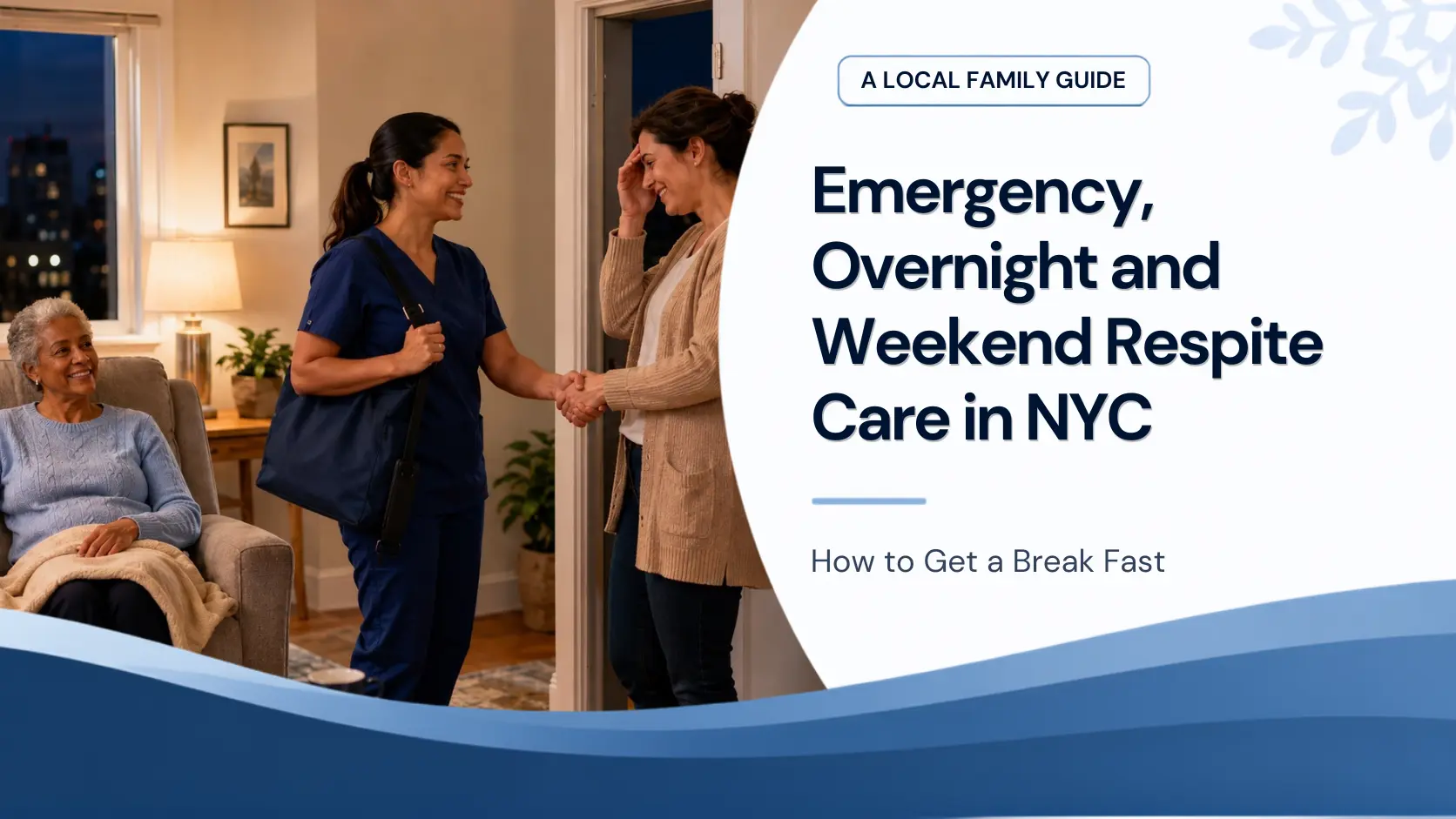
  • Emergency, Overnight and Weekend Respite Care in NYC: How to Get a Break Fast

    Emergency, Overnight and Weekend Respite Care in NYC: How to Get a Break Fast

    Family Caregiver Guide

    Emergency, Overnight and Weekend Respite Care in NYC: How to Get a Break Fast

    When you need cover tonight, this weekend, or by Friday β€” not after a two-month approval process.

    The short answer
    The fastest respite care in NYC is private-pay in-home respite, which can start within 24–48 hours β€” an aide comes to your loved one’s home for the hours, nights or weekend you need. If your loved one already has Medicaid home care, ask their plan about temporarily increasing hours. For developmental disabilities, OPWDD funds its own respite. Call 718-375-2707 and a coordinator will set up cover this week.

    The Four Fast Routes to a Break

    ⚑ Emergency respite care (24–48 hours) Private-pay in-home respite is the only option that reliably starts within a day or two β€” no assessment cycle, no plan approval. You choose the shifts; care can begin as soon as an aide is matched.
    πŸŒ™ Overnight respite care An aide covers the night β€” either a waking night shift or a live-in arrangement β€” so you can finally sleep. See our full guide to overnight and live-in home care in NYC.
    πŸ“… Weekend respite care Recurring weekend blocks β€” Saturday morning to Sunday evening is the most common request β€” so family caregivers who work all week get real time off. Weekend-only schedules are fine; there is no minimum.
    πŸ₯ Short-term and temporary respite A block of one to six weeks β€” after your own surgery, during a family trip, or while a permanent plan is arranged. In-home respite means no facility move and no disruption to your loved one’s routine.

    Who Pays for Fast Respite

    • Private pay is the speed route: you pay by the hour, start in 24–48 hours, and stop whenever you no longer need it. No paperwork beyond a service agreement.
    • Medicaid does not have a separate “respite” benefit for most seniors β€” but authorized personal care hours give family caregivers a scheduled break, and hours can be reassessed upward when a caregiver’s availability changes. If a parent might qualify, start with who qualifies for respite care in NYC.
    • OPWDD respite is a funded service of its own for families caring for a loved one with a developmental disability β€” see OPWDD respite services in NYC.
    For a full comparison of respite options and costs across New York β€” in-home, adult day programs, and facility stays β€” see our main guide: Respite care in New York: options, costs, and how family caregivers can get a break. And if you’re wondering whether needing a break is even “allowed,” read why every family caregiver needs respite β€” burnout helps no one, least of all the person you care for.

    Quick Answers

    How fast can emergency respite care start?

    Private-pay in-home respite in NYC can usually start within 24–48 hours of your first call. Medicaid routes take longer because hours must be assessed and authorized first.

    Can I get respite care for just one weekend?

    Yes. Weekend respite care can be a one-off β€” for a trip or a family event β€” or a recurring schedule, like every Saturday. There is no minimum commitment.

    How long can respite care last?

    As short as a four-hour shift and as long as several weeks of round-the-clock cover. Families commonly book one to six weeks after a caregiver’s own surgery or during travel.

    Is there overnight respite care for elderly parents with dementia?

    Yes β€” a waking overnight aide is the usual arrangement for dementia, so someone is alert if your parent wakes and wanders at night. Aides experienced with dementia can be requested.

    Does Medicaid pay for respite care in New York?

    Not as a standalone benefit for most seniors β€” but Medicaid personal care hours function as scheduled respite for the family, and OPWDD funds dedicated respite for developmental disabilities.

    What does emergency respite care cost?

    In-home respite is billed hourly, with overnight and live-in blocks priced as a shift. Exact rates depend on the schedule β€” one call gets you a quote for your specific dates.

    Overnight and Weekend Respite: Quick Answers

    How does overnight respite care work?

    An aide covers the night shift (typically 8–12 hours) so the family caregiver sleeps. In NYC it is usually staffed through the care recipient’s Medicaid MLTC hours or OPWDD respite budget; private pay is the fast route when neither is in place yet. Call 718-375-2707 to arrange nights this week.

    Is weekend respite care for seniors available on short notice?

    Yes. Weekend blocks (Saturday, Sunday or both) are the most requested respite format in NYC and can often be staffed within 48 hours for private pay, or sooner if Medicaid hours are already authorized but unused.

    Get Cover This Week

    Tell us the dates and nights you need. A coordinator will match an aide and set up respite cover β€” often within 24–48 hours. Call 718-375-2707 Request Care Online
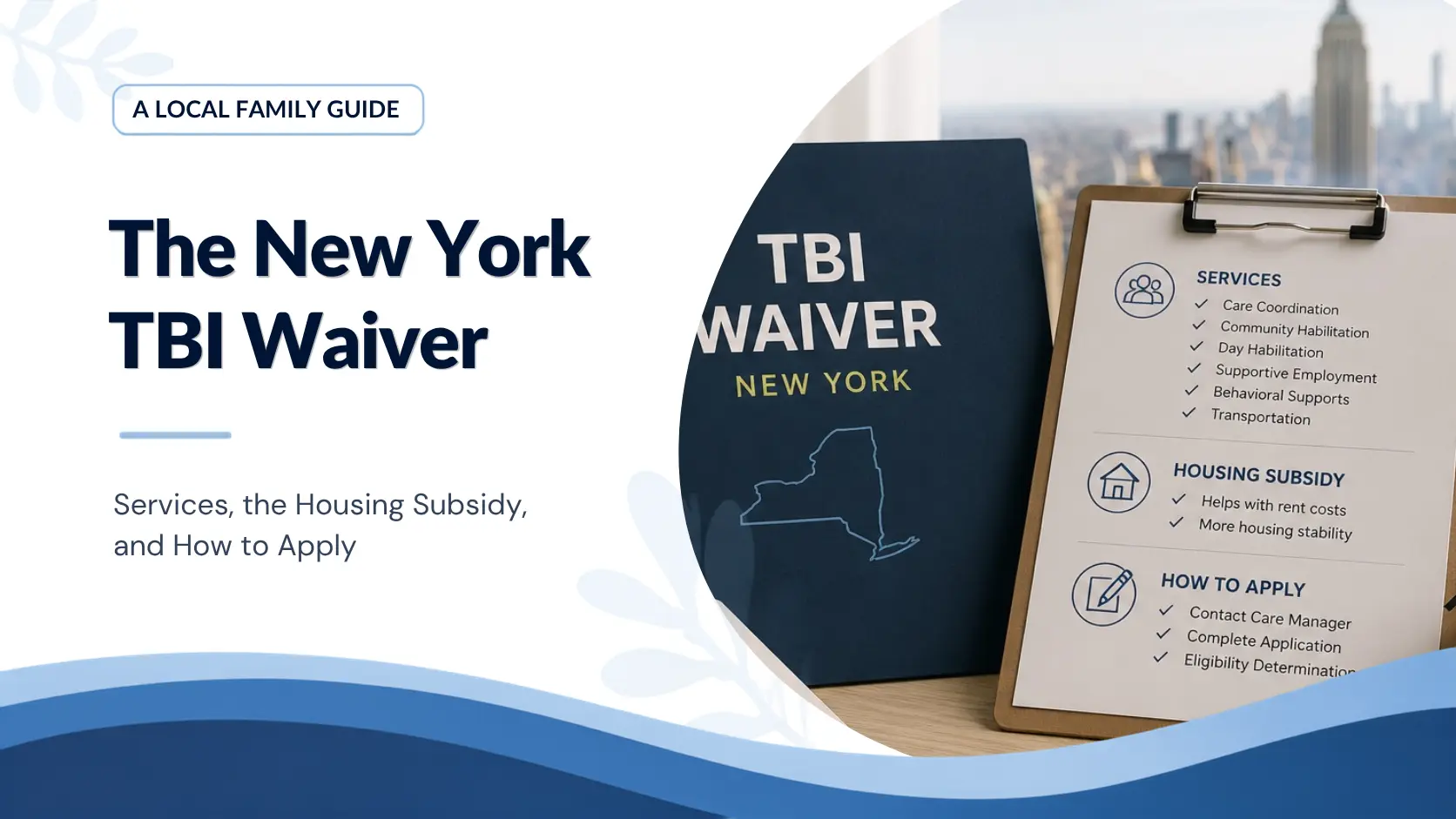
  • The New York TBI Waiver: Services, the Housing Subsidy, and How to Apply

    The New York TBI Waiver: Services, the Housing Subsidy, and How to Apply

    Waivers & Programs

    The New York TBI Waiver: Services, the Housing Subsidy, and How to Apply

    How New York’s Medicaid Traumatic Brain Injury waiver works — the services it funds, who qualifies, how the TBI housing subsidy is calculated, and the step-by-step application path.

    💡 Key Takeaways
    • The TBI waiver is a Medicaid HCBS program that keeps brain-injury survivors living in the community.
    • It funds service coordination, skills training, day programs, behavioural support and home modifications.
    • The TBI/NHTD housing subsidy pays rent above roughly one third of the participant’s monthly income, up to fair market rent.
    • Applications start with your Regional Resource Development Center (RRDC).
    • Waiver services can be combined with regular Medicaid home care hours.

    After a brain injury, the hardest part is often not the medical care — it is everything around it. Where will they live? Who helps during the day? How does any of it get paid for? New York has a Medicaid program built specifically for this: the Traumatic Brain Injury (TBI) waiver, administered by the New York State Department of Health.

    The TBI waiver is a Home and Community Based Services (HCBS) waiver. Its purpose is simple: keep people with brain injuries living in the community instead of a nursing facility, by funding the services — and in some cases the housing — that make community living possible.

    What the TBI Waiver Covers

    Waiver services go well beyond a home health aide. Depending on the approved service plan, participants can receive:

    👤 Service Coordination

    A coordinator who builds the service plan, arranges providers and keeps the plan current.

    🧠 Independent Living Skills Training

    Rebuilding daily-living, budgeting, cooking, transport and organisational skills after injury.

    🏠 Structured Day Program

    Community-based day programming focused on cognition, socialisation and re-entry.

    🛡️ Positive Behavioral Interventions

    Behavioural support for the impulsivity, agitation or disinhibition that can follow a brain injury.

    🛠️ Environmental Modifications

    Ramps, grab bars, bathroom modifications and assistive technology to make a home workable.

    🏦 Housing Subsidy

    Rental assistance for eligible participants who cannot afford community housing on their own.

    Waiver services sit alongside regular Medicaid, so a participant can also receive personal care or home health aide hours. If you want the care side rather than the program side, see our guides to TBI home care in New York and support after a brain injury in NYC.

    The TBI Housing Subsidy: How It Actually Works

    This is the part families most often search for and least often find explained. The TBI/NHTD housing program provides a monthly rental subsidy to waiver participants who cannot otherwise afford community housing.

    • Who it is for. People already enrolled in the TBI or NHTD waiver, with an approved service plan and active waiver services.
    • The participant contribution. Participants contribute roughly one third of their monthly income toward rent; the program covers the remainder, up to fair market rent limits for the area.
    • What else it can cover. Security deposits, moving expenses, and background or credit check fees as one-time costs, plus limited utility assistance in defined circumstances.
    • What it does not cover. Home ownership costs and mortgages, and rent above fair market limits.
    • Resource of last resort. The state treats the subsidy as a last resort — other housing resources are expected to be pursued first.

    Approval runs through your Service Coordinator and the Regional Resource Development Center (RRDC), with final sign-off from the Department of Health. Because both the rules and the payment administration have changed over the years, always confirm current requirements with your RRDC or Service Coordinator before making housing decisions.

    Who Qualifies for the TBI Waiver

    Broadly, an applicant must:

    • Have a diagnosed traumatic brain injury or a related acquired brain injury recognised by the program;
    • Be Medicaid eligible;
    • Be assessed as requiring a nursing home level of care — but be able to live safely in the community with waiver services;
    • Be within the program’s age range and able to participate in developing a service plan;
    • Live in, or be moving to, an approved community setting.

    TBI waiver or NHTD waiver? They are siblings. The NHTD (Nursing Home Transition and Diversion) waiver serves people with physical disabilities and seniors who need a nursing home level of care; the TBI waiver serves people with brain injuries. They share the housing program and much of the service menu. Our overview of NHTD and TBI support services compares them, and home care for adults with disabilities maps all the programs together.

    How to Apply for the TBI Waiver

    • 1. Contact your Regional Resource Development Center. Every region of New York has an RRDC; it is the front door to both waivers. A hospital social worker, discharge planner or home care agency can point you to yours.
    • 2. Establish Medicaid. If Medicaid is not in place, start there — see how to qualify for Medicaid home care, and pooled income trusts if income is over the limit.
    • 3. Intake and eligibility review. The RRDC confirms diagnosis, level of care and Medicaid status.
    • 4. Choose a Service Coordinator. You pick from approved providers. This person matters more than any other choice you make in the process.
    • 5. Build the Service Plan. The plan lists every service, provider and frequency — including a housing subsidy request if one applies.
    • 6. Approval and start. Once the Department of Health approves the plan, services begin and are reviewed on an ongoing basis.

    Expect the process to take time, and expect paperwork. Families who move fastest are usually the ones who get Medicaid sorted early and who ask their coordinator for a written checklist at the start.

    Where a Home Care Agency Fits

    Waiver services and home care are separate but complementary. Advantage Home Care supports brain-injury clients across the five boroughs with personal care and home health aide hours, overnight and live-in coverage, and care coordination and family support that keeps the medical, waiver and family sides talking to each other. If you are mid-application and stuck, that coordination is often the thing that unblocks it.

    Frequently Asked Questions

    What is the TBI waiver in New York?

    It is a Medicaid Home and Community Based Services waiver run by the New York State Department of Health for people with traumatic brain injuries who would otherwise need nursing home care. It funds services such as service coordination, independent living skills training, structured day programs, behavioural support, home modifications and a housing subsidy.

    Does the TBI waiver pay rent?

    For eligible participants, yes — through the TBI/NHTD housing program. Participants generally contribute about one third of their monthly income toward rent and the program covers the balance up to fair market rent limits. It also covers certain one-time costs like security deposits and moving expenses, and is treated as a resource of last resort.

    How do I apply for the TBI waiver?

    Contact the Regional Resource Development Center (RRDC) for your area. The RRDC handles intake, confirms Medicaid and level-of-care eligibility, and connects you with a Service Coordinator who builds your service plan for state approval.

    What is the difference between the TBI waiver and the NHTD waiver?

    Both keep people out of nursing homes and share the housing program and much of the service menu. The TBI waiver serves people with brain injuries; the NHTD waiver serves seniors and people with physical disabilities.

    Can I get a home health aide and the TBI waiver at the same time?

    Yes. Waiver services are in addition to regular Medicaid coverage, so participants can receive personal care or home health aide hours alongside waiver services.

    How long does TBI waiver approval take?

    It varies by region and by how quickly Medicaid and documentation come together — plan for months rather than weeks. Getting Medicaid in place first is the single biggest accelerator.

    TBI Waiver Program in NY: Quick Answers

    What is the TBI waiver program in NY?

    New York’s Medicaid Traumatic Brain Injury waiver funds community-based services for adults 18–64 (at enrollment) with a documented TBI or related brain injury who need a nursing-facility level of care but want to live at home. It runs through Regional Resource Development Centers (RRDCs) and a service coordinator, alongside regular Medicaid.

    What TBI waiver services are covered?

    Service coordination, home and community support services, independent living skills training, structured day programs, community integration counseling, positive behavioral interventions, environmental modifications, assistive technology, transportation, respite, substance abuse programs and the housing subsidy described above, all written into an individual service plan.

    What is the difference between the TBI housing program and the housing subsidy?

    They are the same benefit: the waiver’s housing subsidy helps pay rent and utilities so a participant can live in the community. It is requested through the service coordinator and RRDC and is separate from Section 8 or NYCHA. For day-to-day aide support during and after the application, see TBI home care in NYC or call 718-375-2707.

    Navigating the TBI Waiver? We Can Help.

    Our care coordinators work with brain-injury clients and families across all five boroughs — from Medicaid setup to day-to-day home care.

    Call 718-375-2707 Request Care Online
  • In-Home Caregiver in NYC: What They Do, What It Costs, and How to Hire One

    In-Home Caregiver in NYC: What They Do, What It Costs, and How to Hire One

    Home Care Basics

    In-Home Caregiver in NYC: What They Do, What It Costs, and How to Hire One

    A plain-English guide to home care assistance in New York City — what an in-home caregiver actually does, agency vs. private hire, real costs, and how Medicaid can cover it.

    💡 Key Takeaways
    • An in-home caregiver helps with personal care, meals, housekeeping, medication reminders and safety.
    • PCA, HHA, home attendant and companion are different roles — a nurse assessment usually decides which you need.
    • Hiring privately makes you the employer; an agency covers vetting, insurance, supervision and backup coverage.
    • Medicaid can pay for home care in New York, but only through a licensed agency.
    • Private-pay care can usually start within 24 to 48 hours.

    Most families do not start by searching for a job title. They start with a situation: a parent who is unsteady on the stairs, a spouse who cannot manage a shower alone anymore, a hospital discharge that arrives faster than anyone expected. What they want is an in-home caregiver — someone reliable who comes to the house and helps.

    This guide explains what a home caregiver actually does, the difference between hiring privately and going through an agency, what it costs in New York City, and how to arrange it — including how Medicaid can cover the whole thing.

    What Does an In-Home Caregiver Do?

    An in-home caregiver supports someone with the everyday tasks that have become difficult, so they can stay in their own home instead of moving to a facility. In New York, the work usually falls into four buckets.

    🛀 Personal care

    Bathing, dressing, grooming, toileting, transfers and safe mobility around the home.

    🍳 Household support

    Meal preparation, light housekeeping, laundry, shopping and errands.

    💊 Health-related help

    Medication reminders, appointment escorts, and — with a home health aide — vital signs and simple clinical tasks under nurse supervision.

    🤝 Company and safety

    Conversation, routine, supervision for someone with memory loss, and a second set of eyes on how they are really doing.

    Home Caregiver, Home Attendant, PCA, HHA — What Is the Difference?

    These words get used interchangeably, which is why families end up confused on the phone with an agency. In practice:

    • Personal Care Aide (PCA) — also called a home attendant. Handles personal care and household tasks. Read what a PCA does.
    • Home Health Aide (HHA/CHHA) — everything a PCA does, plus health-related tasks under a nurse’s supervision. Read the CHHA guide.
    • Companion caregiver — social support and supervision without hands-on personal care.
    • Live-in or overnight caregiver — coverage through the night or around the clock. See overnight and live-in home care.

    Not sure which one you need? The HHA vs. PCA comparison and the home attendant explainer lay it out side by side. In most cases a nurse assessment decides for you.

    Hiring Privately vs. Going Through an Agency

    You can find a caregiver on your own. Plenty of families do, and it can work. But it is worth being clear about what you take on.

    Hire privately and you become the employer: you handle screening, references, background checks, payroll taxes, workers’ compensation, and — the one that catches people out — coverage when your caregiver is sick, on vacation or simply does not show up. There is no backup.

    With a licensed agency, screening, training, insurance, supervision and replacement coverage are built in, and a nurse writes and reviews the care plan. Agency care is also the only route if you want Medicaid to pay, because Medicaid-funded hours must be delivered through a licensed provider. If you are comparing agencies, our guides on choosing a home care agency and verifying a legitimate agency are the place to start.

    What Does an In-Home Caregiver Cost in NYC?

    Private-pay home care in New York City is generally billed hourly, with lower effective rates for live-in arrangements and higher rates for short shifts, overnights and specialized care. Rates move, so rather than quote a number that ages badly, we keep current ranges in our NYC home care cost guide.

    The more useful question is usually not “what does it cost” but “do we have to pay for it at all.” Many New York families qualify for Medicaid-funded home care and pay nothing out of pocket — including families who assumed their income or savings ruled them out.

    How to Get an In-Home Caregiver: The Actual Steps

    • 1. Describe the day. Write down what your loved one struggles with and when. Mornings? Nights? Bathing? This determines hours and caregiver type more than any diagnosis does.
    • 2. Call an agency. A coordinator will tell you within one conversation whether Medicaid is likely to cover it and what the fastest path is.
    • 3. Nurse assessment. A nurse visits the home, confirms what is needed and writes the care plan.
    • 4. Caregiver matching. Language, gender preference, cultural fit and schedule all get factored in. Ask for this explicitly — it is the single biggest predictor of whether the arrangement lasts.
    • 5. First shift and follow-up. A good agency checks in after the first days and adjusts. If something is not working, say so early.

    Our step-by-step walkthrough is here: how to get started with home care in NYC.

    If you are not sure it is time yet: most families wait longer than they should. The warning signs are usually practical rather than dramatic — unopened mail, weight loss, a near-fall no one mentions. See signs it is time for home care and home care for a parent living alone.

    Frequently Asked Questions

    How much does an in-home caregiver cost in New York City?

    Private-pay caregivers in NYC are billed hourly, with live-in arrangements priced differently from hourly shifts and premium rates for nights, weekends and short visits. Current ranges are in our home care cost guide. Many families qualify for Medicaid and pay nothing.

    Can Medicaid pay for an in-home caregiver?

    Yes. New York Medicaid covers personal care aide and home health aide hours for eligible residents, authorized through an MLTC plan after a nurse assessment. Hours must be delivered by a licensed agency, so privately hired caregivers cannot be reimbursed.

    Is it better to hire a caregiver privately or through an agency?

    Hiring privately can cost less per hour, but you become the employer — responsible for vetting, taxes, insurance and finding backup when your caregiver is unavailable. An agency handles screening, supervision, insurance and coverage, and is required if Medicaid is paying.

    How many hours a week can we get?

    Anything from a few hours a week up to live-in or 24-hour coverage. Under Medicaid, the number of hours is set by the assessment and your plan’s authorization; with private pay you choose.

    How fast can a caregiver start?

    Private pay can typically begin within 24 to 48 hours. Medicaid-funded care depends on the assessment and authorization timeline, though a coordinator can often start that process the same day you call.

    Can we request a caregiver who speaks our language?

    Yes, and you should. We match on language, culture and gender preference across Russian, Spanish, Creole, Mandarin, Bengali and more. It is one of the strongest predictors of a placement working out long term.

    Home Care Assistance in NYC: How to Choose an Agency

    Where can I get home care assistance in NYC?

    Three routes: a licensed home care agency (Medicaid or private pay), a Medicaid MLTC plan that assigns an agency, or hiring privately. Advantage Home Care is a licensed agency serving all five boroughs with Medicaid-covered and private-pay caregivers, offices in Brooklyn and the Bronx, and intake in English, Spanish and Russian. Call 718-375-2707.

    How do I choose a home care agency in New York?

    Check the agency is licensed by the NYS Department of Health (LHCSA), ask which MLTC plans it contracts with, how it matches caregivers by language and neighborhood, how fast it can replace an aide who does not show, and whether a nurse supervises the care plan. Then ask for a same-week start date; a good NYC agency can give you one.

    How much does home care assistance cost in NYC?

    Private-pay hourly rates in NYC vary by agency and hours; live-in is billed daily. Most of our clients pay nothing because hours are authorized through Medicaid managed long-term care. See the cost section above and our private pay guide.

    Need a Caregiver at Home? Let’s Talk.

    One call tells you what your loved one needs, whether Medicaid covers it, and how soon someone can start.

    Call 718-375-2707 Request Care Online